Tsunami Alerts: Where Are They Issued in the U.S.?
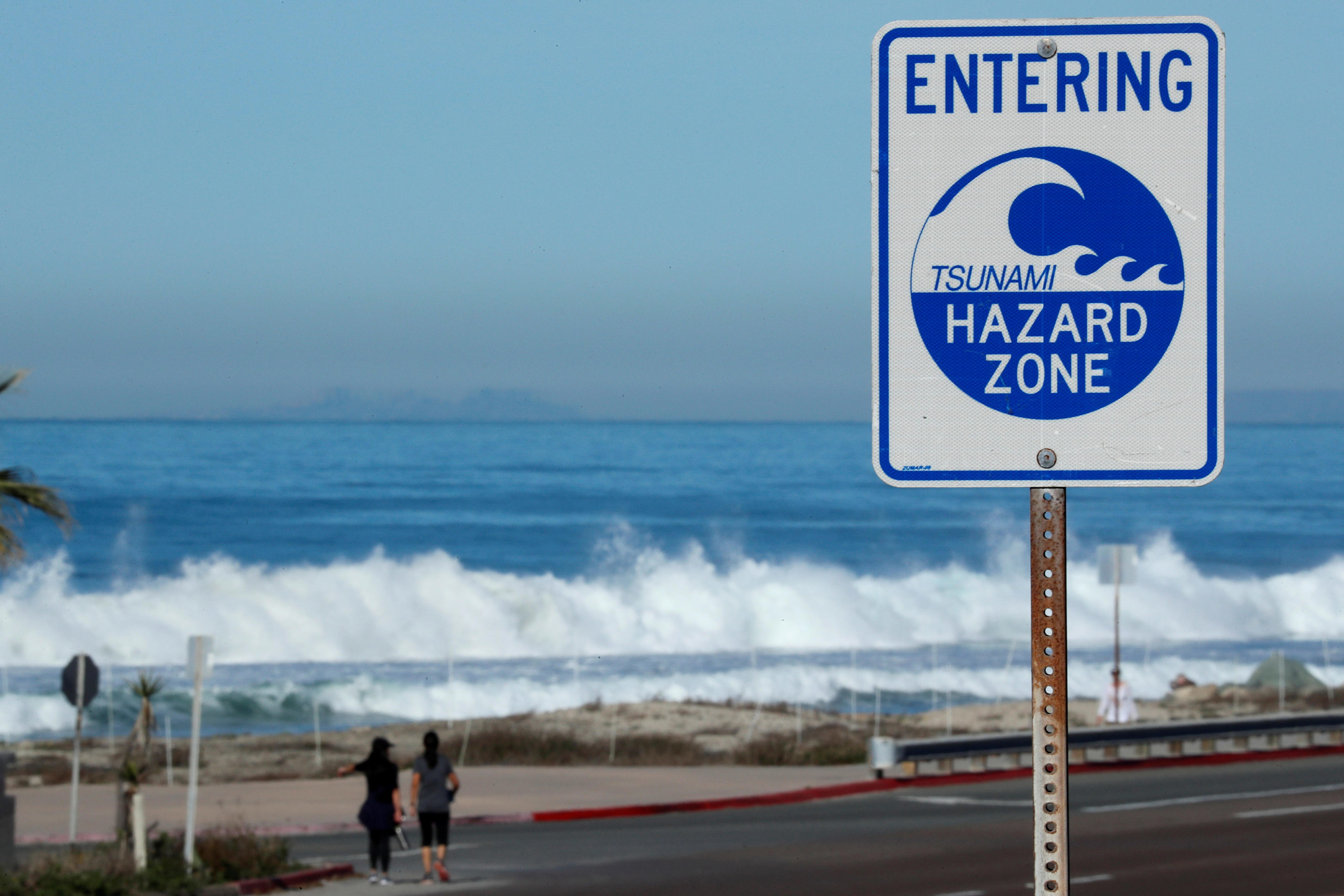
Major Earthquake Triggers Widespread Tsunami Alerts Across the U.S.
A powerful magnitude 8.8 earthquake struck off the coast of Russia's Kamchatka Peninsula on July 29, triggering a series of tsunami alerts across several regions in the United States. The tremor occurred around 7:24 p.m. ET, approximately 78 miles east-southeast of Petropavlovsk-Kamchatsky, according to the U.S. Geological Survey. As a result, officials issued warnings, advisories, and watches for Alaska, Hawaii, and the West Coast of the contiguous United States.
Reid Wolcott, a meteorologist with the weather service in Seattle, emphasized the severity of the event, stating, "this is a significant, real event." He noted that while the immediate threat was primarily focused on Alaska and areas near the epicenter, the National Tsunami Warning Center needed more time to assess the potential impact on the West Coast.
Hawaii Under Statewide Tsunami Warning
Hawaii is currently under a statewide tsunami warning following the earthquake. Officials warned that destructive waves could affect coastal areas even far from the epicenter. The Hawaii Emergency Management Agency (HEMA) stated that the first wave was expected to hit at 7:10 PM HST, with all-hazards sirens sounding at 5:10 PM HST. The agency urged residents to take urgent action to protect lives and property, emphasizing that hourly updates would be provided.
Alaska Faces Potential Tsunami Activity
The National Tsunami Warning Center issued advisories and warnings along Alaska’s Aleutian Islands, where tsunami activity was possible starting at different times across various islands. Shemya Island saw potential activity as early as 4:46 p.m. Alaskan Daylight Time, followed by Adak Island at 5:46 p.m., and Saint Paul Island at 7:06 p.m. Authorities advised residents to move away from the water, beaches, marinas, harbors, and inlets.
The forecasted maximum heights of potential tsunami waves in Alaska included:
- Adak: Between 1.2 to 2.2 feet
- Unalaska, Saint Paul, Sand Point, Cold Bay: Less than 1 foot
- Other locations: Less than 1 foot
West Coast Receives Tsunami Advisory
The National Weather Service (NWS) issued a tsunami advisory for the entire West Coast, including Washington, Oregon, California, and parts of Alaska. While widespread inundation was not expected, the NWS warned that dangerous currents could still occur. In Washington, the predicted maximum wave heights were generally less than 1 foot, with some areas like Moclips expecting between 0.7 to 1.3 feet.
Oregon and California Face Increased Risk
A tsunami warning is now in effect for coastal areas of Oregon and California, extending from the Stateline border to Northern California’s Cape Mendocino. In San Diego, officials advised people to avoid beaches and harbors, as strong ocean currents were expected. Meteorologist Dial Hoang reminded the public of the dangers associated with tsunamis, citing a tragic incident in 2011 when a man was swept out to sea while trying to photograph a tsunami.
In Oregon, the predicted wave heights ranged from less than 1 foot to 1.8 feet, while in California, the highest expected waves were in Crescent City, reaching between 2.9 to 5.4 feet. Other locations such as Fort Bragg, Port San Luis, and Santa Barbara also faced potential wave heights of up to 3.8 feet.
Pacific Islands Receive Alert
Tsunami alerts were also issued for the Pacific Islands, including the Northern Mariana Islands of Guam, Rota, Tinian, and Saipan. Experts from the U.S. Geological Survey indicated there was a threat to these regions due to the earthquake.
Understanding Tsunami Alerts
The National Weather Service outlines four levels of tsunami alerts:
- Tsunami Warning: Indicates a dangerous tsunami is expected or occurring, with potential for widespread flooding and strong currents.
- Tsunami Advisory: Suggests a tsunami with potentially dangerous currents or waves is expected, though not as severe as a warning.
- Tsunami Watch: Signals that a distant earthquake has occurred, and a tsunami is possible.
- Tsunami Information Statement: Indicates no threat or a very low likelihood of a destructive tsunami.
These alerts are crucial for ensuring public safety and allowing authorities to take necessary precautions.

Post a Comment for "Tsunami Alerts: Where Are They Issued in the U.S.?"
Post a Comment