TSA's Family Security Lanes: Safe Travel for Families
Introduction to the Families on the Fly Initiative
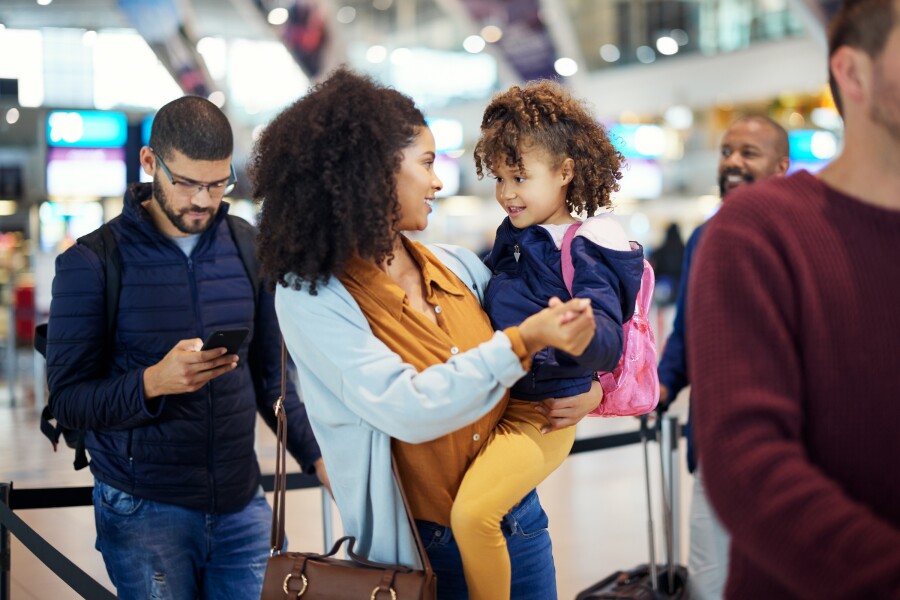
Traveling through airport security can be a challenging experience, especially for families with young children. The process often involves managing strollers, dealing with restless toddlers, and handling additional items like baby food and bottles. These challenges can lead to longer wait times and increased stress for everyone involved. Recognizing these difficulties, the U.S. Department of Homeland Security (DHS) has introduced the Families on the Fly initiative, which aims to provide dedicated screening lanes for families at select airports.
Implementation of the Program
The Families on the Fly program will initially launch at Orlando International Airport (MCO) in Florida and Charlotte-Douglas International Airport (CLT) in North Carolina. These airports were chosen due to their popularity among families with small children. In the next phase, the program will expand to John Wayne Airport (SNA) in Orange County, California, and Daniel K. Inouye International Airport (HNL) in Honolulu, Hawai'i. Further expansions are planned for Charleston International Airport (CHS) in South Carolina, Jacksonville International Airport (JAX) in Florida, Rhode Island T.F. Green International Airport (PVD), Luis Muñoz Marín International Airport (SJU) in Puerto Rico, and Tampa International Airport (TPA) in Florida. Additional airports may be added based on the program's success.
Reasons for the Change
The decision to implement this initiative comes at a time when travelers have become increasingly frustrated with long security lines. Post-pandemic travel has surged, leading to longer wait times and operational backlogs. The Families on the Fly program is seen as a response to this growing frustration. According to Paul Stewart, a relocation expert and founder of My Baggage USA, the program addresses the need for faster and less stressful security processes.
Stewart also notes that the summer travel season is an ideal time to roll out the program, as it is peak family travel time. During this period, delays caused by families going through security may be at their highest. Additionally, DHS has announced other changes in airport security procedures, such as eliminating the need for travelers to remove shoes, which could complement the new initiative.
Potential Benefits and Challenges
Dedicated family screening lanes could offer several benefits. They may help reduce congestion at security checkpoints by allowing families to move through the process at their own pace. This could lead to smoother operations for all travelers, as the general public might experience shorter wait times. For families, the lanes could significantly reduce stress and make the overall travel experience more enjoyable.
However, the success of the program depends on adequate staffing and clear signage. If the lanes are not properly managed or left underutilized during off-peak times, they could create confusion rather than convenience. There is also the risk that some families might avoid the dedicated lanes if they perceive them as slower or less efficient.
Expert Opinions and Experiences
Jesse Neugarten, founder and CEO of Dollar Flight Club, has experienced similar programs in Australia and New Zealand. He noted that these lanes helped reduce security line times and made the travel process more manageable for families. Neugarten is optimistic about the potential benefits of the Families on the Fly program in the United States.
Paul Stewart emphasizes that the ultimate test of the program will be its practical implementation. He believes that during peak travel times, such as Thanksgiving and the winter holidays, the program's effectiveness will be put to the test. Only time will tell whether the initiative will successfully alleviate the challenges faced by families at airport security checkpoints.
Conclusion
The Families on the Fly initiative represents a significant step toward making air travel more family-friendly. While there are potential challenges to overcome, the program has the potential to improve the overall airport experience for families and other travelers alike. As the program expands, its success will depend on careful planning, adequate resources, and continuous evaluation to ensure that it meets the needs of all passengers.

Post a Comment for "TSA's Family Security Lanes: Safe Travel for Families"
Post a Comment