Trump's Russia Move Targets China, Not Ukraine
The Strategic Shift in U.S. Foreign Policy
The headlines often focus on the recent Alaska summit between former President Donald Trump and Russian President Vladimir Putin, framing it as a pivotal moment for Ukraine. Analysts in Washington and Brussels have debated whether Trump was too lenient toward Moscow or if he compromised Kyiv's position. However, this perspective overlooks a broader strategic reality: the United States is facing its most significant long-term challenge not from Russia, but from China.
Under the Trump administration, foreign policy has been shaped by a clear objective—containing China’s rise. This approach includes imposing sweeping sanctions on Beijing's access to advanced AI chips, trading U.S. security guarantees for alignment in the Middle East and Indo-Pacific, and prioritizing economic and military strategies that counter Chinese influence. Against this backdrop, Trump's engagement with Russia is not a distraction but a calculated move to create a more coherent America-first strategy.
Europe's Focus on Ukraine
For Europe, the war in Ukraine is seen as the "front line of democracy." Brussels, supported by Kyiv, pushes for an indefinite confrontation with Russia through maximum sanctions, deeper NATO commitments, and the permanent integration of Ukraine into the Western order. While this vision is ambitious, it comes at a cost to the United States. NATO expansion increases U.S. defense obligations, while Ukraine’s demographic and economic decline makes full territorial restoration unlikely, creating an open-ended liability for Washington.
Economically, Europe has borne the brunt of disrupted energy and trade since 2022, while the U.S. has benefited from LNG exports and remains relatively insulated. The European agenda seeks to bind the U.S. more closely to continental affairs, potentially diverting attention from the critical theater that will shape the 21st century.
Trump’s Realist Approach
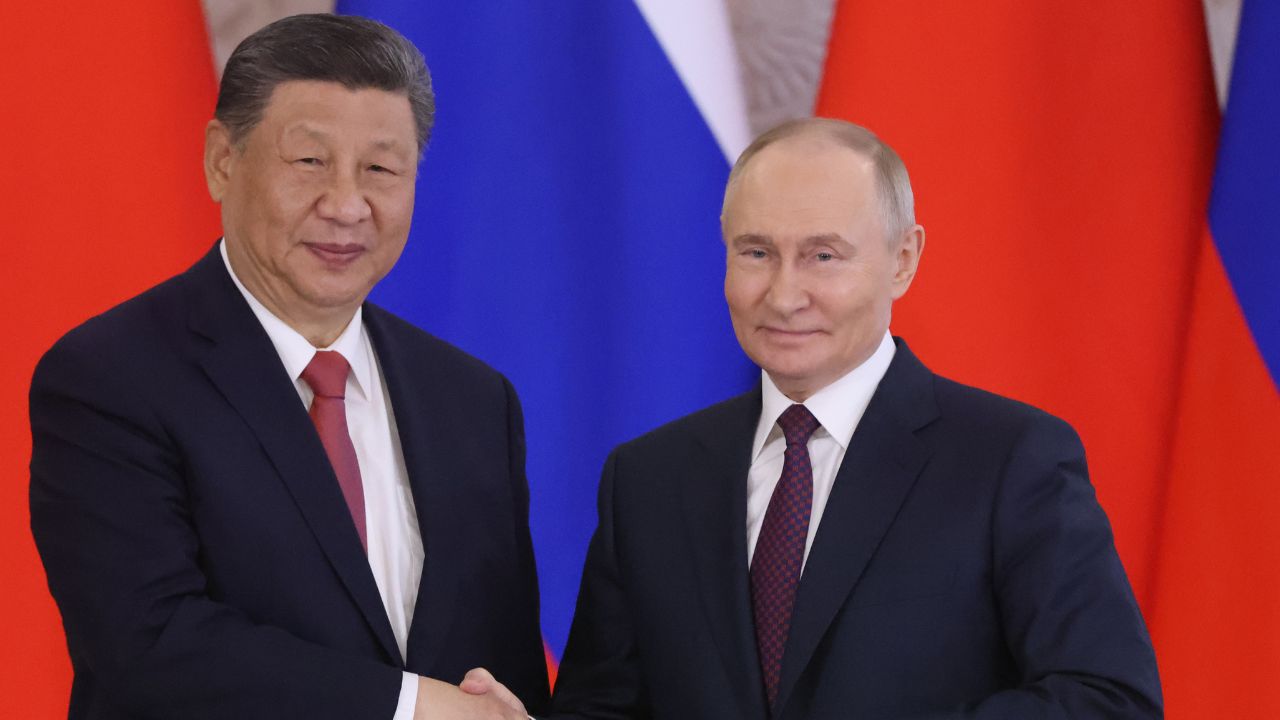
Trump’s outreach to Russia is not about indulgence but about realism aligned with his China-first doctrine. Russia today is a weak link in Beijing’s strategy, with growing dependence on Chinese capital, markets, and diplomatic support. Beijing has used this leverage to secure steep discounts on Russian oil, tighten yuan trade, and align Moscow with its geopolitical positions. If left unchecked, this "Eurasian entente" could force the U.S. into a confrontation with two nuclear powers simultaneously.
Trump aims to disrupt this alliance by offering transactional opportunities. On the economic front, he has hinted at potential cooperation in energy, Arctic shipping, and critical minerals, which could reduce Russia’s reliance on Beijing while creating supply chain opportunities for U.S. industry. Militarily, he has carefully managed Ukraine aid, providing enough support to hold the line without risking direct escalation. Diplomatically, he has paired conditional incentives with firm deterrents, linking relief to verifiable steps from Russia, such as a ceasefire and de-escalation, with the threat of snapback sanctions always in reserve.
A Broader Strategy
This approach aligns with other actions taken by the Trump administration. Washington has already cut China off from the most advanced AI semiconductors, blocked access to cloud-computing resources that power Beijing’s labs, and sought to restructure rare-earth supply chains through allies across the globe. In the Middle East, Trump has exchanged U.S. security guarantees for alignment on oil and technology, explicitly framed as part of the China contest. In Asia, he has expanded basing rights in the Philippines and Guam, citing Chinese aggression in the South China Sea.
Seen in this context, Trump’s Russia outreach is not a departure but a continuation of the same strategic design. By prying apart the Russia-China axis, he creates strategic space for the U.S. to focus on the Indo-Pacific, where the future of global power will be decided.
The Opportunity for the U.S.
For Putin, the Alaska summit comes at a time of both strength and vulnerability. Moscow has made modest gains in Ukraine and seen oil revenues rise in early 2025. However, it faces mounting financial pressure. Its priority demand is phased re-entry into the SWIFT system, starting with Rosselkhozbank. Meanwhile, Trump has doubled tariffs on Indian goods to 50%, explicitly citing India’s Russian oil purchases, and threatened penalties as high as 100% on any country buying discounted Russian crude—a warning aimed directly at China.
If Trump can channel Russia into transactional deals—limited energy, Arctic, and minerals cooperation—he could weaken Moscow’s bond with Beijing, allowing the U.S. to focus on the critical challenges ahead. By reducing U.S. overstretch in Europe, he frees up resources for the Indo-Pacific, where the century’s outcome will be determined.
A Strategic Choice
The real choice before the U.S. is clear. The first option is to follow the EU–Ukraine script—permanent sanctions, endless NATO expansion, and an open-ended confrontation that serves Europe’s agenda while draining U.S. attention. The second is Trump’s realist course—not trust, not appeasement, but cold-eyed leverage: using Russia’s weakness to fracture its bond with China, ensuring America faces only one great power challenge, not two.
Anchorage, then, was not about a concession. It was about coherence. Trump has already recast U.S. foreign policy around the China challenge. His Russia play is part of that same framework. The Alaska meeting should be understood not as a betrayal of Ukraine or a gift to Putin, but as a strategic bid to reshape the board so the U.S. can fight—and win—the contest that truly matters.

Post a Comment for "Trump's Russia Move Targets China, Not Ukraine"
Post a Comment