Trump's Poll Numbers: A Politics Desk Analysis
New York Democrats Respond to Texas Redistricting Efforts
As the political landscape continues to shift, New York Democrats have unveiled their own mid-decade redistricting scheme in response to Texas Republicans' efforts. This move highlights the challenges and limited options that Democrats face as they prepare for the 2026 midterms.
The Texas Republicans are working on plans to redraw congressional maps mid-decade, which could significantly impact the balance of power in the House of Representatives. In contrast, New York Democrats have introduced a bill that would allow state lawmakers in Albany to conduct mid-decade redistricting, but only if another state does so first. This proposal is technically a legislatively referred constitutional amendment, meaning it would require passing the Legislature in two consecutive sessions and then being approved by voters in a ballot measure.
If enacted, this bill could set up a national redistricting tit-for-tat between Republicans and Democrats, with control of the House potentially at stake. However, there are key differences between what's happening in New York and Texas. While Texas Republicans aim to enact new district boundaries for the 2026 elections, the New York bill would not be in place until the 2028 elections. This timeline illustrates the long and arduous path that the New York proposal must navigate before it can take effect.
Trump’s Approval Ratings and Their Impact on the 2026 Midterms
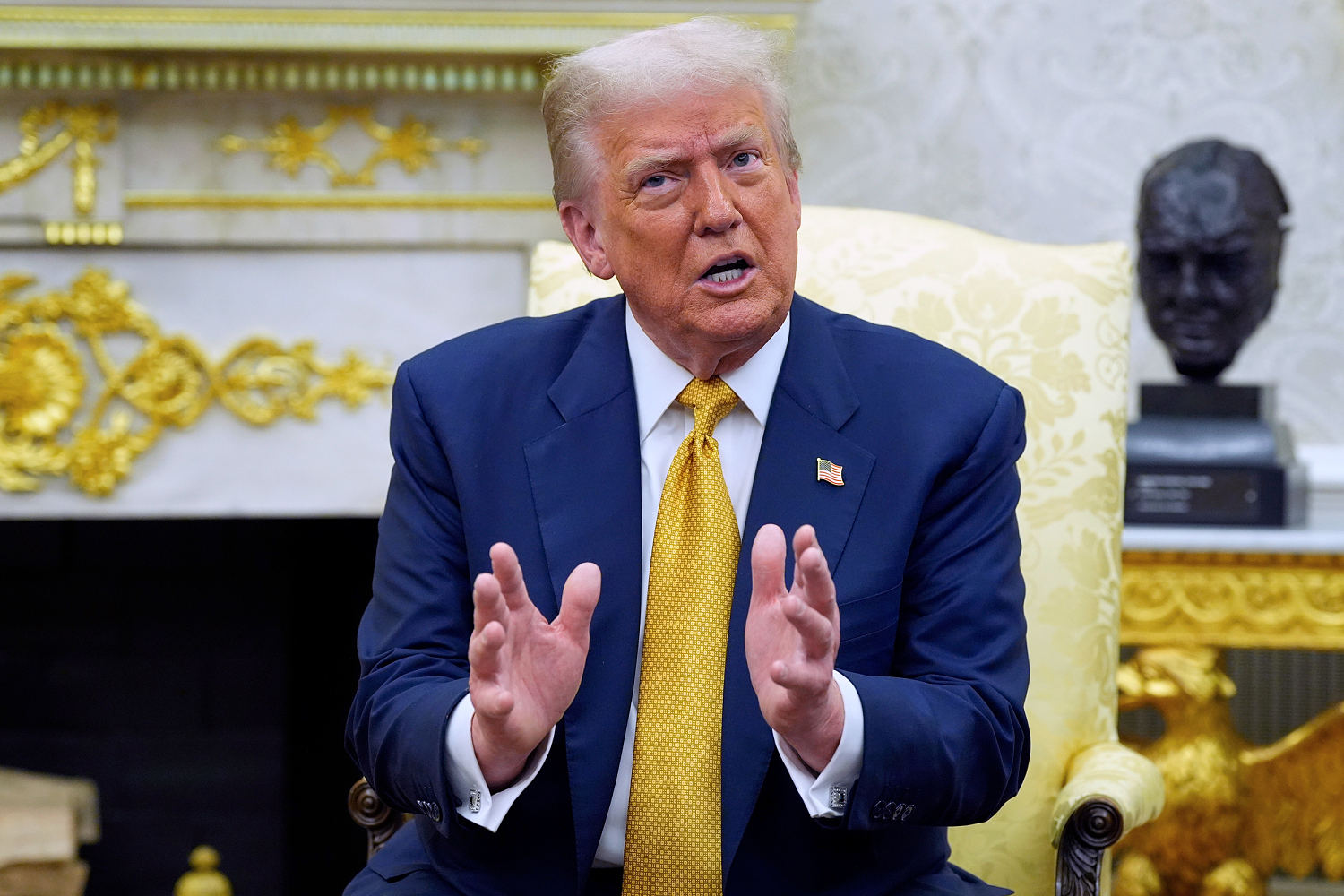
Steve Kornacki provides an analysis of Donald Trump's current approval ratings and how they compare to his first term. Like the first Trump presidency, the second one is playing out in a polarized political atmosphere. However, there is a key difference in how the public perceives Trump's leadership now compared to 2017.
According to a running average of independent public polling, Trump's job approval rating is currently at 43%. This is a historically low number, but it is slightly higher than at this point in 2017. The average includes 13 polls released within the past two weeks, with one Gallup survey placing Trump's approval at 37%, which is 3 to 8 points lower than other polls in the average.
As the 2026 midterm landscape takes shape, a critical question is what level of approval Trump needs to maintain for Republicans to have a chance of keeping control of the House. With the electorate highly sorted along partisan lines and many seats already safely in the hands of either party, the battleground is unusually small.
The GOP doesn't need to make inroads into Democratic territory to keep the majority, which means the party could theoretically get by in 2026 without a broadly popular Trump. Democrats managed to limit their losses in the 2022 midterms despite then-President Joe Biden's low job approval rating, bolstering the GOP's hopes on this front.
If Trump can remain above his first-term levels and boost his current standing a few points, the playing field could be very competitive next year. However, if his approval moves in the opposite direction, the story could change dramatically.
Historical Context and Future Implications
Historically, abrupt shifts in presidential approval ratings have been common. For example, during George W. Bush's second term, chaos in Iraq, controversy over the federal response to Hurricane Katrina, and his failed nomination of Harriet Miers to the Supreme Court led to a significant drop in his approval rating. Similarly, four years ago, Biden's average approval was at 53%, but it dropped after the disastrous withdrawal from Afghanistan.
Despite these historical precedents, Trump has not experienced similar dramatic shifts in his image over the past decade. He remains a president and a man about whom most people have already made up their minds. However, there are still some who remain undecided, making the 2026 midterms a crucial test for both parties.
Conclusion
The political landscape is constantly evolving, and the actions taken by New York Democrats and the approval ratings of Donald Trump will play a significant role in shaping the 2026 midterms. As both parties strategize and prepare for the upcoming elections, the focus will remain on maintaining control of the House and navigating the complexities of redistricting. The outcome of these efforts will have lasting implications for the future of American politics.

Post a Comment for "Trump's Poll Numbers: A Politics Desk Analysis"
Post a Comment