Trump's New Chip Tariff Sparks More Questions Than Clarity
Trump's Semiconductor Tariff Plan Sparks Uncertainty
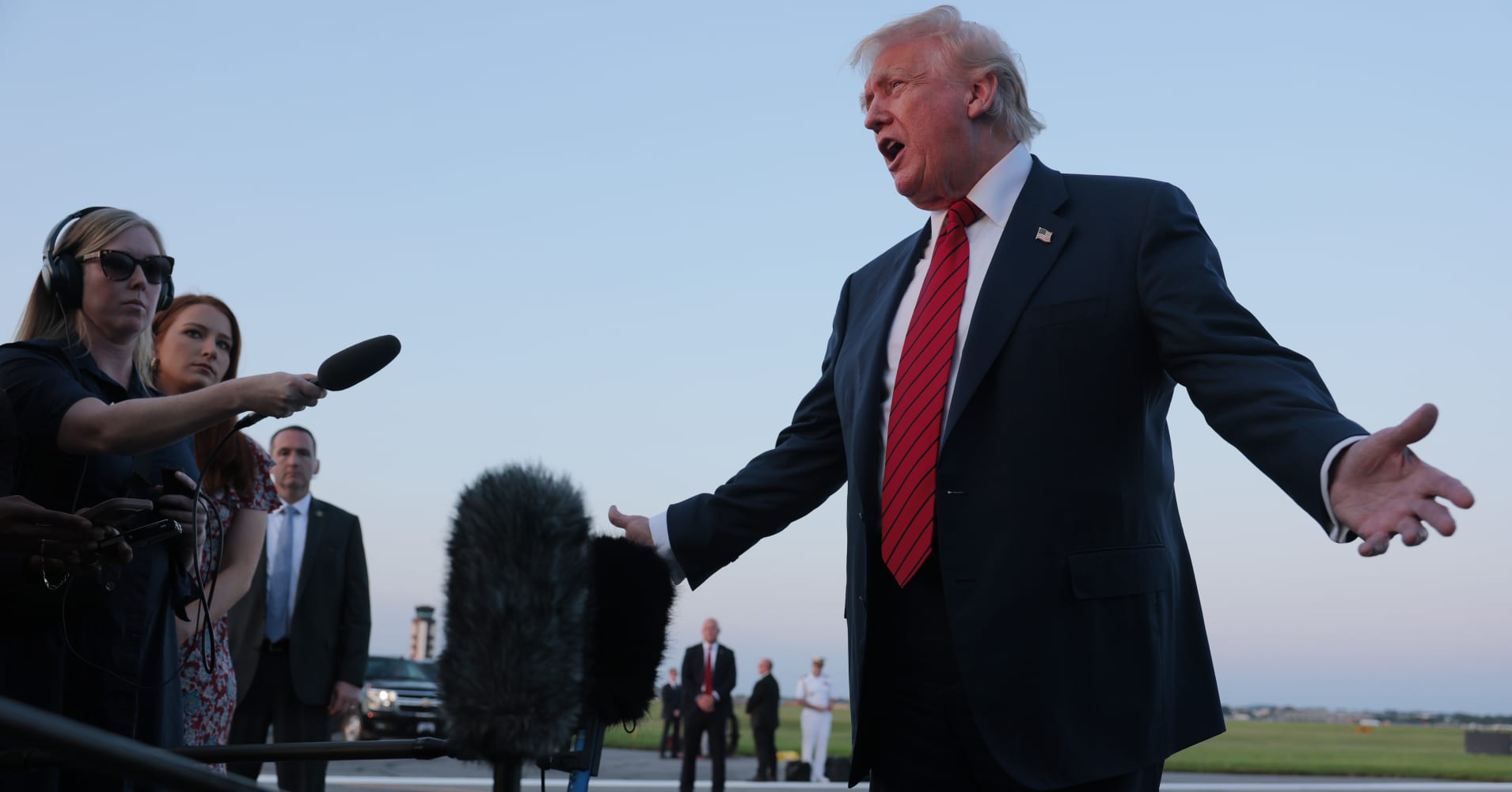
U.S. President Donald Trump has announced plans to impose a 100% tariff on imported semiconductors and chips, but with an exception for companies that "build in the United States." This move has generated significant attention and questions about its implications for the global semiconductor industry.
Semiconductors are at the heart of the modern digital economy, representing an over $600 billion industry. Any potential tariffs on these critical components could have far-reaching effects. However, experts argue that the policy is still in its early stages, and key details remain unclear.
Ray Wang, research director of semiconductors, supply chain, and emerging technology at The Futurum Group, emphasized that it is too soon to determine the full impact of the proposed tariffs. He noted that the final rule is likely still being drafted, and technical details are not yet clear.
Who Benefits from the Exemption?
One major question surrounding the policy is how much manufacturing a company must commit to the U.S. to qualify for the tariff exemption. The U.S. has been working to bring semiconductor manufacturing back to the country for years. Since 2020, leading companies like TSMC and Samsung Electronics have invested hundreds of billions of dollars in building plants in the U.S.
James Sullivan, Managing Director and Head of Asia Pacific Equity Research at J.P. Morgan, suggested that most major chip manufacturers may receive exemptions under this policy. If true, this could lead to a consolidation of market share among the largest players in the semiconductor sector.
Following Trump’s announcement, shares of major Asian chip companies such as TSMC rose in Thursday morning trading. TSMC recently announced plans to expand its investments in the U.S. to $165 billion. Similarly, shares of South Korea’s Samsung and SK Hynix also increased after a Korean trade envoy reportedly stated that these companies would be exempt from the 100% tariffs.
Unclear Scope of Tariffs
Beyond the issue of exemptions, many aspects of the potential tariffs remain uncertain. Stacy Rasgon, senior U.S. semiconductor analyst at Bernstein, highlighted that most semiconductors imported into the U.S. come embedded in consumer goods such as smartphones, PCs, and cars.
In 2024, the U.S. imported $46.3 billion worth of semiconductors—only about 1% of all U.S. imports, according to the Information Technology and Innovation Foundation. While tariffs on these imports might be manageable, broader tariffs could pose more challenges.
Rasgon raised several questions about the scope of the proposed tariffs: “Are there going to be tariffs on end devices? Are you going to be looking at tariffs on components within end devices?” These uncertainties highlight the complexity of implementing such a policy.
National Security Investigation Adds Complexity
The confusion around semiconductor tariffs was further amplified by the U.S. Department of Commerce’s national security investigation into semiconductor imports in April. This investigation came just as the sector was exempted from Trump’s “reciprocal” tariffs. Although the vague language from the Trump administration has not been invoked in the president’s latest statements, it could theoretically be used to apply broad tariffs across a large portion of the electronics supply chain.
It remains unclear whether semiconductor materials and manufacturing equipment used to produce chips would fall under the tariffs. This ambiguity adds another layer of uncertainty for companies operating in the sector.
Interconnected Supply Chains
The intricate and interdependent nature of the semiconductor supply chain could complicate any potential tariff strategies. For example, American chip designer Qualcomm sends its designs to TSMC for manufacturing in Taiwan before importing the chips to the U.S. It is unclear whether such imports would be exempt from tariffs if TSMC is considered to be “building in the U.S.”
Another key player in the U.S. semiconductor market is cloud service providers like Amazon Web Services and Google, which rely heavily on semiconductors to power AI initiatives. According to a recent report from the Information Technology and Innovation Foundation, semiconductors contribute $7 trillion in global economic activity annually by supporting a wide range of applications, including AI and big data.
Shifting Investment Trends
Apple CEO Tim Cook, who joined Trump at the White House, announced that the company will source chips from Samsung’s production plant in Texas. Apple also pledged an additional $100 billion in U.S. investments, bringing its total investment commitments to $600 billion over the next four years.
This shift in investment signals a growing trend among American companies to move their chip supply chains into the U.S. As the semiconductor landscape continues to evolve, the long-term impact of Trump’s tariff plan remains to be seen.

Post a Comment for "Trump's New Chip Tariff Sparks More Questions Than Clarity"
Post a Comment