Trump's Critics Claim Putin Flattered Him at Alaska Summit; Europe Aims to Follow Suit
A New Chapter for Trump and the Ukraine Conflict
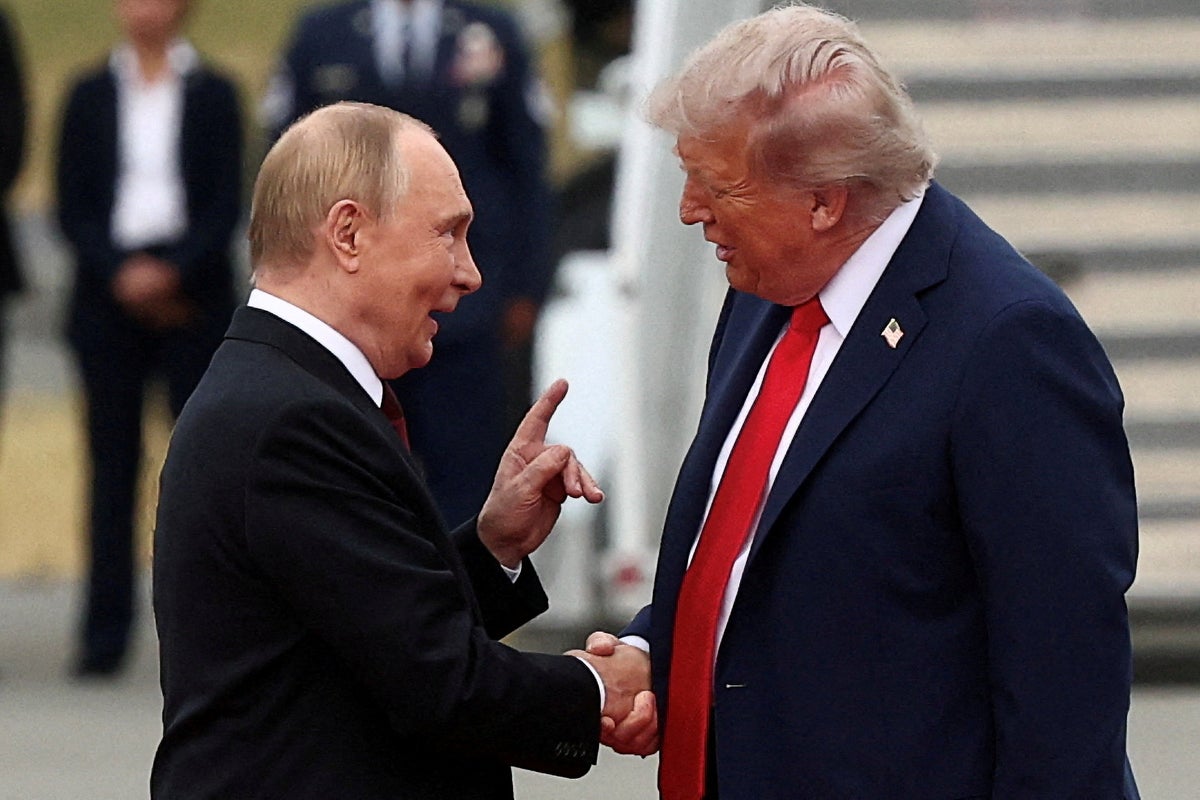
With Alaska behind him, Donald Trump is stepping back into a complex political landscape as he returns to the White House this week. His recent summit with Vladimir Putin has concluded, but the implications of that meeting continue to ripple through the international community. On Friday, the U.S. welcomed the Russian leader with what many saw as an over-the-top gesture, even as he was accused of being a war criminal. The event in Anchorage, meant to discuss peace talks on Ukraine, notably excluded any Ukrainian representatives.
Trump’s return to Washington comes after he publicly reversed his earlier call for a ceasefire and reportedly supported a Russian demand for Ukraine to cede the entire Donbas region, including areas currently under Ukrainian control. This shift has raised concerns among allies and critics alike, especially as Trump now faces a coalition of European leaders who are determined to ensure that any agreement involving Ukraine includes Kyiv’s direct participation.
This group of European leaders, often referred to as the “coalition of the willing,” has shown strong support for Ukraine and is resolute in its stance that no peace deal should be made without Kyiv’s approval. The president's previous interactions with Ukrainian President Volodymyr Zelensky have been tense, with one notable incident involving a near-shouting match during their last Oval Office meeting. However, there are signs that Zelensky’s allies aim to avoid such confrontations and instead focus on influencing Trump through more amicable channels.
European leaders are also pushing for Ukrainian officials to be directly involved in any peace discussions with Russia, a point that had previously seen some progress in May, only for Russia to delay and hesitate. The size of the delegation heading to Washington on Monday suggests that Zelensky is aiming to make a strong statement. Alongside the Ukrainian leader will be British Prime Minister Sir Keir Starmer, Finnish President Alexander Stubb, German Chancellor Friedrich Merz, French President Emmanuel Macron, Italian Prime Minister Giorgia Meloni, EU President Ursula von der Leyen, and NATO Secretary-General Mark Rutte.
Each member of this group has cultivated friendly relations with Trump, except for Zelensky, who had a tense encounter with the U.S. president during his visit in February. Publicly, these leaders expressed optimism about the effects of Trump’s summit, with Starmer stating that it brought them closer to ending Russia's illegal war in Ukraine.
Despite the positive public statements, there are underlying concerns. Critics argue that the summit may have been a setback for Ukraine and Europe. Senator Chris Van Hollen, a Democrat, criticized the red carpet treatment given to Putin and noted that no ceasefire or immediate meeting between Putin and Zelensky was achieved.
U.S. officials are likely to frame any news of Putin’s openness to a U.S.-backed security agreement as a win for Ukraine. However, there remains a significant gap between what Putin and the Ukrainian government are willing to accept, and little progress has been made due to Trump’s reluctance to use leverage against Putin.
Zelensky has emphasized the need for reliable and long-term security guarantees, involving both Europe and the U.S. He has made it clear that any territorial issues must be discussed with Ukraine’s participation, and no decision on such matters can be made without their input.
Some had hoped for the use of leverage after Trump’s statements suggested he no longer believed Putin’s claims of wanting an end to the conflict. There were indications that Trump might impose sanctions on the Russian government. However, this progress seems to have stalled, leaving European leaders to rely on figures like Starmer and Stubb to convince Trump that Russia’s demands for the full seizure of the Donbas region are not in Ukraine’s best interest.
On Sunday, Secretary of State Marco Rubio stated that Trump’s position on whether Putin was serious had not changed, offering some hope that the U.S. president could be persuaded to see the risks of ceding further territory to Russia. Despite these efforts, the path forward remains uncertain, with the stakes for Ukraine and the broader international community remaining high.

Post a Comment for "Trump's Critics Claim Putin Flattered Him at Alaska Summit; Europe Aims to Follow Suit"
Post a Comment