Trump's Controversial Nominee Confirmed as Federal Judge
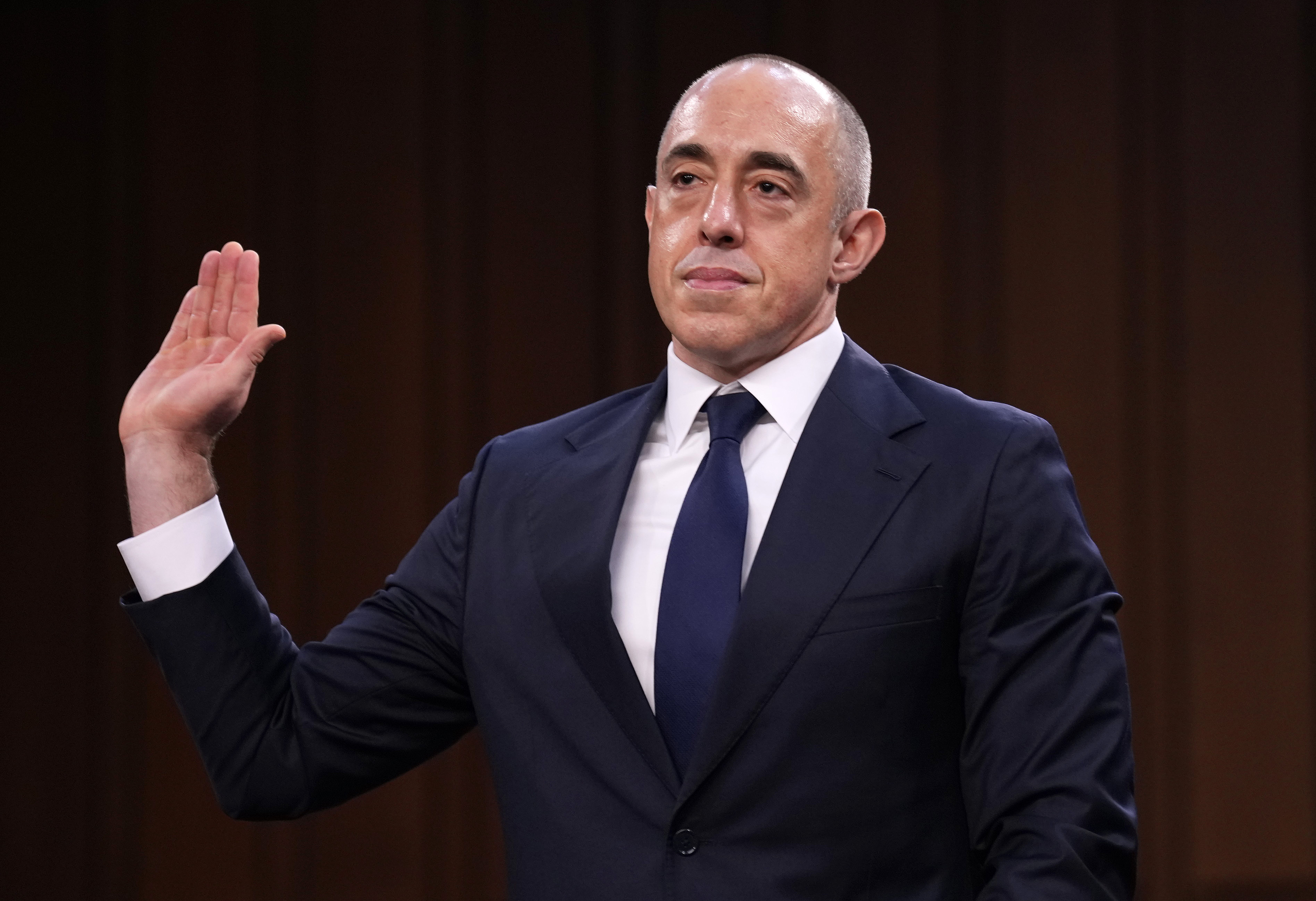
Confirmation of Emil Bove as Federal Appeals Court Judge
The U.S. Senate made a historic decision on Tuesday night, voting to confirm Emil Bove as a federal appeals court judge. This vote marked the end of a highly contentious confirmation process that drew significant attention from both political and legal circles. Bove, who served as a top Justice Department official and was previously an attorney for former President Donald Trump, faced allegations from three whistleblowers claiming he prioritized the president’s agenda over legal principles.
The final vote was 50-49, with most senators voting along party lines. Notably, two Republican senators, Lisa Murkowski of Alaska and Susan Collins of Maine, joined Democrats in opposing Bove’s nomination. Meanwhile, Senator Bill Hagerty of Tennessee was absent and did not cast a vote.
Bove has been one of the most controversial nominees among the 15 judges nominated by Trump during his second term. Senate Democrats and the whistleblowers have raised concerns about his suitability for a judicial role, arguing that he may not be able to make impartial decisions without political influence.
Background on Bove's Nomination
Emil Bove was formally nominated by the president in June to serve on the U.S. Court of Appeals for the 3rd Circuit, which covers Pennsylvania, New Jersey, Delaware, and the Virgin Islands. His nomination came with a faster timeline than usual, prompting criticism from Democrats who claimed the expedited process limited adequate debate. In response, some Democrats walked out of a hearing when Republicans refused to allow more discussion.
Hundreds of former prosecutors expressed their concerns through a letter urging the Senate to reject Bove’s nomination, calling him “the worst conceivable nominee.” Bove has played a key role in the Trump administration’s efforts to remove career prosecutors and develop its legal strategy on immigration. Two whistleblowers alleged that he instructed subordinates to potentially ignore court orders that could hinder Trump’s plans to deport millions of undocumented immigrants.
One whistleblower, Erez Reuveni, who was fired from the Justice Department in April, publicly shared his account of these interactions. A third whistleblower provided evidence to lawmakers, suggesting that Bove misled them during his confirmation hearing regarding his handling of the dismissal of public corruption charges against New York Mayor Eric Adams. This led to the removal of prosecutors in the U.S. attorney’s office in the Southern District of New York and the Justice Department’s public integrity section.
Concerns from Senators and Whistleblowers
Senate Minority Leader Charles E. Schumer (D-New York) criticized the confirmation, calling it a “dark day” and stating that Bove’s alleged dishonesty disqualifies him from becoming a federal judge. “Since it seems very likely Mr. Bove lied to senators, he never should become a federal judge,” Schumer said after the vote.
Senator Susan Collins expressed her concerns about Bove’s political background and actions during his time at the Justice Department. She stated that his record led her to conclude he would not serve as an impartial jurist.
Other Republicans, however, were not swayed by the accusations. Senator Thom Tillis of North Carolina, who previously opposed another Trump nominee due to his support for pro-Trump rioters, said he was not convinced by the claims against Bove. He emphasized the importance of following proper committee procedures and noted that the third whistleblower had not shared evidence with the committee earlier.
“I’m not going to do it as a one-off,” Tillis said before the vote. “I think we have to follow the committee process and make sure that whistleblower has at least attempted to reach out and have a meeting with the committee staff or the chair.”
Conclusion
The confirmation of Emil Bove has sparked intense debate about the balance between political loyalty and judicial impartiality. While some see his appointment as a step forward, others view it as a troubling precedent. The controversy surrounding Bove highlights the complex interplay between politics and the judiciary, raising important questions about the qualifications and integrity required for such a critical role.

Post a Comment for "Trump's Controversial Nominee Confirmed as Federal Judge"
Post a Comment