Trump's Bid to End Birthright Citizenship Deemed Unconstitutional by Appeals Court
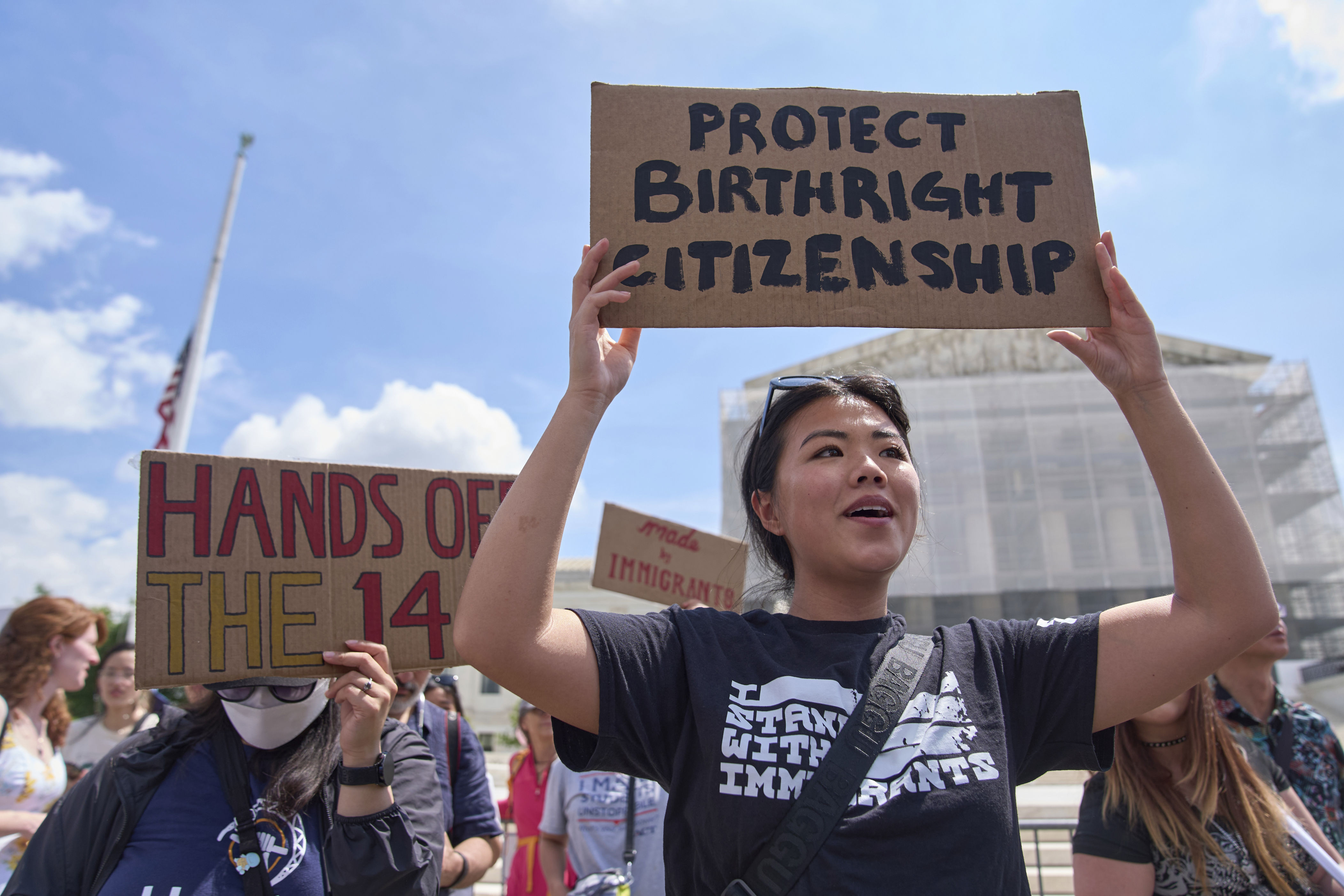
Federal Appeals Court Rules Against Trump’s Birthright Citizenship Order
A federal appeals court has ruled that President Donald Trump’s executive order aimed at ending birthright citizenship is unconstitutional. This decision, made by a three-judge panel of the 9th U.S. Circuit Court of Appeals, upholds a lower court ruling that prevented the enforcement of the order across the entire country.
The ruling comes after a similar decision by a federal judge in New Hampshire, which also blocked the implementation of the controversial policy. The case now moves one step closer to being reviewed by the Supreme Court, potentially leading to a definitive resolution on the matter.
The 9th Circuit's decision ensures that the Trump administration cannot enforce an order that would deny U.S. citizenship to children born to individuals who are in the country illegally or temporarily. The majority opinion emphasized that the executive order’s proposed interpretation of citizenship was unconstitutional, agreeing with the findings of U.S. District Judge John C. Coughenour from Seattle.
Judge Coughenour had previously ruled against the administration’s attempt to change the long-standing principle of birthright citizenship, criticizing what he described as a political effort to bypass constitutional protections. His decision was upheld by the 9th Circuit, reinforcing the legal stance that such changes require legislative action rather than executive decree.
Despite the ruling, the White House and Justice Department have not yet issued any official comments on the decision. However, the Supreme Court has recently limited the power of lower courts to issue nationwide injunctions, which typically apply to all states. This restriction has been a point of contention in several high-profile cases.
In this instance, the 9th Circuit found that the case falls under an exception to the Supreme Court’s restrictions. The states involved—Washington, Arizona, Illinois, and Oregon—argued that a nationwide injunction was necessary to prevent inconsistencies in the application of birthright citizenship laws across different regions of the country.
Judges Michael Hawkins and Ronald Gould, both appointed by former President Bill Clinton, wrote that the district court did not overstep its authority in issuing a universal injunction. They emphasized the need for complete relief to protect the interests of the states involved.
However, Judge Patrick Bumatay, who was appointed by President Trump, dissented from the majority opinion. He argued that the states do not have the legal standing to challenge the executive order and expressed skepticism about the use of universal injunctions. Bumatay did not address whether ending birthright citizenship would be constitutional, focusing instead on procedural concerns.
The Citizenship Clause of the 14th Amendment states that anyone born or naturalized in the United States, and subject to its jurisdiction, is a citizen. However, Justice Department attorneys have interpreted the phrase “subject to United States jurisdiction” as meaning that citizenship is not automatically granted based solely on birth location.
The states challenging the order argue that this interpretation ignores the clear language of the 14th Amendment and the precedent set by a landmark 1898 Supreme Court case. In that case, the Court ruled that a child born in San Francisco to Chinese parents was a citizen due to his birth on American soil.
Trump’s executive order claimed that children born in the U.S. would not be citizens if their mothers lacked legal immigration status or were in the country temporarily, and if their fathers were not U.S. citizens or lawful permanent residents. At least nine lawsuits have been filed across the country to challenge this policy, highlighting the ongoing legal and political debate over birthright citizenship.

Post a Comment for "Trump's Bid to End Birthright Citizenship Deemed Unconstitutional by Appeals Court"
Post a Comment