Trump's Bid to End Birthright Citizenship Deemed Unconstitutional, Blocked by Appeals Court
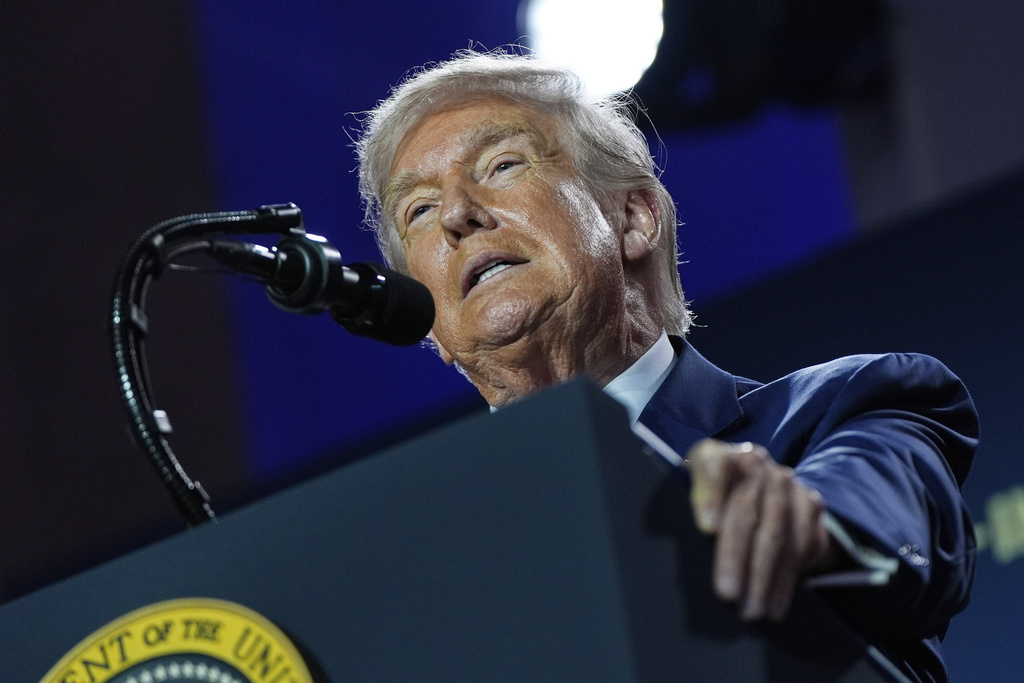
Federal Appeals Court Rules Against Trump's Birthright Citizenship Order
A federal appeals court in San Francisco has ruled that President Donald Trump’s executive order aimed at ending birthright citizenship is unconstitutional. This decision aligns with a previous ruling by a lower court that halted the enforcement of the order across the entire country.
The ruling was issued by a three-judge panel from the 9th U.S. Circuit Court of Appeals. It comes after a federal judge in New Hampshire also blocked the plan, marking the first time an appeals court has addressed the issue. The case now moves closer to being reviewed by the Supreme Court, potentially leading to a swift resolution.
The 9th Circuit’s decision maintains a block on the Trump administration’s attempt to deny citizenship to children born to individuals who are in the United States illegally or temporarily. The majority opinion stated that the executive order’s interpretation of denying citizenship to many people born in the U.S. is unconstitutional. They agreed with the conclusion made by the district court.
This ruling upholds a prior decision by U.S. District Judge John C. Coughenour in Seattle, who had previously blocked the order and criticized the administration for trying to bypass the Constitution for political purposes. Judge Coughenour was the first to challenge the executive order.
The White House and Justice Department have not yet responded to requests for comment on the ruling.
Legal Context and National Implications
The Supreme Court has recently limited the power of lower court judges to issue nationwide injunctions, which are orders that affect the entire country. However, the 9th Circuit found that this particular case falls under an exception outlined by the justices. The case was initiated by a group of states arguing that a nationwide order is necessary to prevent confusion if birthright citizenship only applied in part of the country.
Judge Michael Hawkins and Ronald Gould, both appointed by President Bill Clinton, wrote that the district court did not abuse its discretion in issuing a universal injunction to provide complete relief to the states. They emphasized the importance of addressing the potential problems that could arise from inconsistent application of the law.
In contrast, Judge Patrick Bumatay, who was appointed by Trump, dissented. He argued that the states do not have the legal standing to sue. He expressed skepticism about requests for universal relief, noting that such requests may be a way to circumvent the limitations on nationwide injunctions. However, he did not address whether ending birthright citizenship would be constitutional.
Constitutional Debate Over Birthright Citizenship
The Citizenship Clause of the 14th Amendment states that all people born or naturalized in the United States, and subject to U.S. jurisdiction, are citizens. However, Justice Department attorneys argue that the phrase “subject to United States jurisdiction” means that citizenship is not automatically granted based solely on birth location.
The states involved in the lawsuit—Washington, Arizona, Illinois, and Oregon—argue that this interpretation ignores the plain language of the Citizenship Clause. They also reference a landmark 1898 Supreme Court case where the court ruled that a child born in San Francisco to Chinese parents was a citizen by virtue of being born on American soil.
Trump’s executive order claimed that a child born in the U.S. is not a citizen if the mother does not have legal immigration status or is in the country legally but temporarily, and the father is not a U.S. citizen or lawful permanent resident. At least nine lawsuits challenging the order have been filed across the United States.
Ongoing Legal Challenges
The debate over birthright citizenship continues to unfold in the courts, with multiple legal challenges seeking to determine the scope of the 14th Amendment. As the case moves forward, it remains to be seen how the Supreme Court will ultimately rule on the issue. For now, the 9th Circuit’s decision ensures that the current interpretation of birthright citizenship remains in effect while the legal battle continues.

Post a Comment for "Trump's Bid to End Birthright Citizenship Deemed Unconstitutional, Blocked by Appeals Court"
Post a Comment