Trump's Attack on the UN Contradicts American Public Sentiment
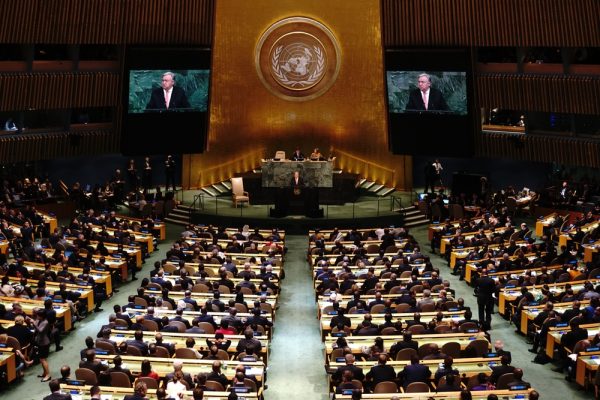
The Evolution of U.S. Policy Toward the United Nations
Since entering American politics, Donald Trump has consistently pursued a foreign policy that challenges the principles of international cooperation and multilateralism. His administration’s actions have significantly impacted the United Nations, an organization founded on the ideals of global unity, peace, and equitable treatment for all nations.
The United Nations was established with a mission to promote peace, prevent conflict, and foster social progress worldwide. Its founding charter emphasizes the importance of equal rights among nations, regardless of size. However, Trump’s political philosophy has been fundamentally different, emphasizing a nationalist approach known as "America First."
During his 2016 presidential campaign, Trump made it clear that his administration would prioritize American interests above all else. In his inaugural address in 2017, he reiterated this commitment by declaring, “From this day forward, it’s going to be only America first.” This rhetoric became a central theme of his presidency, often accompanied by strong displays of patriotism that resonated with his base.
Dismantling International Institutions
Under Trump's leadership, the U.S. government took several steps to weaken key components of the United Nations and other international organizations. These actions included withdrawing from the Paris Climate Agreement, the World Health Organization (WHO), the UN Human Rights Council, and UNESCO. Additionally, the U.S. opposed the Global Compact on Refugees, suspended funding for the UN Population Fund, and imposed sanctions on the International Criminal Court (ICC).
Despite these efforts, many of these policies were reversed during the Biden administration, which sought to re-engage with the international community. However, with Trump's return to the presidency in 2020, the U.S. once again adopted a more aggressive stance toward the United Nations.
Resuming Nationalist Policies
In January 2025, U.S. Representative Elise Stefanik, nominated as the U.S. ambassador to the United Nations, expressed strong criticism of the organization. She argued that U.S. tax dollars should not support entities that do not align with American interests. Senator Jim Risch, chair of the Senate Foreign Relations Committee, echoed these sentiments, calling for a reevaluation of every UN agency to determine its value to the U.S.
Under Trump's direction, the U.S. government withdrew from the WHO and the UN Human Rights Council, refused to participate in the UN Relief and Works Agency, and announced plans to withdraw from UNESCO. New sanctions were also imposed on the ICC, further straining U.S.-UN relations.
Financial Impact on the United Nations
The Trump administration also targeted the financial stability of the United Nations. In July 2025, legislation sponsored by the administration and passed by the Republican-controlled Congress reduced funding for the organization by $1 billion. This move had significant consequences for various UN programs, including those focused on humanitarian aid, environmental protection, and human rights.
Additionally, the proposed fiscal 2026 budget aimed to halt payments for UN Peacekeeping missions and reduce other contributions. Despite the relatively small amount of funding the U.S. provides—$820 million annually for the regular UN budget—the country now owes over $1.5 billion to the regular budget and an additional $1.3 billion to the Peacekeeping budget.
Public Opinion and the Future of the United Nations
Despite the Trump administration’s efforts, public opinion in the U.S. remains largely supportive of the United Nations. A Pew Research Center poll in late March 2025 found that 63% of Americans believed their country benefited from UN membership. Similarly, a University of Maryland survey in June 2025 revealed that 84% of respondents supported continued or increased collaboration with the UN.
This support extended to specific agencies, with high percentages of Americans favoring UNICEF, UN Peacekeeping, the World Food Program, the WHO, and the UN Environment Program. Even regarding the ICC, which the U.S. has never joined, 62% of Americans expressed approval.
Conclusion
While Trump's "America First" approach may resonate with his supporters, it contrasts sharply with the broader American public's recognition of the need for global cooperation. As the U.S. continues to navigate its role on the world stage, the future of the United Nations remains a critical issue.

Post a Comment for "Trump's Attack on the UN Contradicts American Public Sentiment"
Post a Comment