Trump's AI Push for Allies, Deregulation Move
U.S. Strategy to Boost AI Leadership
The Trump administration has unveiled a comprehensive artificial intelligence (AI) blueprint aimed at strengthening America’s position in the global AI race, particularly against China. This plan includes measures to loosen environmental regulations and significantly expand AI exports to allied nations, with the goal of maintaining a technological edge.
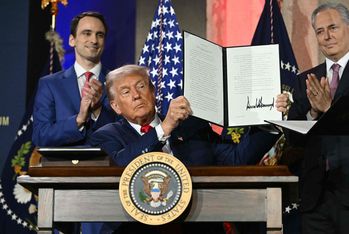
During a speech at the “Winning the AI Race” AI Summit, President Donald Trump emphasized the importance of this initiative, stating that the competition between the U.S. and China will shape the 21st century. “America is the country that started the AI race. And as President of the United States, I'm here today to declare that America is going to win it,” he declared.
The plan features over 90 recommendations, including the export of U.S. AI software and hardware to other countries. It also proposes a unified federal standard for AI regulation, rather than allowing each state to impose its own rules. This approach contrasts sharply with the previous administration's strategy, which placed strict limits on AI chip exports to prevent their misuse by adversaries.
Export Expansion and Industry Collaboration
Michael Kratsios, head of the Office of Science and Technology Policy, highlighted that the departments of Commerce and State will collaborate with the industry to deliver secure full-stack AI export packages. These packages would include hardware models, software applications, and standards tailored for American allies around the world.
This expansion in AI exports could benefit major tech companies such as Nvidia, AMD, Alphabet’s Google, Microsoft, OpenAI, and Meta. The plan aims to support these firms in their global operations while ensuring that U.S. technology remains competitive.
In addition to the blueprint, Trump signed three executive orders that incorporate elements of the plan. These orders focus on relaxing environmental rules, setting guidelines for chip exports, and addressing political bias in AI technologies.
Regulatory Shifts and National Security Concerns
The previous administration had imposed restrictions on AI chip exports to China, fearing that these chips could be used to enhance China’s military capabilities. However, Trump rescinded these policies, arguing that they hindered American competitiveness. He also revoked the AI diffusion rule, which limited the amount of AI computing capacity certain countries could access through U.S. chip imports.
Vice President JD Vance emphasized the need for the U.S. to avoid self-imposed limitations that could allow China to catch up. “If we're regulating ourselves to death and allowing the Chinese to catch up to us, that's not something [...] we should blame the Chinese for [...], that is something we should blame our own leaders for, for having stupid policies that allow other countries to catch up with America,” he said.
Despite these changes, the plan does not address national security concerns regarding Nvidia’s H20 chip, which powers AI models and was designed to bypass previous restrictions on Chinese access. Although Trump initially blocked the export of the H20 to China, he later allowed sales to resume, drawing criticism from some Republicans.
Environmental and Infrastructure Measures
The AI plan also includes provisions to accelerate the construction of data centers by easing environmental regulations. The administration plans to utilize federal land to expedite development projects, including power supply infrastructure. New exclusions for data centers under the National Environmental Policy Act are being considered, along with streamlined permits under the Clean Water Act.
These measures aim to meet the growing demand for electricity driven by the rapid expansion of AI and cloud computing. U.S. power demand has reached record highs this year after years of stagnation, highlighting the need for increased energy capacity.
International Partnerships and Future Steps
The export expansion aligns with recent agreements that granted the United Arab Emirates greater access to advanced AI chips from the U.S. This move reflects a broader strategy to strengthen alliances and ensure that U.S. technology remains accessible to trusted partners.
Trump has indicated that additional actions will be taken in the coming weeks to support Big Tech companies in securing the energy needed for expanding AI infrastructure. As the U.S. continues to navigate the challenges of AI development, the focus remains on maintaining a leadership role in this transformative technology.

Post a Comment for "Trump's AI Push for Allies, Deregulation Move"
Post a Comment