Trump Warns New Sanctions Loom for Russia Oil Buyers, Including China
Escalating Tensions: Trump’s Tariff Strategy and Global Reactions
US President Donald Trump has taken a bold step in his ongoing effort to pressure countries that continue to buy Russian energy products, particularly in the context of the war in Ukraine. On Wednesday, he announced a 25% tariff on India, which is set to go into effect the following day. This move signals a broader strategy aimed at isolating Russia economically and forcing other nations to choose sides.
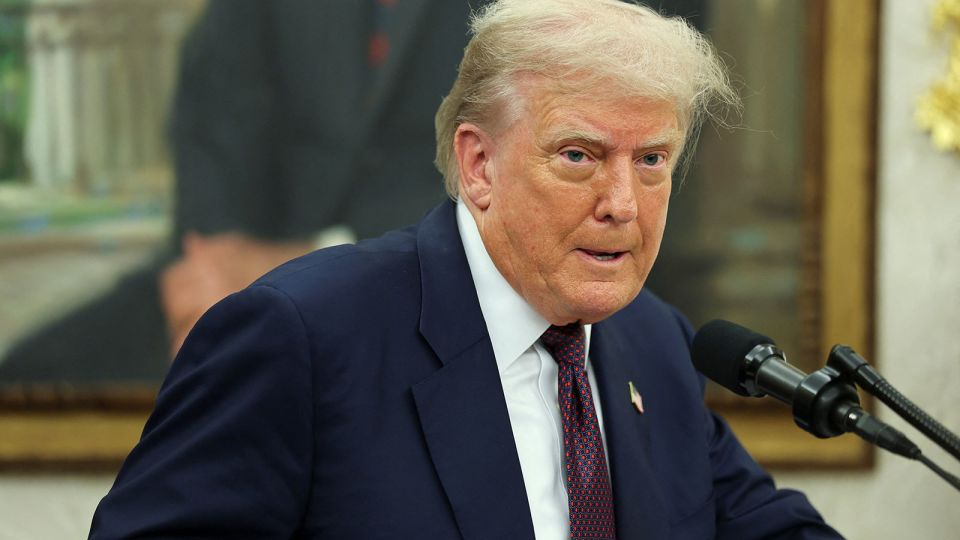
“You’re going to see a lot more,” Trump stated during a press briefing in the Oval Office. “This is just a taste. You’re going to see so much secondary sanctions.”
The tariffs are part of a larger plan to weaken Russia’s economy by cutting off its access to international markets. Trump had previously set a deadline for Russian President Vladimir Putin to end the conflict, but as negotiations have stalled, the US has turned to economic measures as a tool of influence.
A New Approach to Economic Pressure
Trump's use of tariffs has been a defining feature of his administration, often used as a means to protect American industries or push foreign governments to align with US interests. The current approach, however, introduces a new dimension—secondary tariffs. These penalties are designed to target third-party countries that continue to trade with Russia, creating a difficult choice between maintaining economic ties with an adversary or facing further US consequences.
While Trump expressed optimism about recent diplomatic efforts, including a meeting between Putin and US envoy Steve Witkoff, he suggested that these discussions were not sufficient to prevent the imposition of new sanctions. This indicates that the administration is prepared to take stronger action if necessary.
China: A Key Player in the Energy Market
China remains the largest buyer of Russian energy products, and Trump has been engaged in negotiations for a new trade deal with Beijing. Despite this, the president did not rule out applying similar tariffs to China, even though it could jeopardize the ongoing talks.
“I don’t know yet,” Trump said when asked about potential actions against China. “One of them could be China.”
Chinese officials have responded with firmness, emphasizing that they will act in accordance with their national interests. Foreign ministry spokesperson Guo Jiakun stated, “Tariff wars have no winners.” He also criticized what he called “coercion” and affirmed that China would protect its sovereignty and development interests.
The US and China are currently working to extend a trade truce that has prevented the imposition of triple-digit tariffs. However, the deadline for this agreement is approaching, with the current arrangement set to expire on August 12.
India’s Response and Strategic Positioning
India, the world’s fifth-largest economy, has become a focal point of Trump’s tariff strategy. In addition to the 25% tariff scheduled to take effect on Thursday, the US has also announced a second 25% tariff that will come into play later this month. This comes as a response to India’s continued imports of Russian oil and gas.
India has defended its position, stating that its energy purchases are based on market conditions and aimed at ensuring energy security for its vast population. A statement from India’s Ministry of External Affairs emphasized that the country’s actions are consistent with those of other nations acting in their own national interest.
“We have already made clear our position on these issues,” the statement read. “It is therefore extremely unfortunate that the US should choose to impose additional tariffs on India for actions that several other countries are also taking in their own national interest.”
Broader Implications for Global Trade
Trump’s tariff threats have intensified tensions between the US and key trading partners, signaling a shift toward more aggressive economic diplomacy. As the administration continues to leverage tariffs as a tool of influence, the global trade landscape is becoming increasingly complex. Countries like China and India are now forced to navigate a delicate balance between economic interests and geopolitical pressures.
With the situation evolving rapidly, the coming months will be critical in determining how these strategies shape international relations and economic policies.

Post a Comment for "Trump Warns New Sanctions Loom for Russia Oil Buyers, Including China"
Post a Comment