Trump unveils AI strategy backed by Silicon Valley leaders
Trump's AI Action Plan: A Focus on Global Dominance and Regulatory Shifts
President Donald Trump has introduced a comprehensive strategy aimed at solidifying America’s position as a global leader in artificial intelligence. This initiative, known as the "AI Action Plan," emphasizes the need to remove regulatory barriers that could hinder the development and deployment of AI technologies both domestically and internationally.
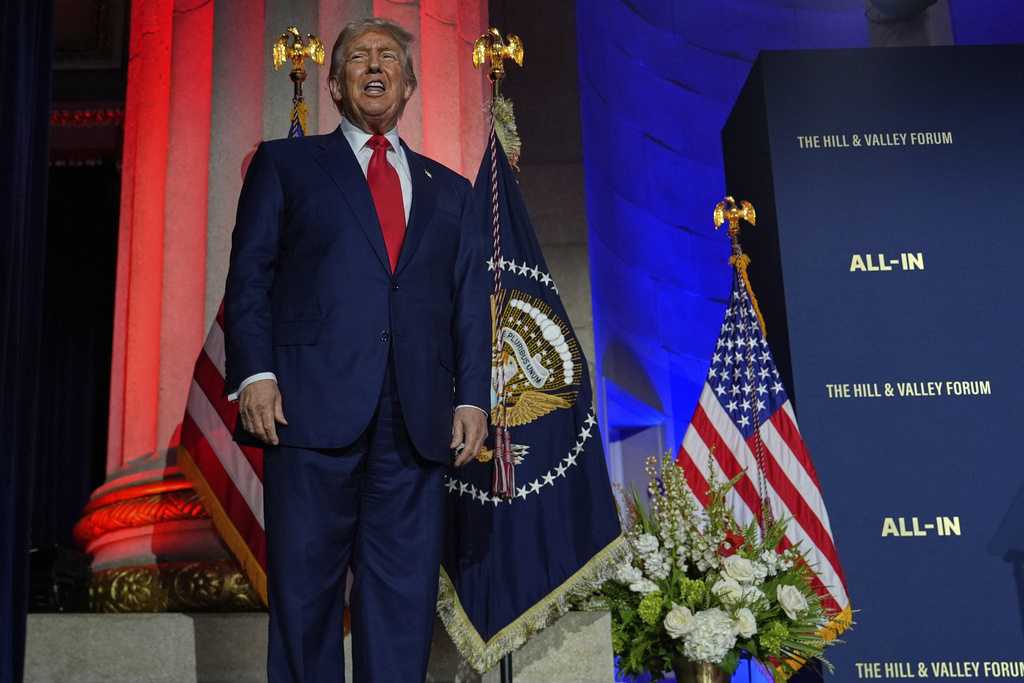
The plan aligns with the interests of tech industry lobbyists and Silicon Valley investors who have long supported Trump. During a public event co-hosted by the bipartisan Hill and Valley Forum and the "All-In" podcast, Trump emphasized the importance of fostering innovation without unnecessary bureaucratic hurdles. He stated, “America must once again be a country where innovators are rewarded with a green light, not strangled with red tape.”
Key Components of the AI Action Plan
One of the central elements of the plan is the acceleration of AI technology sales abroad. It also aims to simplify the construction of data centers, which are essential for developing and running AI products. These facilities require significant energy, prompting discussions about environmental regulations and their impact on AI growth.
Trump signed three executive orders to implement the plan, focusing on fast-tracking AI construction projects, expanding U.S. tech exports, and addressing what he refers to as "woke" AI. The plan includes measures to ensure that government contracts with tech companies prioritize systems that are free from ideological bias. However, it does not specify which values should be considered fundamental.
Environmental Regulations and Energy Production
A major goal of the plan is to streamline the permitting process for data centers and reduce environmental regulations. It criticizes what it calls "radical climate dogma" and suggests lifting restrictions related to clean air and water laws. Trump has previously linked AI's high energy demands with his push to expand U.S. energy sources, including gas, coal, and nuclear power.
“We will be adding at least as much electric capacity as China,” Trump said during the event. “Every company will be given the right to build their own power plant.” This approach has raised concerns among environmental advocates, especially as the AI building boom increases demand for fossil fuels, contributing to global warming.
Industry Response and Criticisms
The tech industry has been pushing for easier permitting rules to connect computing facilities to power sources. However, the AI construction boom has also sparked debates about the environmental impact of increased fossil fuel production. In response, United Nations Secretary-General Antonio Guterres called for tech firms to power data centers entirely with renewable energy by 2030.
The plan also seeks to discourage states from imposing strict AI regulations. It encourages federal agencies to avoid funding states with burdensome regulations, advocating for a single, common-sense federal standard that supersedes state laws.
Diverging Opinions Among Tech Leaders
There are differing opinions within the tech community regarding the regulation of AI. While some, like venture capitalist Marc Andreessen, support an "accelerationist" approach with minimal regulation, others, such as David Sacks, advocate for a more balanced techno-realistic perspective. Sacks argued, “Technology is going to happen. Trying to stop it is like ordering the tides to stop. If we don't do it, somebody else will.”
Opposition and Concerns
Despite the plan's focus on innovation, there is significant opposition from various groups, including labor unions, environmental justice organizations, and privacy advocates. Over 100 groups have signed a resolution opposing Trump's industry-driven AI policy, calling for a "People's AI Action Plan" that prioritizes the American people.
J.B. Branch, an advocate for Big Tech accountability, criticized the plan as a "sellout." He argued that it benefits tech giants at the expense of everyday Americans, potentially leading to higher electricity bills to subsidize discounted power for AI data centers.
Conclusion
As the debate over AI regulation continues, Trump's plan highlights the complex interplay between innovation, environmental concerns, and political ideology. While the focus on global dominance and reduced regulatory barriers may appeal to certain stakeholders, it raises critical questions about the future of AI in the context of societal and environmental responsibility.

Post a Comment for "Trump unveils AI strategy backed by Silicon Valley leaders"
Post a Comment