Trump ramps up pressure on Zelensky before White House visit
The Escalating Pressure on Ukraine and the Complex Dynamics of Peace Talks
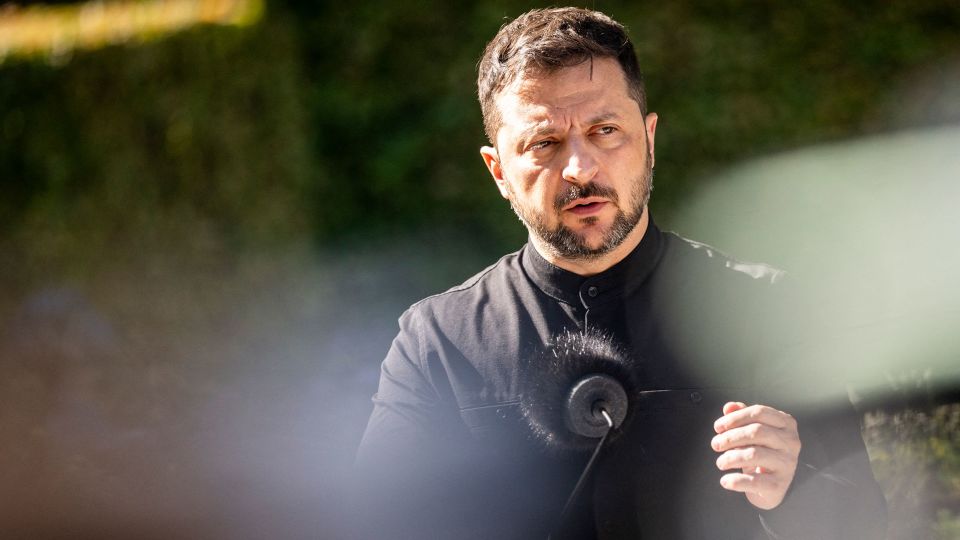
President Donald Trump is intensifying pressure on Ukraine to agree to terms that could end the war with Russia, drawing parallels to Moscow’s rhetoric. This comes just two days after his meeting with Russian President Vladimir Putin. Trump has scheduled a summit on Monday with Ukrainian President Volodymyr Zelensky and a group of European leaders, marking one of the most significant moments in efforts to resolve the conflict that began with Russia's 2022 invasion.
The White House meeting holds immense importance for European security and the Western alliance since the Cold War. It will test Trump’s sincerity and his ability to lead both Ukraine and Russia toward a resolution that likely won’t satisfy either side. Following his summit with Putin in Alaska, which drew widespread criticism outside the administration and among supporters, Trump offered several symbolic and procedural concessions to the Russian leader without clear public commitments in return.
Steve Witkoff, Trump’s envoy, claimed on Sunday that Russia had softened its stance on post-war Western security arrangements for Ukraine and was open to making significant land swaps. “We agreed to robust security guarantees that I would describe as game-changing,” he told Jake Tapper on “State of the Union.” However, differing perceptions of the Alaska summit will shape the upcoming White House talks.
European officials have privately indicated that Putin called for Ukraine to cede parts of the strategically vital Donbas region, which Russian forces have failed to capture over three and a half years of fighting. This demand is seen as nearly impossible for Zelensky to accept due to political, constitutional, economic, and strategic reasons. His forces have suffered heavy losses defending areas considered critical to preventing future Russian aggression.
No one outside the U.S. and Russian delegations knows exactly what transpired in Alaska. Trump’s invitation to European leaders and his push for peace should not be judged before the crucial meetings take place. Despite this, Trump claimed on social media that “great progress” was being made.
However, the president’s warning to Ukraine after the summit with Putin has raised concerns. “Make a deal,” Trump said on Fox News, emphasizing that Russia is a powerful nation. On Truth Social, he echoed Russia’s stance by suggesting that Zelensky’s country cannot join NATO. This has prompted worry in Kyiv and other European capitals that Trump might try to impose Putin’s vision of a settlement on Zelensky, potentially leading to blame if the Ukrainian leader refuses.
This dynamic is central to Monday’s White House meeting, which could become a televised spectacle if Trump opens it to cameras. The question remains: Will Trump act as a broker who brings Ukraine, its European allies, and Russia to a point where they can accept painful concessions despite their animosity? Or does his acceptance of Putin’s opposition to an immediate ceasefire and delay in new U.S. sanctions on Moscow indicate a shift in support towards Russia?
Josh Rudolph, managing director and senior fellow at the German Marshall Fund, noted that Trump’s actions have shown that Putin, not the Ukrainians or Europeans, is unwilling to stop fighting without conditions like handing over more land than he has already illegally occupied. The key issue now is which side America is on.
Despite mistrust of Trump’s motives, the U.S. president remains a potential catalyst for any peace deal. While there’s little sign that Putin wants peace, U.S. pressure might be the only thing that could halt the conflict. Europe plays a major role in Ukraine’s security after any deal but lacks influence with Putin and cannot fulfill a promised peace enforcement mission without Trump’s support.
Speculation about Trump’s possible desire for a Nobel Peace Prize is irrelevant if he could somehow end the conflict fairly. However, U.S. support for Israel amid its occupation of Gaza under starvation conditions might disqualify him from the Nobel Committee’s consideration.
Zelensky’s arrival at the White House will bring back memories of his previous visit in February, where shocking footage of Trump and Vice President JD Vance berating him was broadcast. This time, his escort includes leaders from France, Germany, Britain, Italy, Finland, NATO, and the European Commission, seen as a protective measure.
Europe has far more at stake than Zelensky’s reputation. The possibility of Russia triumphing in Ukraine and gaining vindication for its illegal invasion poses the biggest geopolitical threat to Europe since the fall of the Soviet Union.
Fiona Hill, a Russia expert during Trump’s first term, emphasized that Europe must have an equal say in the process, as it involves the future of European security. The challenge lies in aligning the interests of Trump, the Europeans, and Putin, as their goals may differ significantly.
Marco Rubio, Trump’s national security adviser, expressed skepticism about the progress made, noting that while some areas of agreement were identified, there remain significant disagreements. The path to a peace agreement is still long.
European leaders traveling to the White House include French President Emmanuel Macron, German Chancellor Friedrich Merz, Italian Prime Minister Giorgia Meloni, British Prime Minister Keir Starmer, Finnish President Alexander Stubb, NATO Secretary General Mark Rutte, and European Council President Ursula von der Leyen. Trump’s relationships with some of them, especially Meloni and Stubb, could influence the outcome.
The president’s mood will be critical, especially after media coverage of his lavish welcome for Putin. Europe’s influence is also in question, as Trump shifted from supporting a ceasefire to backing Russia’s stance on a full peace deal, which could allow more time for Russian forces to seize land.
Macron highlighted the need to learn from past experiences, particularly Russia’s tendency not to honor its commitments. Witkoff, however, viewed Trump’s acceptance of Putin’s ceasefire sequencing as a positive development.
Putin attempted to divide the allies during the Alaska talks, urging Kyiv and European capitals to perceive the discussions constructively. Witkoff pushed back against criticism, claiming that Putin had accepted a security guarantee similar to NATO’s Article 5 clause, though not linked to NATO itself.
Despite these claims, there are concerns that Trump might not honor NATO’s mutual defense clause if Russia attacks a member state near its borders. This could put him at odds with his political base, which shares his doubts about American protection of European allies and his desire to avoid foreign wars.
Conservative media has been supportive of Trump, portraying Zelensky as an obstacle to peace and a barrier to another Trump "win." Nonetheless, the image of Trump as a peacemaker resonates with his most loyal supporters.

Post a Comment for "Trump ramps up pressure on Zelensky before White House visit"
Post a Comment