Trump Pressures GOP Senator on Judicial Nominations
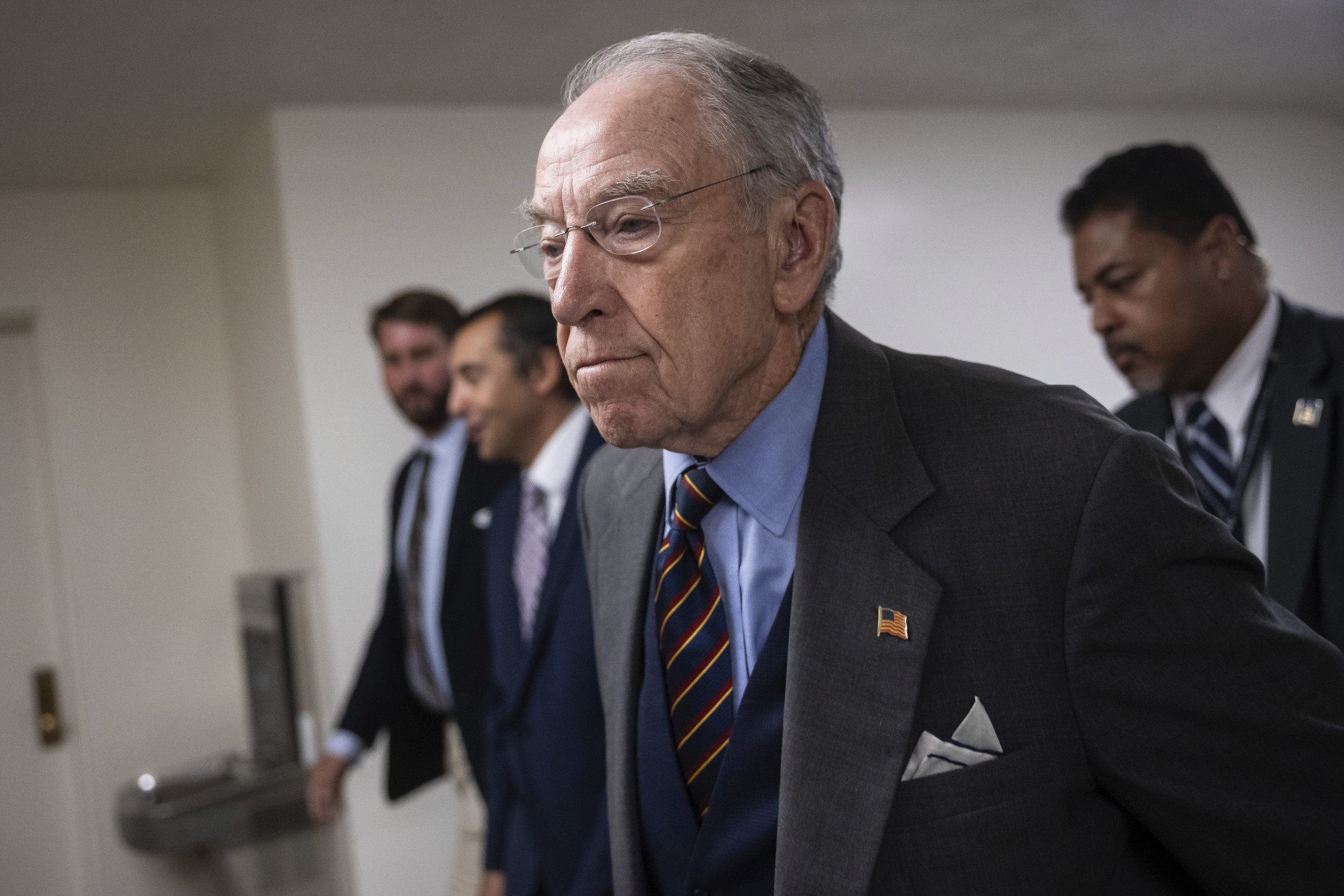
Trump Calls for End to Blue Slip Tradition in Judicial Appointments
Former President Donald Trump has publicly urged Senate Judiciary Committee Chair Chuck Grassley to abandon the "blue slip" tradition, which allows senators to object to presidential judicial appointments. In a recent post on Truth Social, Trump criticized the process, claiming it enabled "blue state" senators to block his conservative judges. He argued that Senate Majority Leader Mitch McConnell and others had previously disregarded the tradition, and he now wants Grassley to follow suit.
Trump's frustration stems from the slow pace of judicial confirmations during his second term. While he appointed 234 federal judges during his first term—including three Supreme Court justices and 54 appellate court judges—his second-term efforts have been significantly slower. Only three judges have been confirmed in the first six months of his second term. Additionally, several district court judges have ruled against his policies, further fueling his discontent.
Understanding the Blue Slip Process
The blue slip tradition is a long-standing Senate practice that gives home-state senators influence over the confirmation of federal judges and U.S. attorneys. When a nominee is proposed, the Senate Judiciary Committee sends a blue-colored form, known as a "blue slip," to the senator(s) from the nominee’s home state. These senators can approve or oppose the nomination by returning or withholding the form. While not legally binding, the practice has often allowed a single senator to block a nomination.
The process is rooted in the principle of senatorial courtesy, intended to ensure local input in federal appointments. However, it has become a point of contention, particularly when used for partisan obstruction. The enforcement of the blue slip tradition depends largely on the chair of the Judiciary Committee. Critics argue that the process is outdated and undemocratic, creating unnecessary delays and political gridlock. Supporters, however, maintain that it is an essential check that respects states' representation in federal appointments.
Trump's Criticism and Grassley's Stance
In his post, Trump accused Democrats of using the blue slip tradition to block Republican candidates. He claimed that the rule prevents him from appointing his preferred judges in states like California, New York, and New Jersey. However, he did not acknowledge that Republicans also hold similar power over Democratic nominees.
Trump urged Grassley to "have courage" and ignore the blue slip process, arguing that the tradition is unconstitutional and outdated. Grassley had previously relaxed the blue slip requirement during Trump's first term, allowing hearings for nominees even when home-state senators withheld approval. However, in April 2024, Grassley signaled a potential shift, stating that he would honor the blue slip tradition during Trump's second term. This change could complicate the confirmation process for many of Trump's judicial nominees.
Current Controversies and Next Steps
One of the most contentious nominations currently under consideration is Emil Bove, who is awaiting confirmation to the Third Circuit Court of Appeals. His nomination has faced strong opposition from home-state senators Cory Booker and Andy Kim, who withheld their blue slips. Despite this, the Senate Judiciary Committee advanced Bove earlier this month, prompting Democratic senators to walk out in protest.
Bove, who was Trump's former personal defense attorney, has faced allegations from a whistleblower that he encouraged Justice Department officials to defy a court order blocking Trump's mass deportation plans. He denies these claims.
As the Senate prepares for a final vote on Bove, Democrats are demanding a Department of Justice (DOJ) investigation into the allegations. A third whistleblower has also come forward, adding to the controversy surrounding the nomination.
Perspectives and Future Implications
Trump has continued to push for Grassley to break with tradition, calling on him to act "IMMEDIATELY" to prevent Democrats from mocking the Republican Party as weak. Grassley, however, has defended the blue slip tradition, emphasizing that it is meant to encourage consultation rather than serve as an ideological tool for obstruction.
The outcome of Bove's confirmation will likely set a precedent for future judicial appointments. With the political landscape shifting, the debate over the blue slip tradition is far from over. Whether Grassley will continue to support the process or align with Trump's calls for change remains to be seen.

Post a Comment for "Trump Pressures GOP Senator on Judicial Nominations"
Post a Comment