Trump Issues Executive Orders Against 'Woke' AI and Regulation
Trump's Executive Orders Target AI Development and Ideological Bias
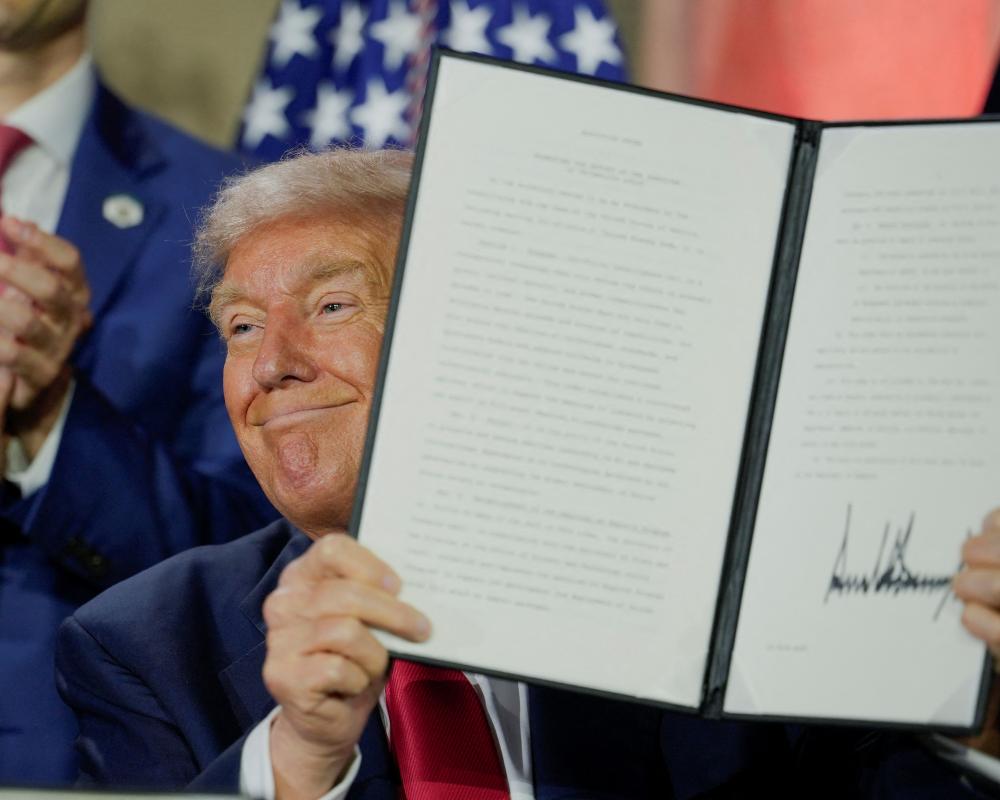
On Wednesday, former President Donald Trump signed a series of executive orders aimed at reshaping the landscape of artificial intelligence in the United States. These measures were presented as part of a broader strategy to position the country as a global leader in AI technology. Among the key directives was one that specifically targeted what the White House described as “woke” AI models—those allegedly influenced by progressive ideologies.
During an appearance at an AI summit in Washington, D.C., Trump criticized what he called “woke Marxist lunacy in the AI models.” He emphasized the need to eliminate such influences, declaring, “Once and for all, we are getting rid of woke. Is that OK?” The audience, composed largely of AI industry leaders, responded with loud applause. Trump also accused his predecessor, Joe Biden, of promoting “toxic diversity, equity and inclusion ideology” as a guiding principle in AI development, suggesting that this approach had hindered progress.
The new order mandates that any AI company receiving federal funding must ensure their models remain politically neutral and free from “ideological dogmas such as DEI.” This directive places pressure on an industry increasingly looking to collaborate with government agencies. It is part of a larger anti-diversity campaign that has extended to federal agencies, academic institutions, and even the military.
While the order states that the federal government should be cautious about regulating AI functionality in the private sector, it emphasizes that public procurement must avoid models that prioritize ideological agendas over truthfulness and accuracy. However, the criteria for determining political bias remain vague, raising concerns that the administration could use the order selectively to target companies it opposes.
Expediting AI Infrastructure and Exporting Innovation
In addition to the ideological focus, Trump’s executive orders include measures to expedite federal permitting for data center infrastructure and promote the export of American AI models. These actions align with the release of a 24-page “AI action plan” titled “Winning the Race,” which outlines the administration’s vision for securing U.S. dominance in artificial intelligence.
Trump described the AI competition as a critical test of national capacity, comparing it to the space race of the mid-20th century. He urged U.S. technology companies to “put America first,” emphasizing the need for domestic innovation and global leadership.
One of the more controversial aspects of the plan involved Trump’s critique of the term “artificial intelligence.” During remarks, he expressed frustration with the word “artificial,” stating, “I don’t like anything that’s artificial. So could we straighten that out, please? We should change the name. I actually mean that.” He suggested replacing the term with something more positive, calling AI “genius.”
Deregulation and Environmental Concerns
Another order signed by Trump focused on deregulating AI development, encouraging the construction of more data centers, and relaxing environmental protections that might slow down these projects. Data centers, essential for housing servers used in AI models, require significant amounts of water, energy, and produce greenhouse gas emissions. Environmental groups have raised concerns about the potential increase in air and noise pollution due to the expansion of such facilities.
Local communities have also pushed back against the construction of data centers, citing negative impacts on their environments. Despite these concerns, the orders emphasize the need for more energy infrastructure, a demand that many tech companies have long advocated for.
Geopolitical Implications and Industry Backlash
The Trump administration’s focus on AI is framed as a response to China’s growing influence in the field. Beijing has invested heavily in AI chips and data centers, aiming to become a global competitor. Chinese companies like DeepSeek have developed AI models that rival those from Silicon Valley.
However, the push against “woke” AI reflects broader conservative concerns about perceived liberal biases in technology. Republicans have long criticized tech companies for favoring progressive viewpoints and suppressing right-wing content. As generative AI becomes more prevalent, these criticisms have shifted from issues like search results and misinformation policies to concerns over chatbots and image generators.
Elon Musk, a vocal critic of AI bias, has pledged to make his xAI company’s Grok chatbot “anti-woke.” Although he and Trump have had a public falling out, Musk may benefit from the administration’s focus on controlling AI’s political outputs. Musk has claimed that Grok has been reworked to eliminate liberal bias, though the chatbot has faced controversy for posting white supremacist and antisemitic content.
Despite these incidents, xAI recently received up to $200 million in contracts from the Department of Defense to develop tools for the government. Other recipients included OpenAI, Anthropic, and Google, which have their own AI models.
Addressing Bias in AI
The debate over AI bias has led to significant turmoil in the industry. In 2020, Timnit Gebru, a co-lead of Google’s “ethical AI” team, was fired after expressing concerns about biases in the company’s AI models and a lack of diversity efforts. Google stated she resigned, but her departure sparked discussions about the challenges of addressing bias in AI systems.
Researchers have found that racial and gender biases persist in AI models, often reflecting existing societal prejudices. These biases can be embedded in the training data, which includes social media posts, news articles, and other media sources that may contain stereotypes or discriminatory content. Despite advancements in AI, these issues continue to raise concerns among experts and the public alike.

Post a Comment for "Trump Issues Executive Orders Against 'Woke' AI and Regulation"
Post a Comment