Trump Is the Peace Architect. Ukraine Deal Awaits.
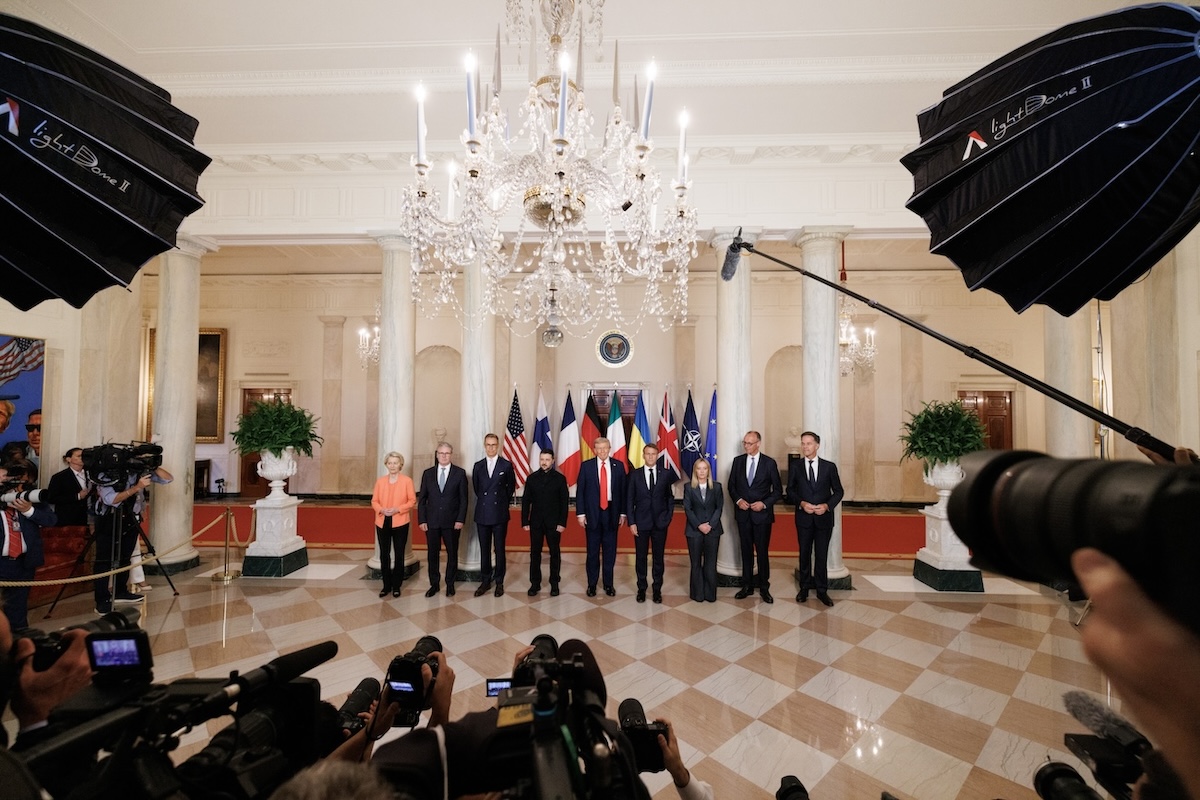
A New Era of Diplomacy in Washington
Volodymyr Zelenskyy arrived at Lafayette Park, surrounded by cameras and exhaustion. His day had started with a meeting at the White House with Donald Trump, followed by discussions with European leaders. Originally scheduled to address the press at the Hay-Adams hotel, the event was abruptly canceled due to space constraints. This set the tone for a day filled with high-stakes negotiations and shifting dynamics.
Zelenskyy emphasized that he had discussed security guarantees with Trump and European leaders. While no specific date has been set for a potential meeting with Putin, the Ukrainian president expressed openness to any format that could facilitate dialogue. He mentioned that during a previous call between Trump and Putin, Russia proposed a bilateral meeting with Ukraine, followed by a trilateral discussion.
As the day progressed, each leader retreated to their respective enclaves across Washington. French President Emmanuel Macron addressed reporters at the French residence, while Friedrich Merz shared news that Russian President Vladimir Putin had agreed to meet Zelenskyy within the next two weeks. Alexander Stubb spoke at the Finnish embassy, highlighting the international attention on the ongoing situation.
Trump, however, remained elusive, only briefly revealing his thoughts when a hot mic captured his remark: “I think he wants to make a deal for me. Do you understand? As crazy as it sounds.” This comment underscored Trump’s belief that any potential agreement would bear his name.
Six months after a tense encounter in the Oval Office, Zelenskyy and Trump were once again in Washington, this time with smiles on their faces. Many anticipated that Trump would push for Ukraine to cede the Donbas region to Russia. Despite public denials from both leaders about discussing territorial plans, the underlying strategy seemed clear — to create conditions for a direct meeting between Zelenskyy and Putin.
The presence of other European leaders in Washington, including Starmer, Macron, Scholz, and von der Leyen, was not about altering the outcome but rather about visibility. They aimed to show support for Zelenskyy while reminding the White House and their own citizens that Europe still holds influence. However, the reality is that the focus has shifted to Washington and Moscow, leaving Europe as an observer.
Zelenskyy also revealed plans for Ukraine to purchase $90 billion in American weapons, funded through European contributions. Additionally, he hinted at the possibility of Ukraine manufacturing drones for U.S. purchase. A formal agreement is expected within the next week or so.
The concept of "security guarantees" has become central to the diplomatic efforts, with peace now being considered a realistic possibility. Putin has signaled openness to such terms for Ukraine.
European leaders echoed similar sentiments, emphasizing the need to stop the killing and achieve a ceasefire. Some, like Rutte, expressed optimism about ending the conflict, while others, like Merz, acknowledged the complexity of the next steps.
At the multilateral meeting, Trump took center stage, offering compliments freely. He praised Starmer, Macron, Meloni, Merz, Rutte, and von der Leyen, reinforcing his role as the key figure in the negotiations. The Europeans, though smiling, recognized that the tone of the conversation was now set by Trump.
Zelenskyy stressed the importance of U.S. support, stating that Ukraine's security depends on strong signals from America. He understands that his options are limited, and refusing Trump's offer could lead to a withdrawal of U.S. support. Without American backing, Europe cannot provide meaningful assistance.
This shift in power dynamics highlights the realpolitik at play. Trump has positioned himself as the indispensable broker, presenting any potential deal as a personal triumph. For Zelenskyy, this means accepting a settlement that may fall short of his earlier aspirations. For Europe, it means acknowledging a process they can no longer control.
What unfolded in Washington was more than just diplomacy; it was a demonstration of where power now resides. Trump has cast himself as the rainmaker, capable of shaping the future of the conflict. The Ukraine peace deal, if it materializes, will be attributed to him, marking a significant shift in global politics.

Post a Comment for "Trump Is the Peace Architect. Ukraine Deal Awaits."
Post a Comment