Trump Blocks Biden's 'Irresponsible' Idaho Wind Farm Approval
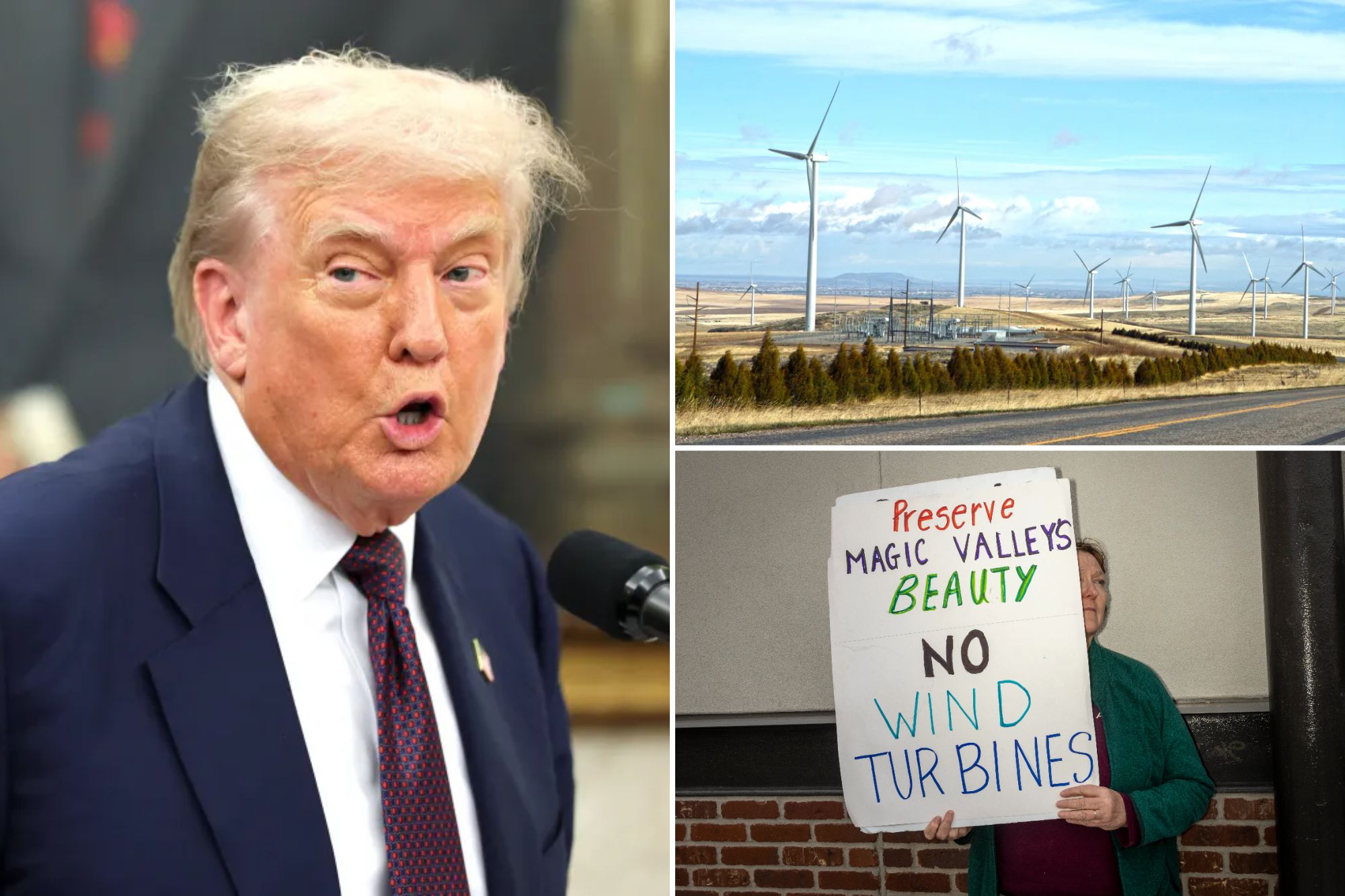
Trump Administration Halts Major Wind Farm Project in Idaho
The Trump administration has taken a significant step by canceling a major wind farm development in Idaho. This project, which was approved near the end of former President Joe Biden’s term, had been a point of contention due to its proximity to a historic site where Japanese Americans were incarcerated during World War II.
In December, the Bureau of Land Management (BLM) gave the green light to a scaled-down version of the Lava Ridge Wind Project, reducing the number of turbines from 400 to 241. However, the project had remained on hold since the beginning of President Donald Trump’s second term when he issued an executive order halting the permitting of wind power projects across the country. The Interior Department was also instructed to review the Lava Ridge decision.
Interior Secretary Doug Burgum stated that reversing the Biden administration’s approval of the Lava Ridge Wind Project would protect tens of thousands of acres from harmful wind policy and safeguard the interests of rural Idaho communities. He emphasized that this action defends American taxpayers, protects land, and prevents what would have been one of the largest and most irresponsible wind projects in the nation.
The Lava Ridge Wind Project, which had been in development for five years, faced opposition from local residents who were concerned about the height of the turbines—up to 660 feet (201 meters), more than twice the height of the Statue of Liberty. There were also concerns that the project would negatively impact views from the Minidoka National Historic Site, where thousands of Japanese Americans were imprisoned during World War II.
Under the original plan, the closest turbine to the historic site would have been 9 miles (14 kilometers) away. Robyn Achilles, executive director of the nonprofit Friends of Minidoka, expressed that her organization is reviewing the announcement. She highlighted the need to protect Minidoka from future development and continue seeking long-term protections for the BLM land in the cultural viewshed of Minidoka.
The Interior Department’s statement rescinding the Lava Ridge approval did not mention Minidoka. A spokeswoman for Magic Valley Energy, the company that proposed the development, did not immediately respond to requests for comment.
When the BLM approved the project, it stated that the wind farm could power up to 500,000 homes and that the decision reflected a careful balance between clean energy development and the protection of natural, cultural, and socioeconomic resources on the historically significant landscape.
Onshore wind is considered one of the cheapest sources of electricity generation. New wind farms typically cost less to build and operate than new natural gas plants in most regions of the United States, even without tax credits.
The Trump administration and congressional Republicans have targeted wind and solar projects as expensive and unreliable, while promoting fossil fuels, which contribute significantly to global warming. Renewable energies like wind and solar provide intermittent electricity, but batteries are increasingly being paired with these projects to ensure a steady supply of power when wind or sun is not available.
Recent legislation signed by Trump last month phases out tax credits and subsidies for clean energy, and an executive order issued shortly after further restricts subsidies for what the administration calls “the Green New Scam.” Since then, Burgum has issued several memos targeting wind and solar power, including one requiring his personal approval for all solar and wind energy projects on federal lands and waters.
These restrictions aim to “end preferential treatment for unreliable, subsidy-dependent wind and solar energy,” according to the Interior Department. Late last month, Burgum canceled plans to use millions of acres of federal waters for offshore wind development. Earlier this week, he issued a new secretarial order requiring that Interior agencies evaluating new wind and solar projects consider “capacity density,” or how much area the projects cover.
Commercial-scale solar and wind projects typically require more land and water than other energy sources like oil and natural gas. Jason Grumet, CEO of the American Clean Power Association, criticized the move, stating that it is not oversight but obstruction that will harm the fastest-growing sources of electric power.

Post a Comment for "Trump Blocks Biden's 'Irresponsible' Idaho Wind Farm Approval"
Post a Comment