Trump and Putin's Peace Talks Threaten Korea
The Alaska Summit: A Controversial Encounter
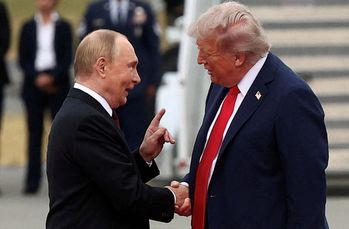
The recent summit between U.S. President Donald Trump and Russian President Vladimir Putin in Anchorage, Alaska, ended without a deal or a cease-fire agreement. Despite the high expectations for a breakthrough, the meeting failed to produce any significant outcomes. However, what transpired behind closed doors has sparked considerable controversy and raised questions about the future of the conflict in Ukraine.
According to reports from the New York Times, Putin proposed that peace talks could be swift if Ukraine were to cede the Donbas region, which is currently under Russian occupation. This suggestion reportedly came to light when Trump conveyed the idea to European leaders. If these reports are accurate, it would mark a significant shift in Trump’s stance, as he previously emphasized an immediate cease-fire as the top priority.
This development has been met with concern, especially given the international condemnation of Russia's invasion of Ukraine in February 2022. As a permanent member of the United Nations Security Council and a nuclear power, Russia's actions have been widely seen as a violation of international law. For Washington, which has long positioned itself as the global enforcer of order, to support such territorial concessions would be a shocking reversal.
Demanding that a nation surrender land after enduring civilian casualties is not only morally troubling but also seen as secondary victimization by powerful states. The Times described the Alaska talks as resembling "a 19th-century imperialist bargain to resolve a 21st-century crisis." This characterization highlights the deep concerns about the implications of such negotiations.
Ukrainian President's Reaction and Concerns
Ukrainian President Volodymyr Zelensky has expressed dismay over the situation, warning that efforts to end the war, now entering its fourth year, are becoming increasingly complicated. When Zelensky meets Trump, he will likely face pressure to accept Putin’s terms. The memory of Trump’s previous encounter with Zelensky, where he bluntly declared, “You have no cards,” remains fresh and painful.
The plight of Ukraine serves as a stark reminder of the realpolitik that defines Trump’s second term. Allies and partners are often reduced to bargaining chips, and the world becomes a chaotic landscape where the strong exploit the weak. Even a major economy like South Korea, with significant military power, cannot afford to be complacent in this rapidly changing geopolitical environment.
Implications for South Korea
President Lee Jae Myung is set to hold his first summit with Trump on August 25. Key issues on the agenda include modernizing the alliance, redefining the U.S. troop presence in Korea, and negotiating higher Korean defense spending. However, the real danger lies in the possibility that Trump might bypass Seoul and engage directly with Pyongyang. This could involve recognizing North Korea’s nuclear status and engaging in arms talks on Kim Jong-un’s terms, which would be a nightmare scenario for South Korea.
There is no guarantee that Trump will not pursue such a strategy. Seoul must be fully prepared to navigate these complex dynamics. To avoid being swept up in great-power maneuvers, South Korea must maintain its own leverage on each issue. The Alaska summit has exposed the harsh realities of power politics, where smaller states are often overlooked. South Korea must ensure it does not become the next casualty in this ruthless game.

Post a Comment for "Trump and Putin's Peace Talks Threaten Korea"
Post a Comment