Trump Allowed to Fire 3 Democrats on Consumer Product Safety Commission, Court Rules
The Supreme Court's Stance on Presidential Authority Over Independent Agencies
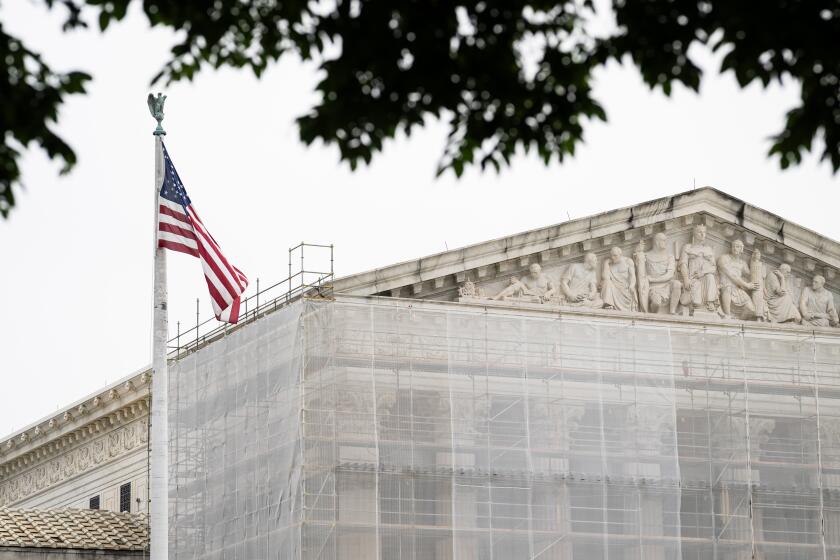
The U.S. Supreme Court has once again affirmed its belief that the president holds the authority to remove leaders of agencies and commissions that Congress designated as independent. This decision came in response to an emergency appeal, where the justices overturned a ruling by a Baltimore judge and supported President Trump’s action to dismiss three Democratic appointees from the Consumer Product Safety Commission (CPSC).
In a concise order, the conservative majority of the court stated that agency officials can indeed be removed by the president. This stance was met with strong opposition from the three liberal justices, who expressed their concerns about the implications of this decision.
Justice Elena Kagan criticized the ruling, stating, "Once again, this Court uses its emergency docket to destroy the independence of an independent agency, as established by Congress." She argued that allowing the president to remove commissioners based solely on party affiliation undermines the bipartisan structure and independence that Congress intended for these agencies.
Justices Sonia Sotomayor and Ketanji Brown Jackson joined Kagan in her dissent. The court's conservative majority has consistently supported President Trump in cases involving federal agencies, including issues related to spending, staffing, and leadership. They argue that the Constitution grants the president executive authority over the government, including the power to fire and replace heads of agencies, boards, and commissions.
This authority has been exercised even when removal orders conflict with laws established by Congress. The central issue remains whether Congress has the power to structure the government or if the president has the executive authority to reshape it.
Historical Context of Independent Agencies
Since 1887, when the Interstate Commerce Commission was created to regulate railroad rates, Congress has established independent agencies with the goal of granting non-partisan experts the authority to regulate in the public interest. The Consumer Product Safety Commission, established in 1972, is led by five members appointed by the president and confirmed by the Senate. These members serve seven-year terms and can only be removed for "neglect of duty or malfeasance in office."
The CPSC investigates complaints about hazardous products and can require warning labels, order recalls, or remove products from the market. In May, the Trump administration informed the commission's three Democratic appointees—Mary Boyle, Alexander Hoehn-Saric, and Richard Trumka Jr.—that they were "terminated" without any accusations of wrongdoing or malfeasance.
These appointees filed a lawsuit in a federal court in Maryland, where U.S. District Judge Michael Maddox, a Biden appointee, ruled the firings illegal and reinstated them to their positions. Judge Maddox referenced the Supreme Court's 1935 decision in Humphrey's Executor v. United States, which upheld the constitutionality of traditional multi-member independent agencies.
This case drew a distinction between "purely executive officers" under the president's control and those serving on boards with "quasi-judicial or quasi-legislative functions." However, the court's conservatives have hinted at overturning this precedent.
Previous Rulings and Legal Precedents
Five years ago, Chief Justice John G. Roberts ruled that the director of the Consumer Finance Protection Bureau could be fired by the president, despite Congress's contrary stipulations. However, this case did not involve a multi-member board or commission, so it did not override the 1935 precedent.
In late May, the court allowed Trump to fire a Democratic appointee on the National Labor Relations Board and another on the Merit Systems Protection Board. The court stated, "Because the Constitution vests the executive power in the President, he may remove without cause executive officers who exercise that power on his behalf," in an unsigned order.
Trump's solicitor general, D. John Sauer, argued that this decision should have permitted the firing of the three CPSC members. However, the 4th Circuit Court upheld Judge Maddox's ruling. Judge James Wynn of the 4th Circuit emphasized that Congress entrusted the power to design independent agencies that serve the public interest free from political pressure. He noted that Congress lawfully constrained the president's removal authority and that the district court correctly refused to allow a president to disregard these limits.

Post a Comment for "Trump Allowed to Fire 3 Democrats on Consumer Product Safety Commission, Court Rules"
Post a Comment