Traverse City Walmart Stabbing Suspect's Troubled Past Revealed
A History of Legal and Mental Health Struggles
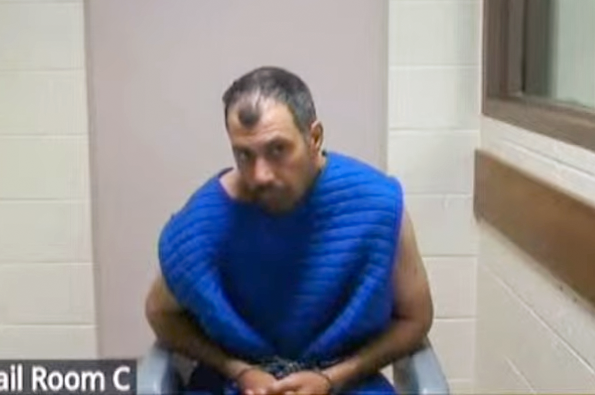
Bradford James Gille, the suspect in a mass stabbing at a Walmart in northern Michigan on July 26 that left 11 people injured, has a long history of legal troubles intertwined with mental health issues. A Detroit Free Press analysis of court records and archives revealed that Gille's cases have often been dismissed or reduced due to his mental health conditions.
At 42 years old, Gille was arrested after being subdued by bystanders following the incident. He was arraigned on one count of felony terrorism and 11 counts of assault with intent to murder in Grand Traverse County’s 86th District Court on July 28. His next court appearance is scheduled for August 6. Gille pleaded not guilty and requested a court-appointed attorney.
The Emmet County Sheriff's Office had been searching for Gille on July 25, a day before the stabbing. A local court had issued an order allowing deputies to arrest him, but they were unable to locate him at the time, according to the sheriff’s office.
Gille has had multiple run-ins with law enforcement and the courts since at least 2002. An attorney who previously represented him suggested that his recurring legal issues, combined with recognized mental health problems, should have led to more structured treatment.
In 2017, Gille was found not guilty by reason of insanity for charges related to dismemberment and mutilation of dead bodies and malicious destruction of tombs and monuments. Duane Beach, the attorney who represented Gille in that case, did not respond to requests for comment.
Past Incidents and Mental Health Diagnoses
An affidavit from a Petoskey Public Safety Department officer detailed an incident on April 11, 2016, when Gille was arrested at Greenwood Cemetery after attempting to dig up a casket. He was later tracked to a nearby motel. Officers contacted Chris Gille, Bradford's father, who informed them that his son had said he bought a shovel to dig someone out of their grave.
When officers found Gille’s van parked outside the Emmet County jail, he was questioned. During the interview, Gille expressed concerns about people being buried alive. According to the affidavit, Gille claimed he dug up the grave because he believed the person was buried alive, but he was mistaken about the location and didn’t know who was buried there. He also stated he overturned other graves because he was angry about people being buried alive.
After his arrest, Gille was taken to a psychiatric hospital where he was diagnosed with bipolar disorder. Following his acquittal, a judge ordered him to be committed to the Center for Forensic Psychiatry in Saline for up to 60 days.
Legal Issues and Repeated Charges
Over the years, Gille has faced various charges, including felonious assault, domestic violence, assault with a dangerous weapon, assault and battery, retail fraud, possession of marijuana, and public intoxication. Some of these charges were either pleaded down or dismissed.
Bryan Klawuhn, a Petoskey defense attorney who represented Gille in a 2002 case involving an assault with a deadly weapon charge that was eventually dismissed, said he hasn’t kept in touch with his former client. However, he emphasized that Gille clearly needed further intervention and highlighted the flaws in how the state addresses mental health within the justice system.
“The system is a flawed system,” Klawuhn said. “We had mental health facilities in the past, but in recent years, the system has broken down. The decision was made to use the criminal justice system as the conduit for treatment.”
Mental Health Challenges and Family Perspective
A 2007 article in the Petoskey News-Review featured insights from Beverly Gille, Bradford’s mother, who attributed her son’s legal issues to mental health lapses. She stated that he had been formally diagnosed with paranoid schizophrenia, an outdated term for a type of schizophrenia that affects cognitive abilities, memory, and senses, often leading to hallucinations and delusions.
“He’s fine when he’s on his medication,” Beverly Gille told the News-Review in 2007. “The problem is, his illness tells him that he is fine and doesn’t need to take his medication. He’s also been through the evaluations so many times that he knows how to answer their questions.”
Klawuhn noted that individuals with mental health struggles who are jailed are often placed on strict medication regimens. However, he pointed out that this is not a long-term solution and criticized the lack of investment in addressing mental health issues in Michigan.
“Forced compliance for medications in jails is not their job, they’re not medically trained,” Klawuhn said. “It’s not a long-term solution until Michigan figures it out and starts spending the money to address the problem.”

Post a Comment for "Traverse City Walmart Stabbing Suspect's Troubled Past Revealed"
Post a Comment