Top 10 Movies Over Three Hours and Perfect From Start to Finish
The Power of Long Films
Long movies often face criticism for being overly extended or indulgent. However, some films use their length not as a flaw but as an essential tool to tell their stories with precision and purpose. These films are not just about duration; they're about the depth of their narratives, the richness of their characters, and the emotional resonance they create. From sweeping historical dramas to epic fantasy sagas, these long films prove that a lengthy runtime can be a strength when used effectively.
'Gone with the Wind' (1939)
"Frankly, my dear, I don’t give a damn."
Gone with the Wind remains a monumental achievement in scale, storytelling, and old-Hollywood spectacle. It is one of the most sweeping Civil War epics, clocking in at nearly four hours. The film's grandeur is anchored by Scarlett O'Hara, played by Vivien Leigh, who embodies both ambition and resilience. Her complex character keeps the emotional core of the film burning through its grand set pieces.
The aesthetic elements of the film, including Max Steiner's iconic score and lush Technicolor visuals, immerse the viewer completely. While it reflects the era in which it was made, it also sparks necessary conversations today. Every frame feels purposeful, and it's no wonder that it became the highest-grossing movie in history.
'Lawrence of Arabia' (1962)
"Big things have small beginnings."
David Lean’s Lawrence of Arabia is the gold standard for epic filmmaking. Its 3-hour, 42-minute runtime flies by thanks to sweeping desert vistas, razor-sharp character study, and a fantastic central performance from Peter O’Toole. The film transforms a military campaign into a profound statement about charisma and empire.
Every frame is exquisitely composed, and Maurice Jarre’s score adds to the magical atmosphere. The film manages to be both intimate and colossal, making it a rare kind of epic that resonates deeply with viewers.
'Satantango' (1994)
"We're all walking in circles. It's the same everywhere."
Béla Tarr’s films tend to be deliberately paced, demanding a lot of investment from the viewer. Satantango takes this to another level, running over seven hours. Shot in mesmerizing black-and-white, it unfolds in a crumbling Hungarian village after the fall of communism. Long, unbroken takes follow characters trudging through mud, drinking themselves into oblivion, and betraying each other in small, cruel ways.
It's bleak but also oddly hypnotic. The rhythm lulls you into its world until you start noticing the tiniest shifts in light, expression, or movement. Tarr turns duration itself into a storytelling tool, making you feel the weight of time as the characters do.
'Titanic' (1997)
"I'm the king of the world!"
Titanic runs for over three hours but never loses its grip. James Cameron succeeded in turning a well-known historical incident into a thrilling disaster epic and a sweeping romance. Leonardo DiCaprio and Kate Winslet elevate the story with a love affair that's earnest without being saccharine.
The storytelling is assured, with impeccable pacing. The first half builds romance and tension, while the second unleashes some of the most harrowing and technically brilliant disaster sequences ever filmed. The meticulous recreation of the doomed ship is staggering, and James Horner’s score remains lodged in the collective memory.
'The Irishman' (2019)
"It is what it is."
Martin Scorsese's The Irishman uses its 3-hour, 29-minute runtime to build a steady, perfectly calibrated rhythm, moving from moments of quiet camaraderie to sudden, clinical violence. The digital de-aging technology drew headlines, but the real magic is in the performances: De Niro's weary stoicism, Joe Pesci's understated menace, and Al Pacino's fiery volatility.
Scorsese takes the gangster epic and drains it of glamour, leaving behind the hollow rituals and lonely endings that such lives inevitably produce. By the final, devastating scenes, the runtime feels not indulgent but necessary, the weight of years pressing down until you can't help but feel the same creeping emptiness as Frank.
'Malcolm X' (1992)
"We didn't land on Plymouth Rock. Plymouth Rock landed on us!"
Spike Lee's Malcolm X is one of the great screen biographies, covering almost the entirety of one person's life and using it to reflect his times. The film examines every major moment in Malcolm X's life, from his troubled youth and time in prison to his rise as a fiery voice for Black empowerment, and finally to his evolution into a more unifying figure in the global fight for justice.
Every minute feels earned, each scene adding depth to the complex, contradictory, and ultimately transformative life of one of the most important figures in American history. Lee's direction blends documentary realism with stylized flourishes, bringing history to vivid life.
'Schindler’s List' (1993)
"Whoever saves one life saves the world entire."
Schindler’s List is 195 minutes long, yet it never feels padded; every scene carries the weight of history. Shot in stark black-and-white, the film chronicles Oskar Schindler's transformation from opportunistic businessman to reluctant savior during the Holocaust. Liam Neeson gives Schindler a charismatic ambiguity, while Ralph Fiennes' portrayal of Nazi commandant Amon Göth is chilling in its depiction of the banality of evil.
The runtime allows the horror to accumulate gradually, making moments of hope and humanity stand out all the more. By the time of the final scenes, Steven Spielberg has delivered a work that's both a harrowing historical document and a deeply moving exploration of moral awakening.
'The Lord of the Rings: The Return of the King' (2003)
"For Frodo."
The Lord of the Rings: The Return of the King is arguably the best of the trilogy. Even at 3 hours and 21 minutes, it sustains a balance between spectacle and emotion. The siege of Minas Tirith and Frodo's final steps into Mount Doom are staged with breathtaking scope, yet Peter Jackson never loses sight of the personal stakes.
The multiple endings have been parodied, but they’re essential: after such an arduous journey, the film takes the time to let every thread find its proper rest. The unique balance of practical effects and CGI is the reason that most of the visuals still hold up.
'The Godfather Part II' (1974)
"Keep your friends close, but your enemies closer."
Francis Ford Coppola took things even further with the follow-up to The Godfather. The Godfather Part II expands the Corleone saga into an epic that's both prequel and sequel, running 3 hours and 22 minutes without a single wasted scene.
The film has a Shakespearean sweep thanks to its dual structure: Michael Corleone consolidating his power in the present, young Vito Corleone rising in the past. Both actors are at the top of their game, showing two men shaped by similar worlds but diverging paths. Coppola uses the length to deepen the tragedy of both men.
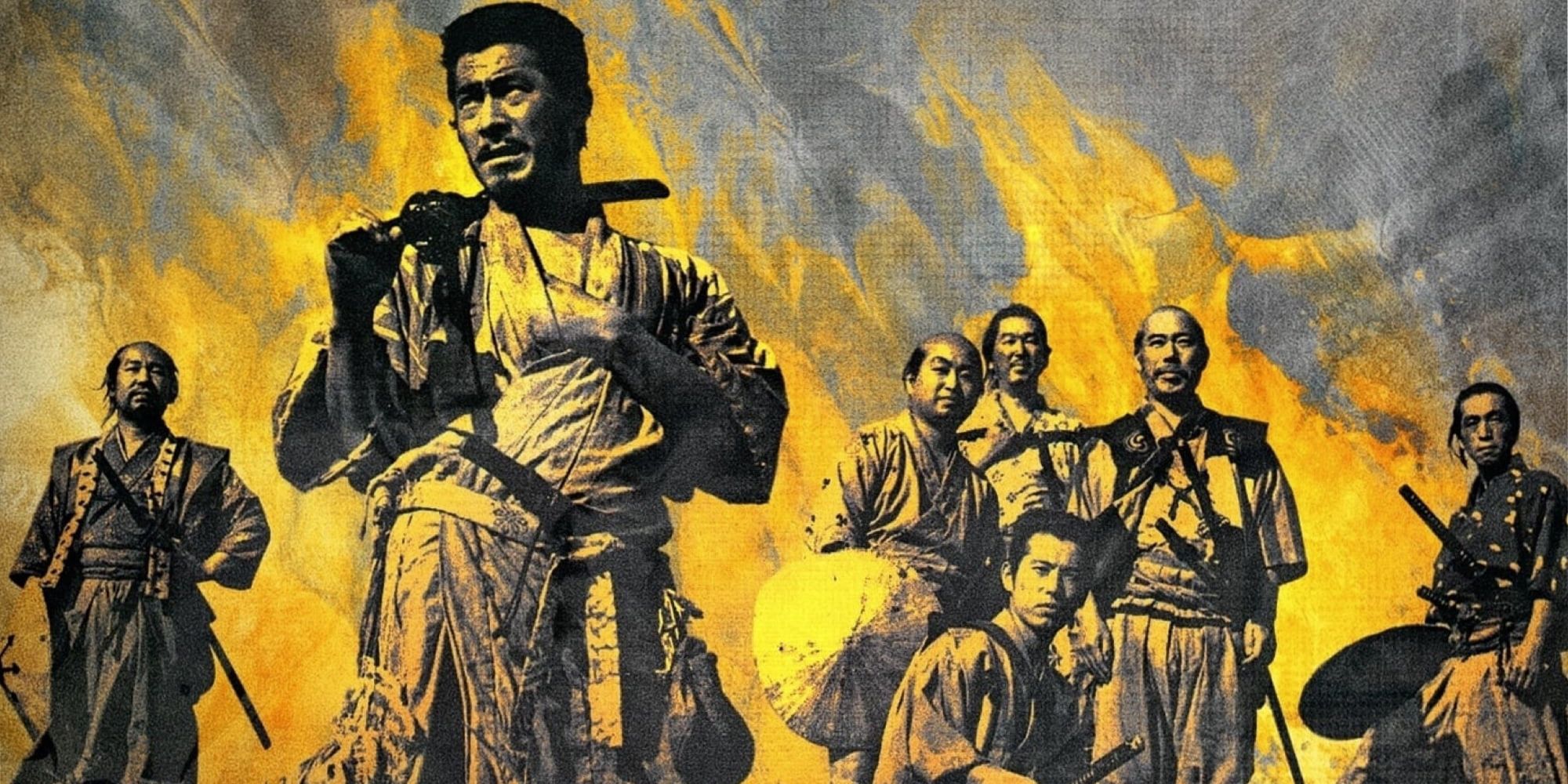
'Seven Samurai' (1954)
"This is the nature of war: These fields, this village, they will never change."
Seven Samurai runs 3 hours and 27 minutes, yet feels as swift and vital as any modern action epic. Akira Kurosawa's film is simple: seven warriors defend a village from bandits. Yet the director turns this straightforward conceit into something transcendental.
He fills the time with meticulous character work, social commentary, and masterfully staged battle sequences. Each samurai is distinct, each villager given moments of depth, making the stakes deeply personal. Kurosawa uses the runtime to let tension ebb and flow, building a lived-in world where victory is bittersweet and sacrifice inevitable.

Post a Comment for "Top 10 Movies Over Three Hours and Perfect From Start to Finish"
Post a Comment