Tony's Fate Hangs in the Balance
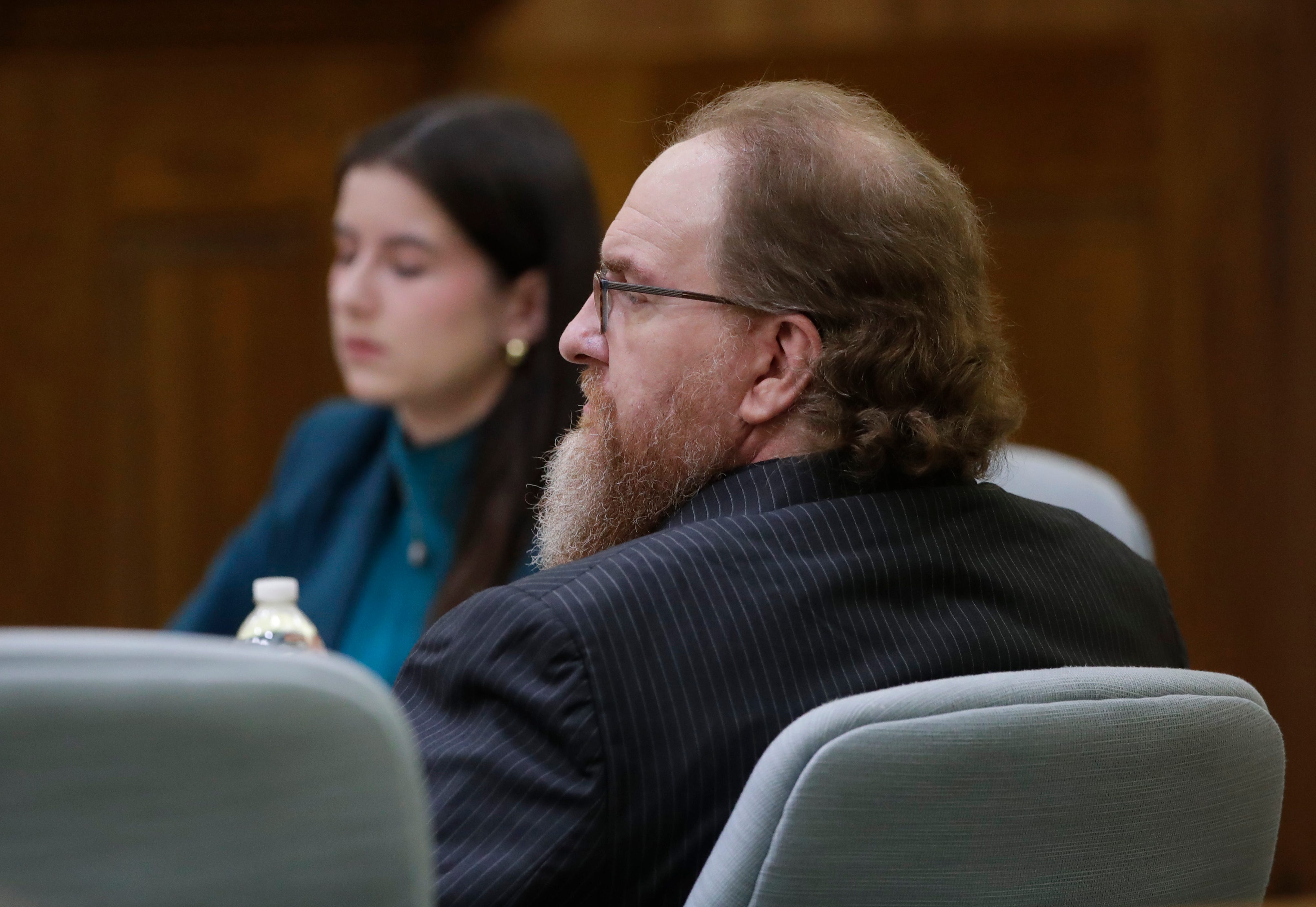
The Trial of Tony Haase: A 33-Year-Old Case Revisited
After nearly three weeks of testimony in the trial of Tony Haase, a man accused of the violent 1992 slayings of Tanna Togstad and Timothy Mumbrue, attorneys delivered their final arguments to the jury on August 6. Over several hours, both sides summarized the evidence and testimonies presented during the trial. The courtroom was filled with community members, as well as family members from Togstad, Mumbrue, and Haase.
The jury began deliberations around 1 p.m., but did not reach a verdict before the end of the day. Just before 4 p.m., Waupaca County Circuit Court Judge Raymond Huber sent jurors home, instructing them to return for further deliberations on August 7.
Haase, 54, of Weyauwega, is charged with two counts of first-degree murder. If found guilty, he will automatically receive a life sentence, with the judge deciding whether he will ever be eligible for release on extended supervision. “Tony’s life is in your hands,” Haase’s attorney, John Birdsall, told the jury at the end of the defense’s closing argument.
A Long Wait for Justice
For the grieving families of Togstad and Mumbrue, this trial has been 33 years in the making. Togstad, 23, and Mumbrue, 35, were dating when they were killed. According to prosecutors, the couple had gone out dancing with friends the night of Friday, March 20, 1992, before returning to Togstad’s home.
Prosecutors claim that on that snowy night, a drunken Haase, then 21, stumbled to Togstad’s farmhouse on Butternut Ridge Road in Royalton. Inside, he fatally stabbed Mumbrue, Togstad, and Togstad’s dog, Scruffy, they say. Prosecutors also allege that Haase sexually assaulted Togstad during the attack.
Although DNA testing was not available at the time, swabs were taken and stored over the years. In 2022, investigators identified Haase as a possible suspect after staging a traffic stop to obtain his DNA from a pen, which matched the sample taken from Togstad’s body.
In the prosecution’s opening statement, Assistant Attorney General Amy Ohtani emphasized the statistical improbability of someone else having the same DNA profile, stating it was “one in 281 quintillion.”
Confession and Controversy
During an interrogation in August 2022, Haase confessed that he does not recall the details of that night, but remembers seeing news reports about the killings and becoming “afraid he was involved.” He described having “snippets” of memories of going to Togstad’s house that night in a “drunken stupor” and getting into a “scuffle” with Mumbrue.
Haase also mentioned that his father and Togstad’s father were friends. He recalled that his father died in a snowmobiling accident involving Togstad’s father when Haase was around 7 years old. He said this memory haunted him on the night of the crime, leading him to drink and head to Togstad’s house.
In their closing arguments, prosecutors revisited the evidence against Haase, including his confession, the DNA match, and a handprint on Togstad’s door that matched Haase’s handprint.
Defense Challenges the Evidence
Defense attorneys argued that the DNA and fingerprint evidence was mishandled and unreliable. They also claimed Haase’s confession was false and the result of deceptive interrogation tactics.
Throughout the trial, the defense has attempted to cast doubt on the prosecution’s case. Birdsall argued that whoever committed the murders must have been a psychopath, which he claims does not apply to Haase, who has no criminal record and no history of safety concerns from his family.
The defense also pointed to a family member of Haase who fits the profile of a potential suspect. This individual, who died in 1995, had a history of animal violence and threats against multiple wives. However, the Post-Crescent has not named this relative, as he was never charged in connection with the homicides.
Birdsall suggested that this family member may have been assisted by two other individuals, one of whom confessed to investigators that he was involved in the murders.
A Contested Suspect
Glendon Gouker, identified early on as a potential suspect, was convicted in 2014 for the 1990 rape of a woman in Iola and for murdering a 19-year-old man and raping his girlfriend in Oklahoma. He received four consecutive life sentences for those crimes.
Defense attorneys pointed out that Gouker confessed to the Togstad-Mumbrue murders. However, Ohtani argued that Gouker’s confession was likely false, as he had a history of misleading police to avoid the death penalty.
Ohtani stated that if the defense’s claims are believed, the family member sounds like a “horrific domestic abuser” and “terrible, cruel animal abuser,” but that doesn’t mean he committed the murders.
She also dismissed the defense’s arguments about DNA contamination and unclear evidence as distractions. “They want to divert you from the evidence in this case, because it is damning,” she said.
Ohtani concluded that Haase went to Togstad’s home that night, expecting her to be alone, as her truck was the only one in the driveway. She suggested that Haase justified his actions by thinking about the snowmobiling accident, unaware that Mumbrue was present and ready to protect Togstad.

Post a Comment for "Tony's Fate Hangs in the Balance"
Post a Comment