Tommy Shannon's 7-Year Journey to a Legendary Bassline with Stevie Ray Vaughan
A Legacy Rooted in the Blues
Tommy Shannon is more than just a bassist; he's a living legend in the world of blues. His career has been intertwined with some of the most iconic names in music, including Johnny Winter and Stevie Ray Vaughan. Over the years, his work has become synonymous with the very essence of the blues, blending traditional elements with innovative techniques that set him apart.
The Early Days and Influences
In 1968, Shannon joined forces with the then-unknown Johnny Winter, forming a trio that would leave an indelible mark on the music scene. Alongside drummer John Turner, they released three influential albums and even performed at Woodstock before disbanding in 1970. This period was pivotal for Shannon, offering him a platform to showcase his talent and grow as a musician.
However, the 1970s were not without their challenges. Shannon struggled with drug addiction and legal troubles, which led to a temporary hiatus from music. It wasn't until the early 1980s that he found his way back to the stage, reuniting with Stevie Ray Vaughan and drummer Chris Layton.
A Second Chance and a New Beginning
Shannon’s return to music began with a gig alongside Rocky Hill, the brother of ZZ Top's Dusty Hill. During this time, he heard that Stevie Ray Vaughan was playing in town. Inspired by the performance, Shannon approached Vaughan and expressed his desire to join the band. His persistence paid off, and shortly after, he was invited to be part of the group.
This new chapter allowed Shannon to contribute his unique style to the band's sound. One of his most notable contributions is the iconic riff from "Crossfire" by Stevie Ray Vaughan & Double Trouble. The track showcases his ability to craft catchy hooks within a blues framework, creating a memorable and timeless piece.
The Art of the Bass Line
"Crossfire" features a vintage blues flavor that is evident in both the repetition and note content of its unforgettable ostinato. Shannon recalls that the line came to him spontaneously during a late-night session. The song begins with a drum fill and a 12-bar intro, driven by Shannon's two-bar sub-hook. As the track progresses, he maintains an almost identical eighth-note rhythmic pattern during the bridge, focusing on roots and octaves.
When the guitar solo kicks in, Shannon adds a tasty eighth-note fill, which he later repeated for variety. His ability to adapt and enhance the track's intensity is a testament to his skill and creativity. Even as the tempo increases, Shannon's bass line remains steady, proving the effectiveness of his static-line concept.
The Instrument That Defined Him
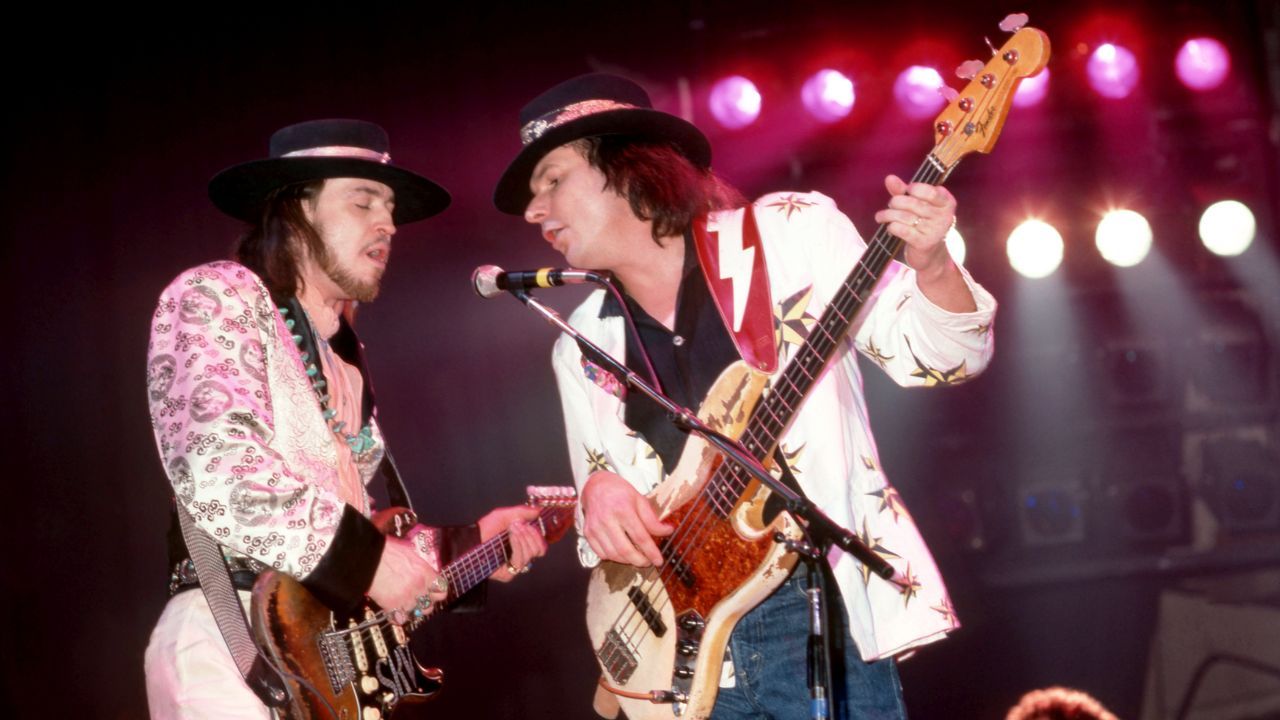
Throughout his career, Shannon has played various basses, but his mainstay is a 1962 Fender Jazz Bass that he has owned since his time with Johnny Winter. Despite receiving offers from different companies, he always returns to his old Fender, believing it to be the best-sounding instrument he has ever played.
To match Vaughan's Eb tuning, Shannon tuned down a half-step, which led to some string-rattle issues. He addressed this by using heavier-gauge Rotosound strings and plucking over the bridge pickup instead of his usual spot over the neck pickup. These adjustments allowed him to maintain the integrity of his sound while adapting to the unique demands of the music.
A Lasting Impact
Tommy Shannon's journey through the blues is a story of resilience, talent, and dedication. From his early days with Johnny Winter to his legendary collaborations with Stevie Ray Vaughan, he has left an enduring legacy in the world of music. His contributions continue to inspire new generations of musicians, ensuring that the spirit of the blues lives on.

Post a Comment for "Tommy Shannon's 7-Year Journey to a Legendary Bassline with Stevie Ray Vaughan"
Post a Comment