Tide Turns Against Israel Over Gaza's Starving Children
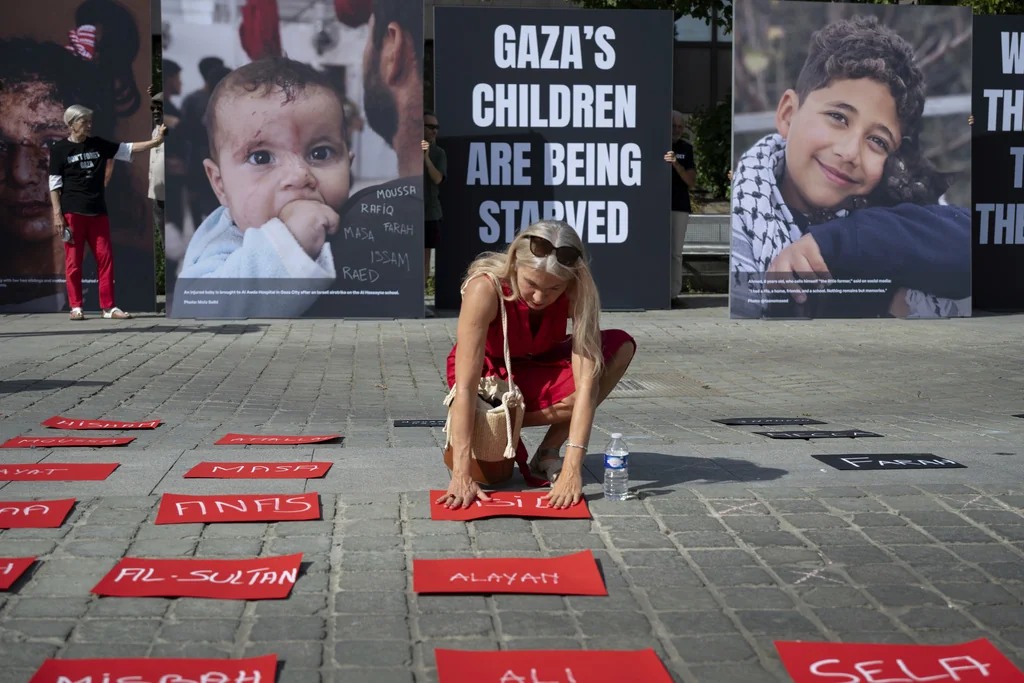
Growing Concerns Over Humanitarian Crisis in Gaza
The United States has long been a strong supporter of Israel, but recent developments in the ongoing conflict have begun to challenge that stance. Graphic images and reports of starving and emaciated children in Gaza have sparked public outrage and shifted opinions, raising questions about how much support the U.S. can continue to provide without addressing the humanitarian crisis.
President Donald Trump and Vice President JD Vance have recently drawn attention to the severe food shortages in the Hamas-controlled Gaza Strip. Trump publicly disagreed with Israeli Prime Minister Benjamin Netanyahu over whether starvation is occurring, emphasizing the need for aid to reach those in desperate need. This shift in rhetoric reflects a growing awareness of the dire conditions faced by civilians in Gaza.
Experts like Omer Bartov, an Israeli-born genocide scholar, believe that the visibility of these tragic images could significantly impact public opinion and political decisions. However, he remains skeptical about whether this will lead to meaningful change. "I personally wish that American TV showed more images so President Trump would see more of them, because he obviously watches TV, and would come to that conclusion sooner," Bartov said. "It's only now that, finally, the scenes are so horrific that you can't quite avoid it."
Netanyahu, under pressure to allow humanitarian aid into Gaza and agree to a ceasefire, has denied claims of starvation. Despite this, world leaders, including Trump, have urged him to prioritize the needs of vulnerable civilians. Trump stated that the U.S. would set up food centers in Gaza and emphasized the importance of getting food to those in need.
Other foreign leaders have also called on Israel to allow more food into the region. UK Prime Minister Keir Starmer announced that his country would recognize a sovereign Palestinian state in September if Israel does not work toward a ceasefire and a two-state solution. The U.K. will join France in recognizing Palestine at the United Nations General Assembly.
While Trump expressed support for funding food distribution, he stopped short of pressuring Israel to agree to a long-term solution. He raised concerns about rewarding Hamas if the U.S. were to support a ceasefire. "You could make the case that you're rewarding people, that you know you're rewarding Hamas if you do that," he said.
Vance echoed similar concerns, calling for more food to enter Gaza while highlighting the need to address the actions of Hamas. "We also want to make sure that the thugs and Hamas that are preventing them from getting food are stopping that process," he said during an appearance in Ohio.
The worst-case scenario of famine is currently unfolding in Gaza, according to the Integrated Food Security Phase Classification. Reports of bone-thin children dying from hunger have shocked many. Israel recently announced it would allow Arab countries to resume air drops of food after months of suspension.
Public support for Israel among Americans continues to decline, with 60% of Americans disapproving of the Israel-Hamas war, nearly double the 32% who approve. This shift in sentiment suggests a growing unwillingness to overlook the suffering of children in Gaza.
Rep. Marjorie Taylor Greene criticized Rep. Randy Fine for suggesting that starving innocent people and children was acceptable. Her comments highlight the increasing scrutiny of Israel's actions, even among some within the Republican Party.
Dennis Lennox, a GOP strategist, noted that while the U.S. still strongly supports Israel, there is a growing willingness among certain voices to criticize Netanyahu and his government. This shift may be influenced by diplomatic negotiations and regional dynamics.
Two Israeli human rights groups, B’Tselem and Physicians for Human Rights – Israel, have accused Israel of committing genocide against Palestinians in separate reports. This marks the first time domestic groups have made such allegations.
Aseel Aburass, director of the Occupied Palestinian Territories department for Physicians for Human Rights—Israel, welcomed Trump’s comments but pointed out the lack of broader structural changes. "Stating that starvation is real and asking for more food to come in is not enough," he said.
J Street, a liberal pro-Israel Jewish organization, has also called for a long-term solution, emphasizing the need for increased aid and the release of hostages. Ilan Goldenberg, J Street’s senior VP and chief policy officer, noted that the humanitarian situation in Gaza is reaching a critical point.
Despite these calls for action, Netanyahu remains adamantly opposed to Palestinian statehood and has boycotted a high-level U.N. conference that backed a two-state solution. "Netanyahu said clearly, but mostly in Hebrew, that his goal is to move people out of Gaza," said Bartov.
The Physicians for Human Rights—Israel report highlighted the long-term damage in Gaza, stating that life is becoming inhospitable for residents. "What we're writing in the report really fits that Israel is not just destroying the way we're analyzing. Israel is not just destroying the healthcare system, but destroying every condition of life that makes life even possible," said Aburass.
Bartov warned that if things continue, "it will definitely get worse" in Gaza. "It's a complete hell what is happening there. It's almost surprising this crisis didn't start before," he said.

Post a Comment for "Tide Turns Against Israel Over Gaza's Starving Children"
Post a Comment