Thousands March in Tel Aviv as Nationwide Hostage Protests Conclude
Massive Protests and Strikes Across Israel Demand End to Gaza War
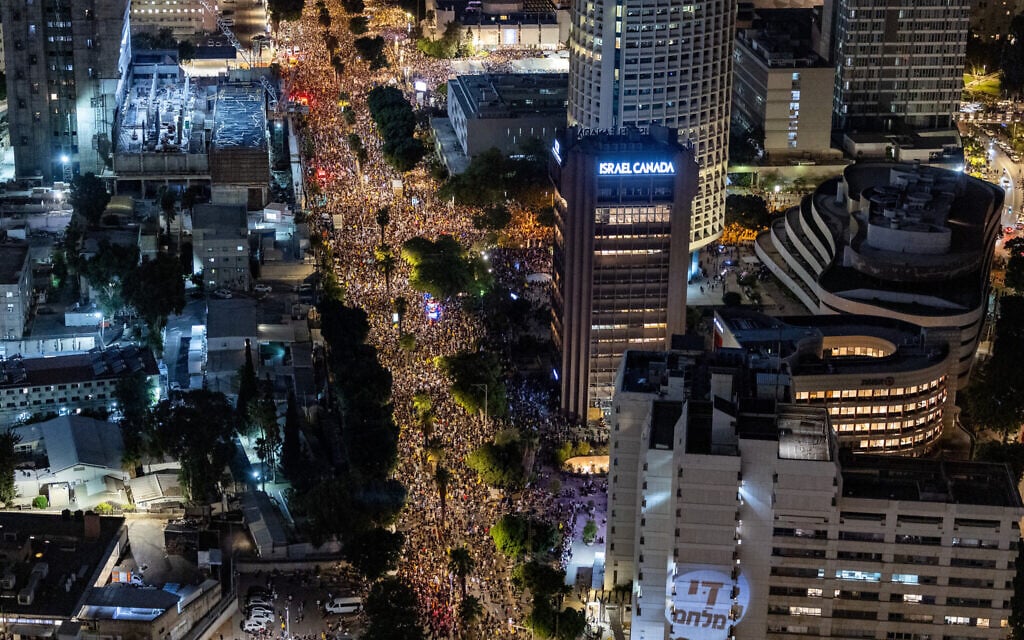
Hundreds of thousands of people gathered in central Tel Aviv on Sunday night, marking the culmination of a nationwide day of protests and strikes. Demonstrators called on the government to end the war in Gaza and secure the release of hostages held by Palestinian militants. The rally in Tel Aviv was one of the largest since the conflict began nearly two years ago, with estimates suggesting over half a million people attended, though no official police figures were released.
The Hostages and Missing Families Forum reported that around 1 million people participated in protests across the country throughout the day. Protest groups and organizations joined forces to stage a major day of civil disobedience following the cabinet's decision earlier this month to expand military operations in Gaza City, despite warnings from top security officials about the risks to hostages.
Major protests also took place in Jerusalem, Haifa, Beersheba, and several smaller cities, with demonstrators blocking roads and highways. Before the Tel Aviv rally, at least 38 people were arrested for blocking streets, and six more were detained after the event as hundreds disrupted public order and blocked Ayalon Highway. However, all roads were eventually reopened.
The day of protests coincided with a significant strike involving hundreds of local authorities, businesses, universities, and tech companies. However, Israel’s central labor union, the Histadrut, did not participate in the effort.
Parents of Hostages Accuse Government of Political Motives
At the Tel Aviv rally, parents of two hostages accused the government of abandoning their sons for political reasons. Ofir Braslavaski, father of hostage Rom Braslavski, expressed frustration over his son’s suffering, stating that the government had chosen to expand the war instead of securing his release.
Videos of Braslavski and another hostage, Evyatar David, showed them appearing emaciated and distressed. Braslavski said, “The entire country saw, all of the leaders saw, but the cabinet chose to expand the war and abandon them.” He urged his son to stay strong, emphasizing that the hostages have no time.
Yehuda Cohen, father of hostage Nimrod Cohen, echoed similar sentiments, accusing the government of prioritizing settlements over the safety of its citizens. He added, “If the Netanyahu government isn’t willing to do this, then they should quit and allow someone more responsible to do so.”
Emotional Messages from Hostage Families
At the rally, the family of hostage Matan Zangauker played a video showing him in Hamas captivity. In the brief clip, Matan asked his mother to "keep making noise" and hoped to see her soon. His mother, Einav Zangauker, addressed the crowd, expressing pride in her son’s strength and demanding an end to the war.
Organizers also screened a video featuring released hostages urging former President Donald Trump to end the war. Former hostages such as Naama Levy and Sasha Troufanov spoke about the dangers of continued military action to remaining captives.
Clashes and Confrontations
After the speeches, hundreds of protesters marched to the nearby Likud party headquarters, where they lit a bonfire and clashed with police. Videos showed officers jostling with demonstrators who were chanting against the government. Throughout the day, drivers in several cities confronted or even attacked protesters blocking roads.
Support from Political Figures
Earlier in the day, former defense minister Yoav Gallant visited Hostages Square to support families of the 50 hostages still in Hamas captivity. Gallant, who was fired by Netanyahu in November, criticized the government for resisting a ceasefire deal that could have returned more living hostages.
Other politicians, including President Isaac Herzog and Opposition Leader Yair Lapid, also visited the square to show solidarity with the families.
Impact of Protests on Hostages
Former hostage Eli Sharabi, whose wife and daughters were killed on October 7, shared how seeing the protests while in captivity gave him immense strength. He said, “Just the knowledge that someone was fighting for me outside gave us tremendous strength.”
However, not all families of hostages supported the protests. Some, like Nadav Miran and Ditza Or, argued that the demonstrations might strengthen Hamas and manipulate public opinion.
Netanyahu’s Possible Shift on Hostage Deals
Amid the protests, reports emerged that Prime Minister Benjamin Netanyahu may be open to a partial deal with Hamas. While he previously stated that only a comprehensive deal would be considered, officials suggested that a phased agreement could be acceptable under certain conditions.
Netanyahu is reportedly seeking guarantees from Trump for a comprehensive peace deal, which could include the release of all hostages. Meanwhile, some within the security cabinet remain opposed to any partial arrangements.
Ongoing Tragedies in Gaza
Hamas holds 50 hostages, including 49 of the 251 abducted during the October 7 attack. At least 28 are confirmed dead, while 20 are believed to be alive. The Hamas-run Gaza health ministry claims over 60,000 people have been killed or are presumed dead in the conflict, though the toll remains unverified.

Post a Comment for "Thousands March in Tel Aviv as Nationwide Hostage Protests Conclude"
Post a Comment