The Wave Broke: How 1970s Films Captured the 'Me Decade'
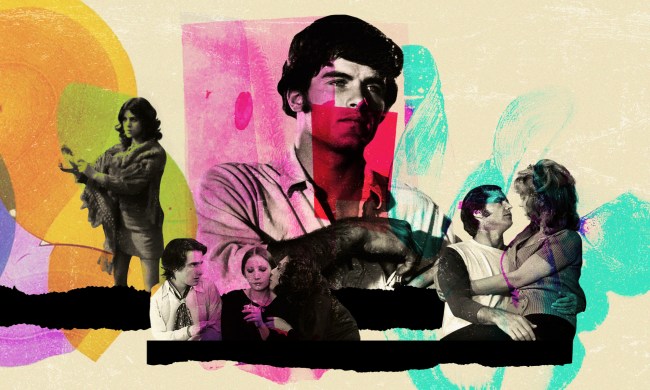
The End of an Era: Cultural Reflections in 1970s Cinema
In the late 1970s, the cultural landscape of the United States was marked by a profound shift from the collective idealism of the 1960s to a more individualistic and disillusioned outlook. This transition is vividly captured in the works of filmmakers who sought to explore the psychological and social fallout of this change. From the desolate landscapes of the American Southwest to the introspective narratives of European cinema, these films reflect the era's complex emotional terrain.
One such film that stands out is Michelangelo Antonioni’s "Zabriskie Point," which captures the disintegration of the counterculture movement. The film opens with scenes of student activists, who have become fragmented and vulnerable to police suppression. The characters—Mark, Daria, and Lee—form a loose group that embodies the fading hopes of the 1960s. In a hallucinatory sequence, they are shown in an orgy, symbolizing the loss of the original ideals of freedom and liberation. Antonioni's critical distance from these scenes serves as a commentary on how the Sexual Revolution has devolved into mere distraction, highlighting the emptiness of the pursuit of pleasure without purpose.
The climax of "Zabriskie Point" features Daria entering a modernist house designed by Paolo Soleri, a figure representing ecological harmony. However, this vision is shattered when the house is destroyed in a violent explosion, accompanied by the chaotic sounds of Pink Floyd. This scene encapsulates the collapse of the utopian dreams of the previous decade, reflecting a broader sense of despair and disillusionment.
In contrast, Monte Hellman’s "Two-Lane Blacktop" presents a different kind of existential journey. The film follows two young men, The Driver and The Mechanic, as they race across the country in a stripped-down car. Their journey is marked by a lack of direction and a sense of aimlessness, mirroring the broader societal malaise of the time. The inclusion of a hitchhiker named "Girl" adds another layer to the narrative, emphasizing the transient nature of relationships and the search for meaning in a world that offers none.
The film's conclusion is particularly poignant, as it ends with a meta-textual reference to the mechanics of filmmaking itself. The image slows down until a frame tears and catches fire, symbolizing the end of a story that has no resolution. This ending reflects the futility of seeking answers in a world that seems increasingly chaotic and unmoored.
Bob Rafelson’s "Five Easy Pieces" offers a more personal exploration of disillusionment. The protagonist, Robert Dupea, played by Jack Nicholson, represents the stasis of the Boomer generation. His journey from a life of classical music and refinement to blue-collar work is marked by a deep sense of frustration and alienation. Nicholson's portrayal captures the essence of a generation grappling with the realization that their aspirations may never be fulfilled.
The film's narrative is punctuated by moments of tension and confusion, as Robert struggles to find his place in a society that offers little in return. His interactions with his girlfriend, Rayette, highlight the complexities of relationships in a world where authenticity is elusive. The film ends with a sense of isolation, reflecting the broader societal shifts that have left many feeling disconnected and adrift.
In Japan, the film industry faced its own challenges, leading to a focus on exploitation cinema. However, the Art Theatre Guild continued to produce radical films that captured the country's retreat from potential change. Nagisa Ōshima's "The Man Who Left His Will on Film" delves into the paranoia of a filmmaker searching for meaning in the suicide of a colleague. The film's first-person perspective creates a sense of intimacy and unease, reflecting the internal conflicts within leftist movements.
Similarly, Yoshishige Yoshida's "Heroic Purgatory" explores the self-defeating infighting among radical groups. Through experimental techniques, the film blurs the lines between reality and fantasy, illustrating the internal struggles of political activists. The narrative's fragmentation mirrors the chaos of the times, emphasizing the difficulty of maintaining a cohesive vision in the face of internal conflict.
In France, the aftermath of the May 1968 demonstrations inspired a wave of artistic analysis. Jacques Rivette's "Out 1" presents a sprawling narrative that gradually builds a sense of unease through subtle details. The film's ensemble cast and fragmented storytelling reflect the uncertainty and confusion of the era, capturing the feeling of a world in flux.
Jean Eustache's "The Mother and the Whore" offers a stark reflection on the consequences of political defeat. The character of Alexandre embodies the transformation of former radicals into conservative figures, highlighting the dangers of losing sight of one's ideals. However, the film also offers hope through the resilience of the female characters, who find strength in their relationship and resist the controlling forces around them.
These films collectively capture the essence of a decade defined by disillusionment and the search for meaning. They reflect the cultural shifts that occurred as the idealism of the 1960s gave way to a more cynical and individualistic worldview. Through their narratives and visual styles, these works provide a powerful commentary on the human experience during a time of profound change.

Post a Comment for "The Wave Broke: How 1970s Films Captured the 'Me Decade'"
Post a Comment