The urgent need for more THAAD interceptors
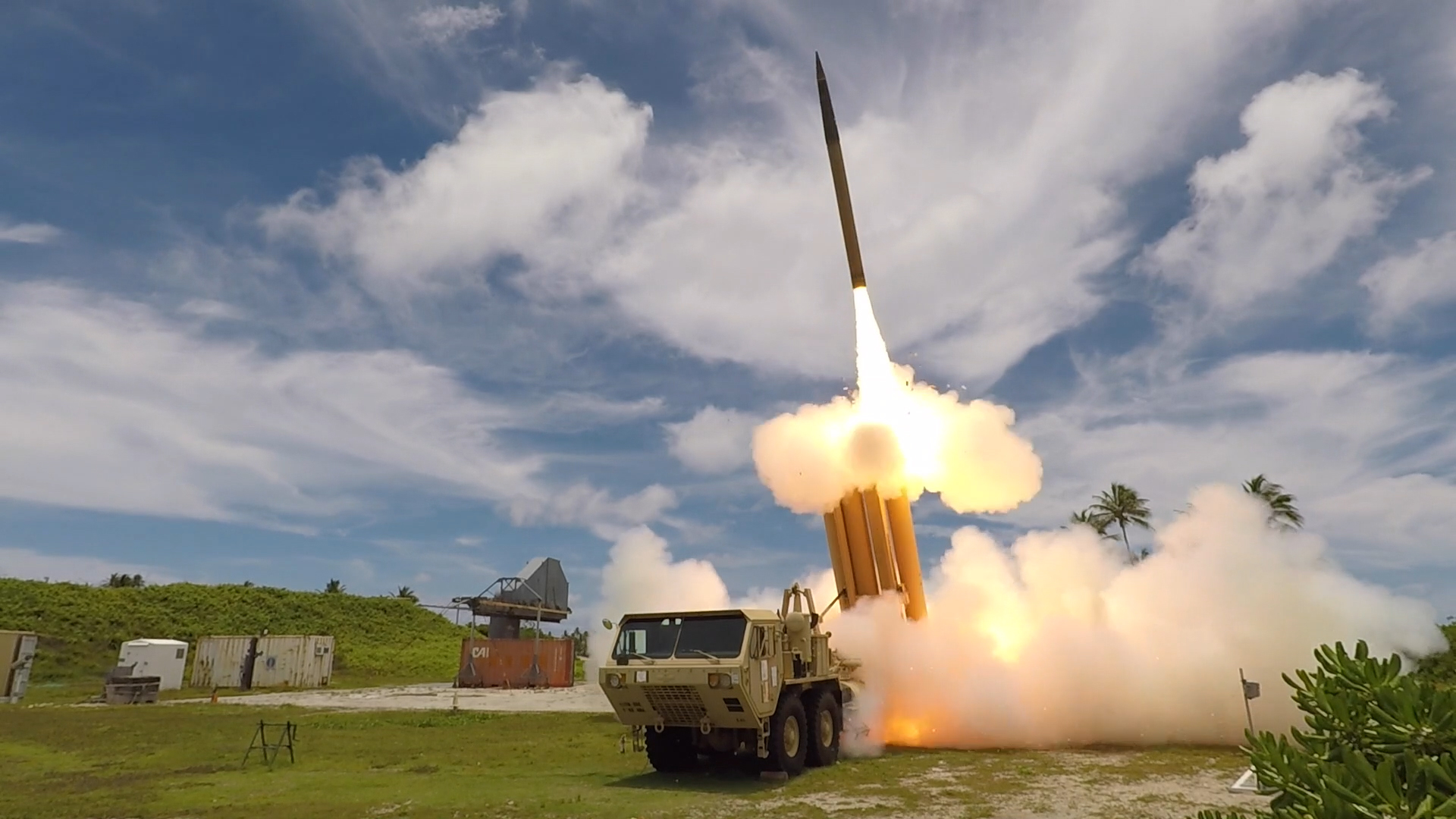
U.S. Army Faces Critical Shortage in Missile Defense Interceptors
The U.S. Army's Terminal High Altitude Area Defense (THAAD) interceptor inventory is critically low, posing a significant risk to national security in the event of future conflicts. Recent events have highlighted this vulnerability, with reports indicating that nearly a quarter of the available interceptors were used during the 12-Day War between Israel and Iran in June. Without immediate action from Congress, it will take far too long to replenish and expand these critical defense assets.
The U.S. Missile Defense Agency recently awarded a $2.06 billion contract modification to produce THAAD interceptors, which is a positive step. However, this effort alone is not enough. To address the growing threat, Congress must act decisively by approving the administration’s request to reallocate funds across programs, ensuring sufficient funding to procure the maximum number of interceptors in the next fiscal year, and pushing the Pentagon and industry to rapidly expand production capacity.
Understanding the THAAD System
THAAD is a land-based missile defense system developed in the United States, designed to destroy short-, medium-, and intermediate-range ballistic missiles both inside and outside the atmosphere using hit-to-kill technology. The U.S. Army currently operates eight THAAD batteries, each consisting of six launchers and eight interceptors per launcher, totaling 48 interceptors per battery. This system forms the upper layer of the Army’s theater ballistic missile defenses, complementing the Patriot system as the lower layer and working alongside naval interceptors such as the SM-3 and SM-6.
During the 12-Day War, Iran reportedly launched over 500 ballistic missiles at Israel and around a dozen at a U.S. airbase in Qatar, destroying a geodesic dome. The U.S. assisted Israel in defending against these attacks, with multiple THAAD batteries deployed in the region, showcasing the system’s interoperability within a broader missile defense architecture.
The Impact of the Conflict on Inventory
Estimates suggest that more than 150 THAAD interceptors were fired during the conflict. According to Pentagon fiscal 2026 budget documents published in June 2025, the Department of Defense had previously committed funding for 646 interceptors. Even accounting for some that may not yet have been delivered or used in testing, the expenditure of 150 interceptors represents roughly a quarter of the total U.S. THAAD inventory.
This raises an important question: why does the U.S. maintain such a small inventory of interceptors? The answer lies in the level of procurement prior to the 12-Day War. The Pentagon requested only 25 interceptors in its base defense budget for FY26 and another 12 through reconciliation, totaling 37. While this is an increase compared to the 11 procured in FY24 and 12 in FY25, it remains insufficient. At this rate, it would take about four years to replenish the interceptors used during the conflict.
Growing Threats and the Need for Action
The situation becomes even more concerning when considering the potential threats from other nations. China, for example, possesses around 2,700 short-, medium-, and intermediate-range ballistic missiles and continues to build more. Russia has more than doubled its ballistic missile production from 2023 to 2024 and is expanding further, according to Ukrainian intelligence. North Korea is also advancing its missile program, threatening regional targets and the U.S. homeland.
These developments underscore the urgent need for a more robust U.S. missile defense infrastructure and larger stockpiles of interceptors.
Steps to Replenish and Expand THAAD Inventory
To address the shortfall, Congress should approve the above-threshold reprogramming request submitted on July 15. This will allow the Pentagon to move funds quickly and acquire additional interceptors, especially given the recent $2.06 billion contract modification by the Missile Defense Agency.
However, Congress should not stop there. For FY26, it should authorize and appropriate the necessary funding to procure the maximum quantity of interceptors that industry can produce. Current full-rate production stands at 96 THAAD interceptors per year, with the potential to reach 144 in FY26. With additional steps, production could be increased further.
A portion of current production is already allocated for foreign military sales to Saudi Arabia and the United Arab Emirates, which has helped sustain the production line while U.S. demand remained low. Industry is prepared to invest in increasing production if Washington commits to purchasing the maximum quantity possible and signals long-term support.
Long-Term Strategy and Congressional Oversight
To encourage industry investment and inform future Pentagon requests, Congress should require an annual report from the Pentagon detailing 1) current maximum production levels for THAAD interceptors and 2) steps being taken and could be taken to expand production capacity each year.
Notably, the Senate Appropriations Committee approved an increase of $923 million for additional THAAD interceptors and related investments on July 31. This is a positive development that the full Congress and administration should support.
Washington has long underinvested in air and missile defense, and the consequences are now becoming evident. Several steps are available to begin addressing the THAAD interceptor shortfall. Ensuring that U.S. service members have the missile defenses they need in a future conflict requires urgent action in Washington today.

Post a Comment for "The urgent need for more THAAD interceptors"
Post a Comment