The Taliban's New Afghanistan: A Growing Concern
The Taliban's Expansion of Religious Education
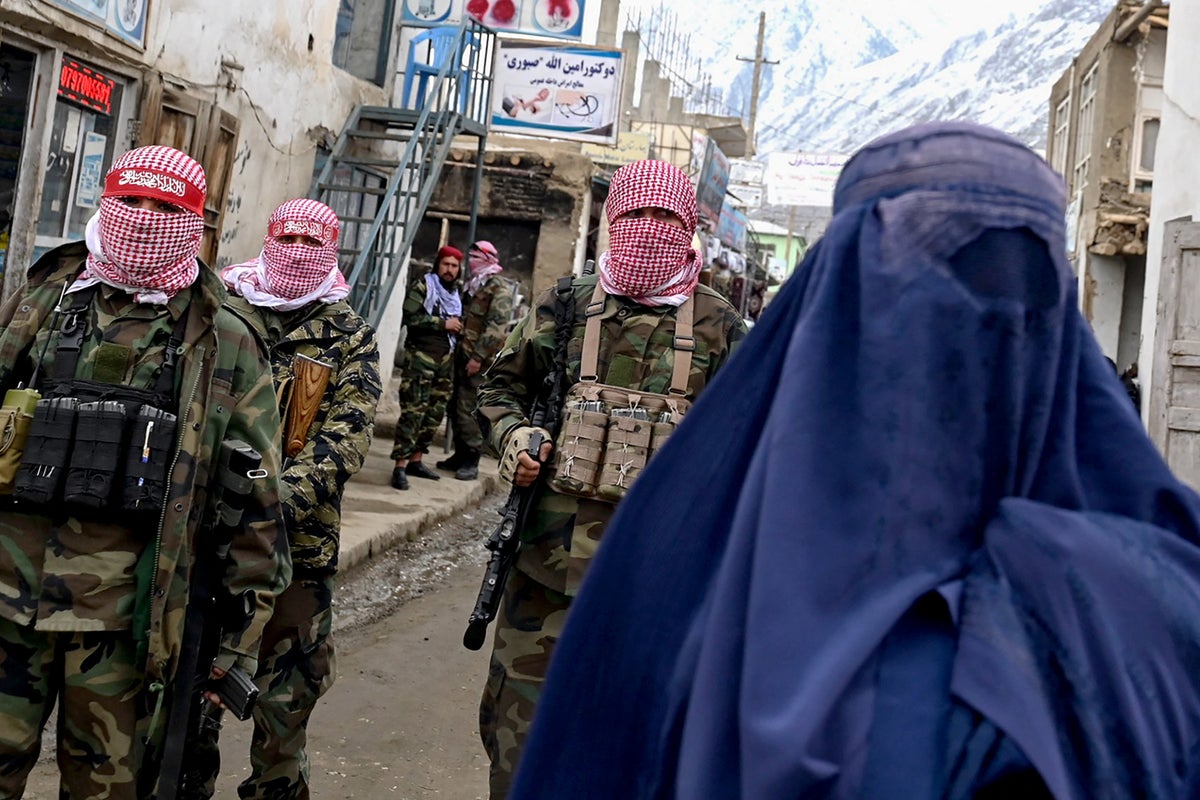
Since regaining power, the Taliban has prioritized spreading its ideology across various sectors in Afghanistan. From prisons and rehabilitation centers to military bases, "religious education" has become a central component of the country's institutions. By introducing courses on Quranic recitation, exegesis, and broader religious instruction, the group aims to bring more Afghans closer to its strict interpretation of Islam and convince them of the merits of its fundamentalist approach.
Recent events have highlighted this strategy. Images of a "graduation ceremony" for 100 individuals undergoing treatment for drug addiction at a rehab center in Herat were widely shared in media outlets aligned with the Taliban. These "graduands" completed courses on the correct recitation and pronunciation of the Quran. The ceremony, which marked the end of their time at the facility, included white clothing, traditional caps, and Taliban flags.
Syed Asif, one of the participants in the course who was a patient at the center, shared his experience with Independent Persian: "I’m currently undergoing treatment and have now been able to quit drugs. During this time, I started reading the Holy Quran and memorized many of its parts."
Hayatullah Rouhani, the anti-narcotics chief in Herat, emphasized that authorities aim to provide opportunities for religious learning as part of the rehabilitation process for those struggling with addiction.
In addition to Quranic instruction, the Taliban also held singing sessions for some patients. They were instructed to sing anthems that glorified the group’s 20-year war against the former Afghan government and Western forces, recounting bombings, suicide attacks, and bloody battles. These songs serve to promote the Taliban’s "jihadist narrative" and legitimize violence.
What is concerning is not just the introduction of religious education itself, but the content and nature of what is taught. This curriculum is designed to push society towards extremism and create fertile ground for Taliban recruitment. During the group’s insurgency against the previous government, religious schools were key recruiting hubs. These institutions distort Islamic teachings and glorify violence, preparing students for war and carrying out suicide missions.
The Taliban's goal is to build a society not only politically dominated by their organization but also intellectually and ideologically shaped by its worldview. Now that they have full control of public schools, religious institutions, universities, prisons, and rehab centers across Afghanistan, their primary focus has been imposing a rigid, hardline interpretation of Islam.
The expansion of religious education by the Taliban is not limited to prisons and rehab centers. There has been a sharp increase in the number of mosques and religious schools throughout the country. The presence of senior Taliban officials at graduation ceremonies, both in religious schools and for religious courses in detention or rehab centers, makes it clear that spreading their version of Islam through "religious education" is a top priority.
These officials have repeatedly called on people to study religion, but with the proviso that this is done according to the Taliban’s own interpretation of Islam, which diverges significantly from mainstream Islamic teachings in much of the Muslim world.
The growing emphasis on this specific brand of religious education, centered on the Taliban’s radical interpretation of Islam, raises serious concerns about the normalization of religious extremism. By promoting slogans like “implementing sharia law” and “establishing an Islamic system,” the Taliban is trying to win over more Afghan citizens to its radical ideology and expand the social base it needs to sustain its political and military power.
This shift in educational and ideological focus underscores the Taliban's long-term strategy to shape the future of Afghanistan. Through controlled access to religious education, they are laying the groundwork for a society that aligns with their vision, reinforcing their influence in every aspect of life.

Post a Comment for "The Taliban's New Afghanistan: A Growing Concern"
Post a Comment