The 'Star Trek' Kiss That Spooked TV Executives
The Controversial Scene That Changed Television
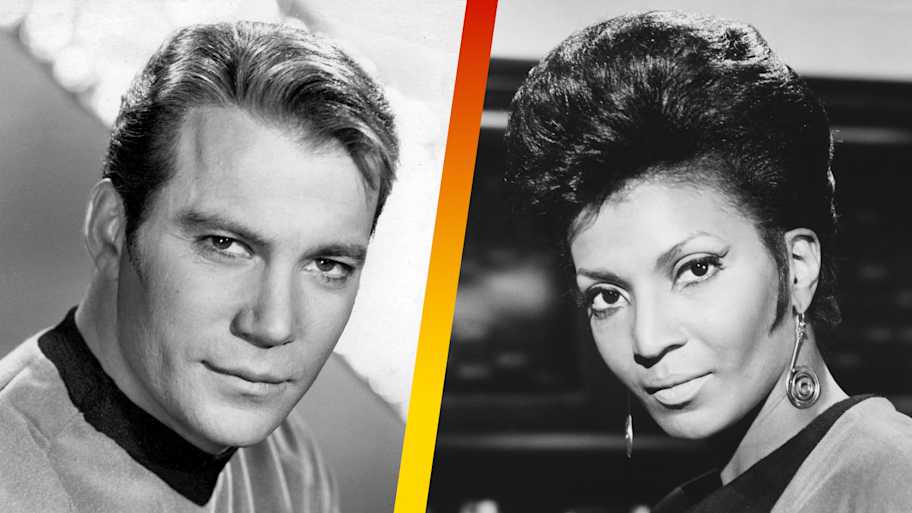
The 1960s were a time of social change and shifting norms, and television was not immune to the challenges of the era. One of the most memorable moments in television history came from the science-fiction series Star Trek, which, despite its futuristic setting, often tackled real-world issues. However, one particular scene—Captain James T. Kirk (played by William Shatner) kissing Lieutenant Nyota Uhura (Nichelle Nichols)—became a flashpoint for controversy.
Shatner was known for his strong personality, and his reaction to the scene was no different. He famously declared, “Let’s just shoot the whole thing, and to hell with the South.” This was not just a line from an actor; it reflected the tension between creative vision and network censorship. The issue wasn’t the act itself, but the fact that Kirk was white and Uhura was Black. At the time, such a scene could have sparked backlash, especially in the Southern United States.
Despite the concerns, both Shatner and Nichols were initially unconcerned about the kiss. They believed it was simply part of the storyline, where the characters were forced into the situation by the alien Platonians. Nichols, who was one of the few Black actresses on a major network show at the time, didn’t see the racial implications as significant. However, the network executives had a different perspective.
A Scene That Sparked Debate
As rehearsals began, the director, David Alexander, became visibly uncomfortable. Soon after, NBC executives arrived on set and raised concerns about the scene. Their main fear was that the kiss would be too controversial for certain regions, particularly the South. Some even suggested that Spock, played by Leonard Nimoy, should be the one to kiss Uhura instead, as they thought it would be more acceptable for an alien to do so.
This idea was eventually rejected, with some suggesting it was a cop-out. Gene Roddenberry, the creator of Star Trek, was called in to resolve the issue. He agreed to film the scene, but with a compromise: two angles would be used. One would show the full kiss, while the other would imply it without actually showing the lip contact. This allowed the network to avoid direct controversy while still including the scene.
Despite the tension, the scene was ultimately filmed. The executives’ fears of backlash did not materialize. Instead, the episode received mostly positive feedback. There was no flood of hate mail, and the show continued without incident.
The Legacy of the Kiss
While the scene may not have been the first interracial kiss on television, it became one of the most iconic. Other examples existed before, such as a 1955 British broadcast of Othello or a 1958 appearance on The Ed Sullivan Show. However, Star Trek’s cultural impact ensured that this moment was remembered.
The episode, titled “Plato’s Stepchildren,” was not initially seen as groundbreaking. It wasn’t until later that it was recognized as a milestone in television history. Even then, the term “first interracial kiss” was often misapplied. The real significance of the scene lay in its representation of a future where race was not a barrier, a vision that resonated with many viewers.
Why It Matters
The kiss was more than just a scene—it was a statement. In a time when interracial marriage was still illegal in some states, Star Trek dared to imagine a world where such barriers no longer existed. While it didn’t immediately lead to a wave of similar scenes on television, it helped pave the way for more diverse and inclusive storytelling.
The episode also highlighted the power of television as a medium for social commentary. Like The Twilight Zone, Star Trek used science fiction to explore real-world issues, often in ways that were more palatable to audiences and advertisers.
In the end, the kiss became a symbol of progress, even if it wasn’t the first of its kind. It showed that television could challenge societal norms and push boundaries, even in a time of strict censorship. And while the immediate impact may not have been dramatic, the long-term legacy of that scene is undeniable.

Post a Comment for "The 'Star Trek' Kiss That Spooked TV Executives"
Post a Comment