The Secret Soviet Space Journey to Mars and Venus
The Ambitious Soviet Vision for Interplanetary Exploration
The Soviet Union’s ambitious space exploration plans were ultimately hindered by the lack of a viable rocket system. Decades after the collapse of the Soviet Union and the end of the Cold War, it's easy to forget that there was a time when the United States felt genuine concern over Soviet capabilities. This wasn’t just due to their nuclear arsenal or military strength but also because of their advanced technological achievements.
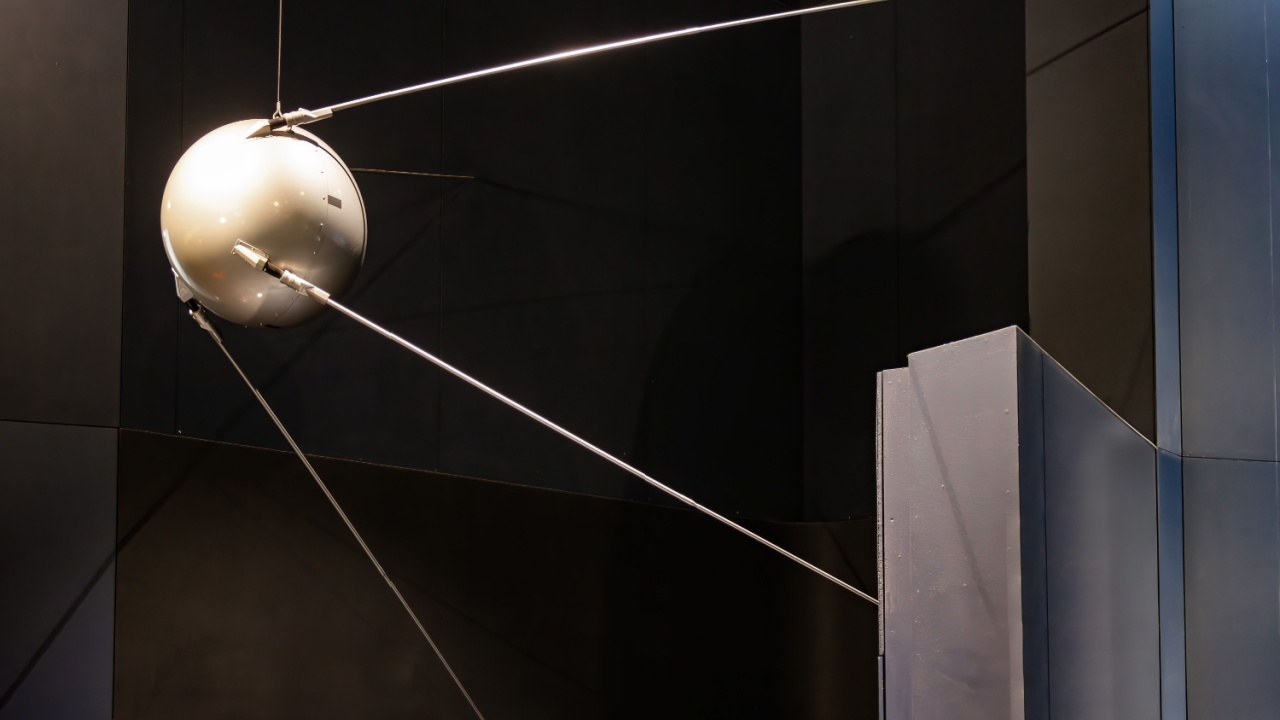
In the realm of space, the Soviets were highly competitive for many years. They achieved significant milestones during the Space Race, including launching the first satellite, Sputnik, and sending the first human, Yuri Gagarin, into space. But their ambitions extended beyond Earth. The Soviet Union had grand plans to spread their communist ideology to the stars, with goals that included landing cosmonauts on the Moon and Mars. Their vision was to send ships and people throughout the solar system long before their American counterparts could do so.
The USSR’s Heavy Interplanetary Vehicle
At the heart of these aspirations was the USSR’s Heavy Interplanetary Vessel (TMK) program. Conceived during the height of the Cold War, the TMK aimed to send crewed missions to both Mars and Venus, responding directly to the U.S. focus on lunar exploration. While the TMK series never progressed beyond the design phase, its conceptual innovations and engineering challenges offer a fascinating look into the Soviet Union’s interplanetary ambitions.
The project was spearheaded by the OKB-1 Design Bureau under the leadership of Sergei Korolev and his deputy, Mikhail Tikhonravov. The goal was to surpass American efforts and showcase Soviet technological prowess. The TMK series included various spacecraft designs such as the TMK-1, TMK-E, MAVR (Mars-Venus), and KK (Space Complex for Delivering a Piloted Expedition to Mars).
Each variant addressed different mission profiles, from flyby missions to more complex scenarios involving landings on the Martian surface. The roots of the TMK program can be traced back to an earlier concept called the Martian Piloted Complex (MPK), proposed in 1956. This mission required a massive spacecraft assembled in low-Earth Orbit (LEO), which relied heavily on the N1 heavy-lift rocket. However, the failure of the N1 rocket led to the downfall of the MPK mission.
Key Components and Variants
Like the MPK program, the TMK series was designed to leverage the N1 rocket. The N1 was crucial for placing the TMK-1 spacecraft into orbit. As the baseline design for the TMK series, the TMK-1 was envisioned as a crewed spacecraft carrying three cosmonauts on a three-year Mars flyby mission. It would follow a free-return trajectory, using Mars’ gravity to slingshot back to Earth, requiring only minor mid-course corrections.
During the flyby, remote-controlled probes would be deployed to the Martian surface to collect data. Another notable variant, the TMK-MAVR (Mars-Venus), incorporated a Venus flyby on the return leg, reducing the mission duration. This design aimed to maximize scientific return by studying two planets in a single mission.
Advanced Designs and Innovations
There was also the TMK-E variant, which explored the use of nuclear electric propulsion, a cutting-edge technology at the time. Konstantin Feoktistov proposed that the TMK-E would spiral out of Earth’s orbit using an ion drive powered by a nuclear reactor, minimizing exposure to the Van Allen radiation belts. Once beyond, the TMK-E, which would be slower than its sister variants, would use conventional rockets.
A distinctive feature of Soviet interplanetary concepts was a long boom separating the nuclear reactor from the crew quarters to reduce radiation exposure. The most advanced iteration of the TMK series was the KK Space Complex, proposed in 1966. This design included multiple modules such as the Expeditionary Spacecraft (EK), Orbital Complex (OK), Landing Module (SA), Ascent Module (AV), Ascent Rocket stage (RV), and Planetary Station (PS) for surface operations.
The Legacy of the TMK Program
Despite these ambitious designs, the TMK program never made it off the drawing board. The lack of a proper heavy-lift rocket proved to be a critical obstacle. Just as their MPK program for going to Mars proved to be the undoing of their manned deep space exploration program, the Soviets’ inability to launch their astronauts beyond Earth’s orbit ultimately doomed their interplanetary ambitions.
This serves as a hard lesson for current space programs. Without the capability to launch astronauts beyond Earth’s orbit, even the most advanced theories and designs remain just that—concepts on paper. The story of the TMK program highlights the importance of robust infrastructure and technological development in achieving long-term space exploration goals.

Post a Comment for "The Secret Soviet Space Journey to Mars and Venus"
Post a Comment