The science of deadly cloudbursts wreaking havoc in India and Pakistan
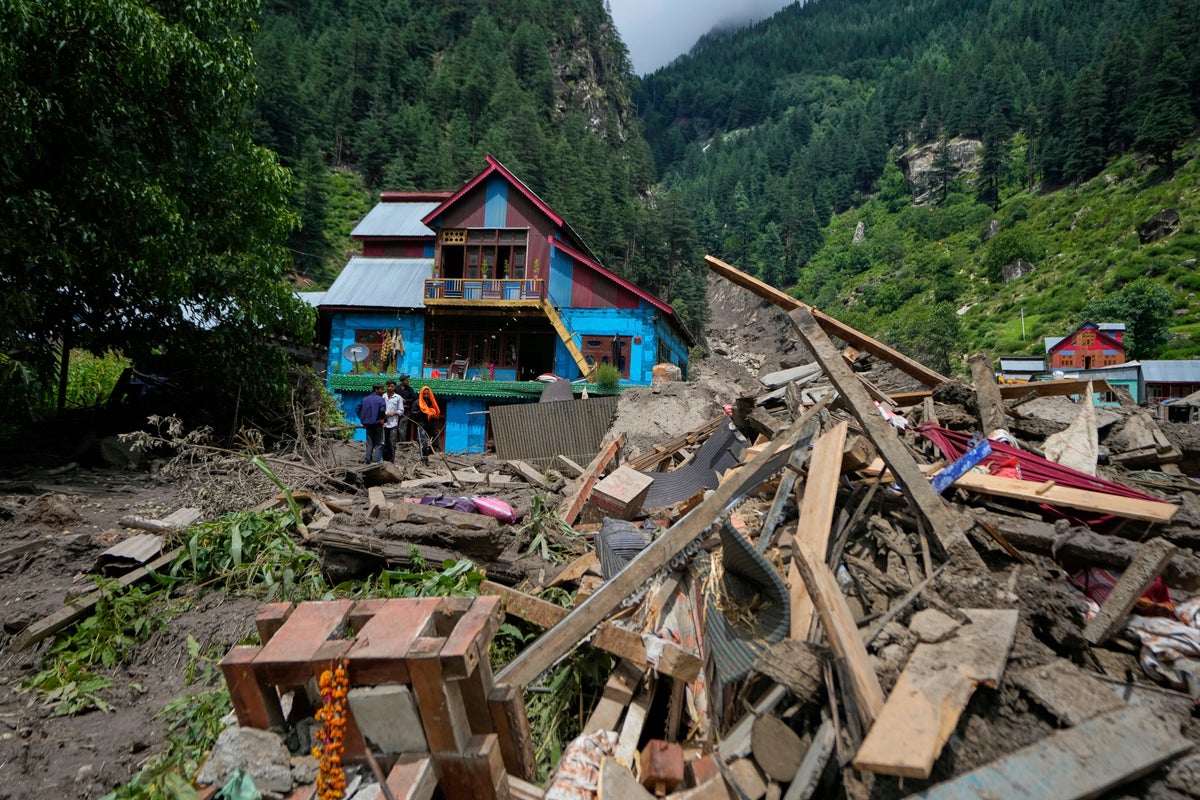
Understanding the Devastating Impact of Cloudbursts in Mountainous Regions
Cloudbursts have become increasingly destructive in mountainous regions across India and Pakistan, bringing with them sudden and intense rainfall that leads to catastrophic consequences. These extreme weather events are characterized by an immense amount of rain falling over a small area within a short time frame, often resulting in flash floods, landslides, and mudflows.
In Pakistan, one of the most tragic incidents occurred in the northwestern district of Buner, where a single cloudburst claimed the lives of up to 300 people. The sheer force of the deluge caused widespread destruction, with homes being flattened and entire villages reduced to rubble. In one particularly heartbreaking case, 24 members of a single family perished in the village of Qadar Nagar when floodwaters swept through their home on the eve of a wedding. Umar Khan, the head of the family, survived because he was out of the house at the time, but four of his relatives remain missing.
India has also faced significant challenges from cloudbursts, especially in the northern state of Uttarakhand. Earlier this month, a cloudburst hit the region, with local television footage showing floodwaters surging down a mountain and engulfing the Himalayan village of Dharali. This event echoes the devastating 2013 cloudburst in the same state, which resulted in over 6,000 fatalities and affected more than 4,500 villages.
What Are Cloudbursts?
A cloudburst occurs when a large volume of rain falls within a very short period, typically more than 100 millimeters (about 4 inches) in an hour over a localized area of around 30 square kilometers (11.6 square miles). These events are sudden and violent, leading to widespread destruction and can be compared to several hours of normal rainfall or more. The phenomenon is essentially the bursting of a cloud, releasing its contents all at once, similar to a rain bomb.
Several factors contribute to the formation of cloudbursts, including warm, moist air rising upward, high humidity, low pressure, instability, and convective cloud formation. When moist air encounters hills or mountains, it is forced to rise, cool, and condense, forming large, dense clouds capable of heavy rainfall. These clouds often get trapped by the mountains, delaying rainfall until they can no longer hold the accumulated moisture, at which point they burst and release it all at once.
Why Do Cloudbursts Occur in India and Pakistan?
Cloudbursts thrive in areas with moisture, monsoons, and mountains. Both India and Pakistan have these elements, making them particularly vulnerable to such extreme weather events. The Himalayas, Karakoram, and Hindu Kush mountain ranges span multiple countries, including India and Pakistan, creating ideal conditions for cloudbursts.
The frequency of cloudbursts in these regions has been increasing due to a warming atmosphere. Warmer air can hold more moisture, creating conditions for sudden and intense downpours. Traditionally, the South Asian region experiences two monsoon seasons, but climate change has disrupted this pattern. Warmer air holds more moisture from the Arabian Sea and Indian Ocean, leading to intense flooding and dry spells rather than sustained rainfall.
The combination of moisture, mountains, and monsoons forces moisture-laden winds upward, triggering sudden condensation and cloudbursts. However, predicting these events remains challenging due to their size, duration, and complex atmospheric mechanisms.
Can Cloudbursts Be Predicted?
Predicting cloudbursts is extremely difficult due to their sudden nature and complex atmospheric processes. Asfandyar Khan Khattak, a Pakistani official, stated that there is currently no forecasting system capable of predicting the exact time and location of a cloudburst. Even with early warning systems in place, the intensity and suddenness of these events often leave little time for residents to react.
Community organizations like SOST, based in Pakistan’s Gilgit-Baltistan region, emphasize the importance of precautions. They advise people to avoid building homes near rivers and valleys, postpone travel to hilly areas during heavy rain, keep emergency kits ready, and avoid traveling on mountainous roads during heavy rain or at night. They also recommend afforestation to reduce surface runoff and enhance water absorption, as well as regular clearing and widening of riverbanks and drainage channels.
Climate Change and the Rising Frequency of Cloudbursts
Experts attribute the increasing frequency of cloudbursts to climate change. A 1°C rise in temperature allows the air to hold about 7% more moisture, increasing the potential for heavy rainfall in short bursts. The warming of the Indian Ocean and Arabian Sea pushes more moisture into the atmosphere, while melting glaciers and snow alter local weather patterns, making rainfall events more erratic and extreme.
Environmental degradation, such as deforestation and wetland loss, further reduces the land's ability to absorb water, exacerbating flash floods. Khalid Khan, a former special secretary for climate change in Pakistan, notes that rising global temperatures have intensified the hydrologic cycle, leading to more frequent and destructive rainfall events. Warming accelerates glacier melt, adds excessive moisture to the atmosphere, and destabilizes mountain slopes, making rare events more common and frequent events more damaging.
As the impacts of climate change continue to unfold, the need for proactive measures and global cooperation becomes ever more urgent.

Post a Comment for "The science of deadly cloudbursts wreaking havoc in India and Pakistan"
Post a Comment