The Power and Strategy of AI
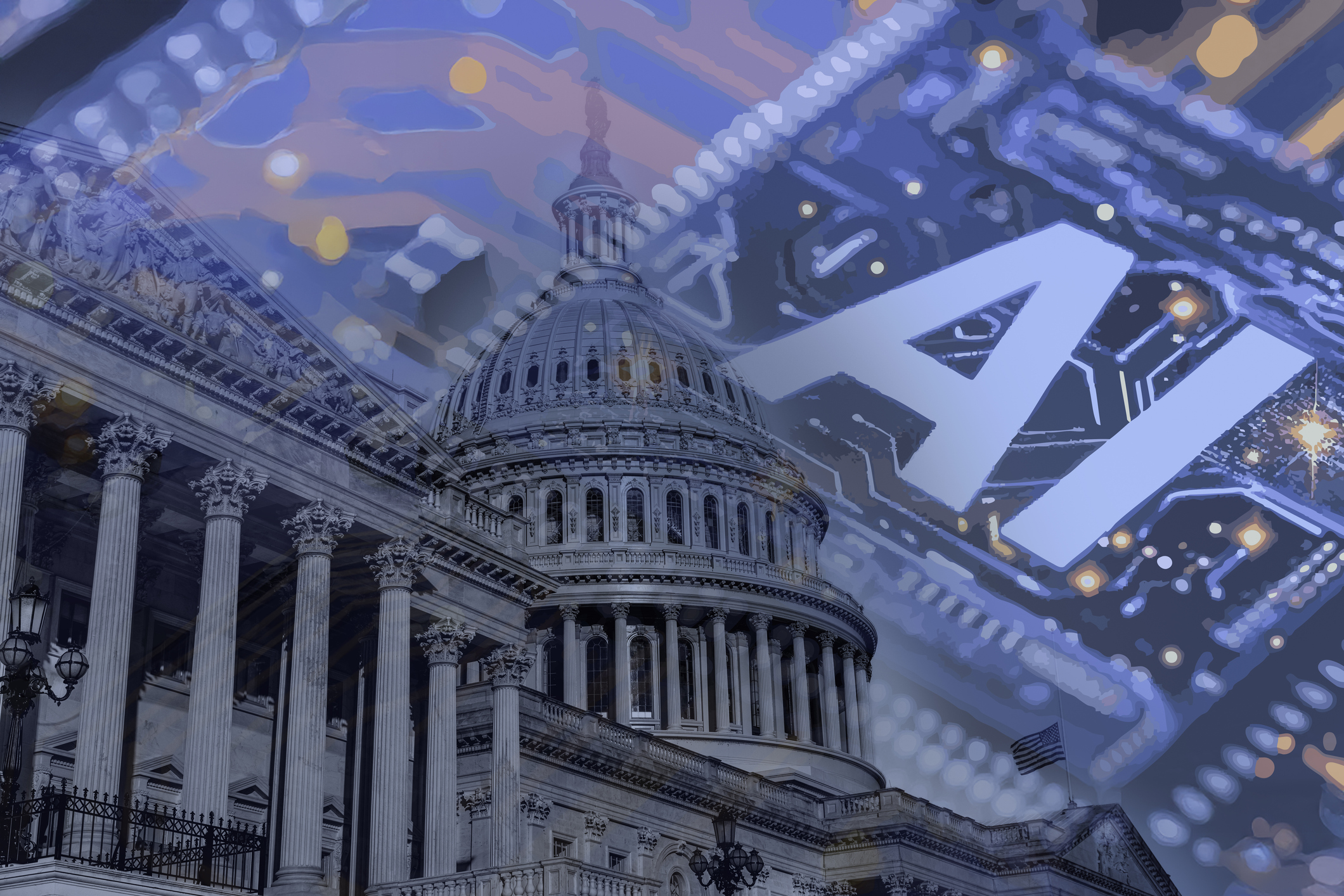
The Acceleration of AI and Its Global Implications
Artificial intelligence is advancing at an unprecedented pace, and few political leaders fully grasp the implications of this rapid development. For decades, technological progress followed what was known as “Moore’s Law,” which observed that the number of transistors on a microchip doubles approximately every 18 to 24 months. However, we are now witnessing a new phase in this evolution, often referred to as “Nadella’s Law.” Satya Nadella, CEO of Microsoft, highlighted this shift during his speech at the company’s annual Ignite conference in 2024, noting that AI performance is doubling every six months rather than every 18 months.
This accelerated pace of AI development has far-reaching consequences. One significant impact is the emergence of AI agents capable of autonomously driving scientific advancements. These systems are already being used in fields such as biotechnology, where they leverage biological research to conduct experiments that lead to innovations in food production, medicine, and environmental protection. In materials science, AI is helping design new materials for energy, medicine, construction, electronics, and aerospace. Soon, AI models may be able to perform the entire scientific method without human intervention.
Another major development is the rise of "agentic AI," which can execute increasingly complex workplace tasks without human oversight. Experts suggest this technology is likely to become widespread within the next year. This shift will fundamentally change the nature of work, particularly in white-collar industries. Productivity is expected to surge, but so will disruption in the labor market. Jobs in scientific research, paralegal work, accounting, analytics, graphic design, and even entry-level desk jobs could be replaced by AI within the next two to three years. The impact will not be limited to office settings—driverless vehicles are already threatening the livelihoods of truck, bus, and taxi drivers.
Political and Economic Challenges
The rapid advancement of AI brings significant political and economic challenges. Initially, both private and public-sector organizations will resist the displacement of large numbers of workers. However, when economic downturns occur, these organizations will face difficult decisions about how to adapt. A recent example was the strike by American longshoremen and dockworkers over concerns about automation. While the strike ended with an agreement, it did not fully resolve the issue of automation’s impact on jobs. As AI continues to replace human labor, political tensions around job loss and economic inequality are likely to intensify.
The geopolitical dimension of AI is equally critical. A fierce competition is already underway between the U.S. and China over access to semiconductors, energy, and rare earth minerals essential for AI development. Recent policies, such as Trump’s decision to allow China to purchase advanced chips from Nvidia, highlight the strategic importance of these resources. China’s dominance in rare earth mineral production gives it leverage, but the U.S. still holds key advantages. America is home to the largest number of “hyperscalers”—cloud service providers that offer massive computing power necessary for AI. Companies like Amazon, Google, Microsoft, Oracle, and IBM are central to this infrastructure.
However, the current U.S. government’s policies threaten these advantages. Attacks on American universities risk reducing scientific funding, weakening public-private partnerships, and limiting the ability to attract top international talent. By pushing away students and skilled immigrants, these policies undermine the U.S.’s long-term competitive edge in AI and national security.
Strategic Moves and Future Concerns
The Trump Administration has taken steps to strengthen U.S. control over AI technologies. It replaced previous strategies with a more rigid approach that limits the export of sensitive AI models. This policy aims to maintain American dominance in AI development but has created friction with Beijing. The Biden Administration’s “AI Diffusion Rule” categorized countries based on their likelihood of diverting AI technologies to China, imposing restrictions accordingly. However, the Trump team later shifted to a more quantitative strategy, requiring at least 50% of data to be exported to the U.S. and no more than 7% to any single other country.
These policies have broader implications for global trade and cooperation. The U.S.-China rivalry over AI is shaping the future of international relations, with significant consequences for other nations. If AI continues to evolve rapidly, the window for effective policy responses may be short. The need for thoughtful, coordinated strategies is urgent as AI reshapes economies, politics, and global power dynamics.

Post a Comment for "The Power and Strategy of AI"
Post a Comment