The Photographer Who Endangered Life to Document Chile Under Pinochet
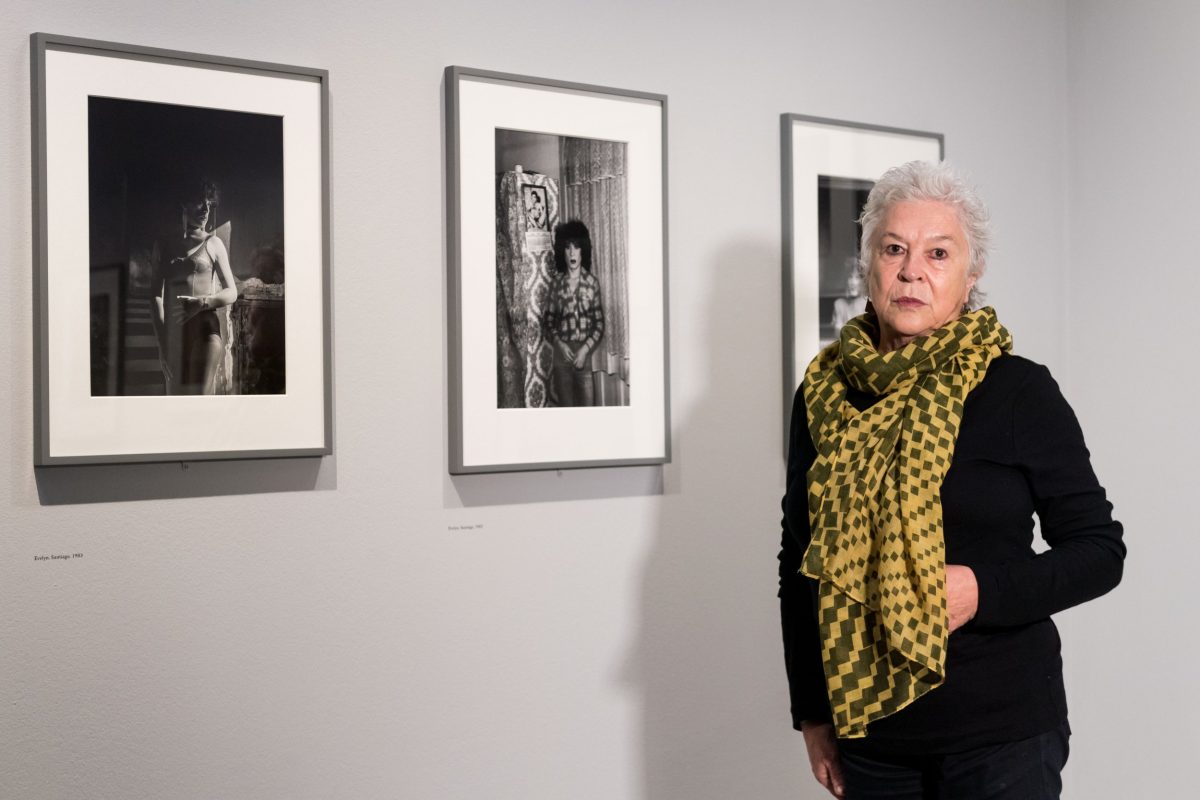
A Journey Through the Lens of Paz Errázuriz
Paz Errázuriz, a self-taught documentary photographer, has spent her life capturing the everyday experiences of Chileans who endured the harsh regime of General Pinochet. Her latest exhibition, “Dare to Look,” invites visitors to confront the realities she has documented over nearly five decades. For Errázuriz, photography serves as a mirror, reflecting not only the world around her but also the inner struggles and resilience of those she photographs.
The exhibition at MK Gallery in Milton Keynes features 171 original black and white prints, offering a comprehensive overview of her career. One of the most striking series, titled Protests, showcases the surreal horror of a 1985 International Women’s Day event where protesting women were violently subdued by water cannons. From a vantage point high above, Errázuriz captures the fragility of the women’s bodies, emphasizing the stark contrast between their vulnerability and the oppressive forces they face.
Errázuriz's approach to photography is both observational and deeply personal. She often positions herself in places that offer a unique perspective, such as from the top of a tall building or through the lens of a camera. This vantage point allows her to document the lives of those often overlooked, without becoming detached from the reality of their experiences. Her work is a testament to the power of visual storytelling, giving voice to the silenced and highlighting the injustices of a repressive regime.
The Challenges of a Photographer in a Repressive Regime
During the early days of the Pinochet regime, which lasted from 1973 to 1990, Errázuriz faced immense challenges. She was forced to leave her teaching job due to her involvement with the Workers’ Union, and her home was raided just five days after the coup. These events marked the beginning of a period of fear and uncertainty, but they also ignited her determination to document the realities of life under dictatorship.
Her neighbors, fearing for their safety, denounced her, believing she and her husband were hiding a Cuban revolutionary. Despite these dangers, Errázuriz continued her work, using her camera as a tool for resistance. In 1981, she co-founded the Chilean Association of Independent Photographers, further solidifying her commitment to documenting the lives of those affected by the regime.
Capturing the Unseen
While many photographers focus on the dramatic and the violent, Errázuriz is drawn to the subtleties of everyday life. Her work often explores the quiet moments of resilience and the hidden struggles of individuals. In her series The Sleeping, she captures the exhaustion and despair of a population living under constant fear. The images are haunting, depicting people in various states of rest, some seemingly asleep, others in a numb, resigned state.
Errázuriz also documents the lives of children and the elderly, highlighting the complexities of their experiences during and after the Pinochet years. She challenges the notion of "minority" by asserting that those often considered marginalized are, in fact, the majority. Her photographs of care homes and mental institutions reveal the neglect and isolation faced by these groups, while also celebrating their dignity and humanity.
The Power of Representation
One of the most significant aspects of Errázuriz’s work is her exploration of the line between representation and exploitation. In her Adam’s Apple series, she documents the lives of LGBTQIA+ sex workers in Santiago and Talca during the AIDS epidemic. Initially focusing on female sex workers, she found that many were unwilling to be photographed due to the risk of exposure. However, queer individuals, including non-binary and trans people, were more open to being captured, as they had already faced societal stigma.
Errázuriz acknowledges the intrusive nature of photography, recognizing that it can be both an act of respect and a potential violation of privacy. Her ability to build trust with her subjects has allowed her to create powerful, lasting connections, as seen in the Adam’s Apple project, where she documented an entire family and its extended circle.
Confronting the Harsh Realities
The final room of the exhibition presents a challenging series called Antechamber of a Nude, shot in 1999 in a psychiatric hospital. The images depict women in degrading conditions, evoking comparisons to concentration camps. Errázuriz was initially too frightened to share these photographs, but after five years, she decided to use them to advocate for change. The resulting exhibition in 2004 led to improvements in patient care, underscoring the impact of her work.
For Errázuriz, “daring to look” is not about sensationalizing suffering, but about recognizing the individual lives behind the images. Her photographs serve as a reminder of the importance of empathy, respect, and the power of visual storytelling. The exhibition, Paz Errázuriz: Dare to Look, continues at MK Gallery in Milton Keynes until 5 October.

Post a Comment for "The Photographer Who Endangered Life to Document Chile Under Pinochet"
Post a Comment