The Only Jewish-Japanese Family in WWII Internment Camps Endured Antisemitism
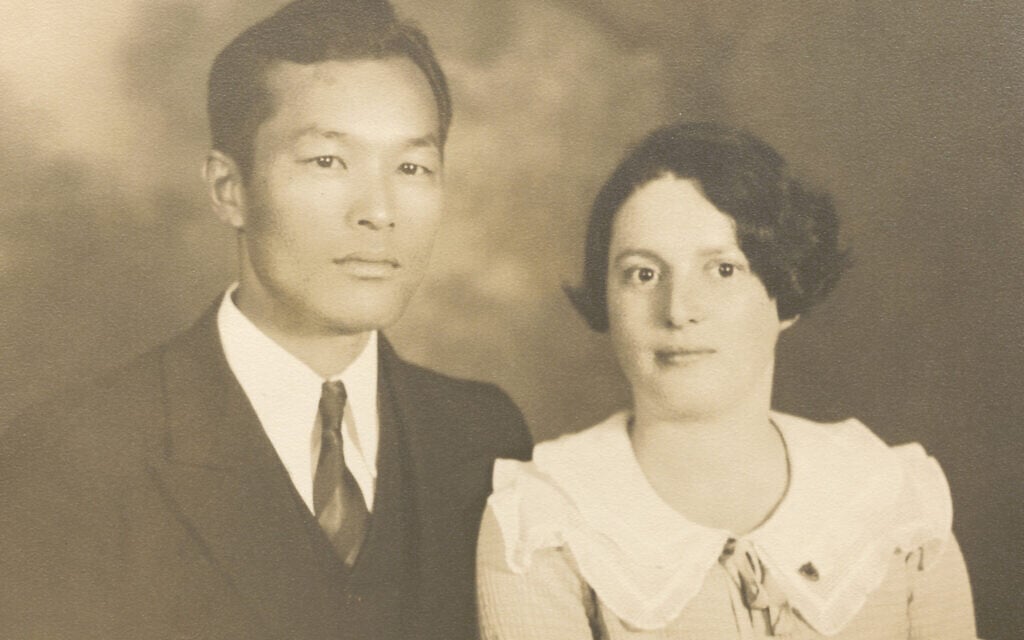
The Heart-Wrenching Decision of Elaine Buchman Yoneda
On March 29, 1942, Elaine Buchman Yoneda faced a heart-wrenching choice: she had received an order to bring her three-year-old son Tommy the next day to an assembly point in Los Angeles for registration and removal to an internment camp. This decision marked the beginning of a painful chapter in her life, one that would test her strength and love for her family.
In the months following the Japanese attack on Pearl Harbor in December 1941, the U.S. government issued orders to round up and incarcerate all individuals of Japanese descent on the West Coast. It didn’t matter if someone was a toddler or a nonagenarian; anyone with even a trace of Japanese heritage was deemed a national security threat. As a result, approximately 120,000 people, two-thirds of whom were U.S. citizens, were forcibly removed from their homes and placed in 10 camps surrounded by wire fences and patrolled by armed soldiers between February 1942 and March 1946.
Elaine and her Japanese-American husband, Karl Yoneda, were both seasoned labor leaders and advocates for social justice. However, when the authorities insisted that sickly Tommy should remain at home, they lost their argument. Karl had previously gone ahead to help build the Manzanar camp, a remote and barely inhabitable area at the foot of the Sierra Nevada Mountains, under the false promise that volunteering would delay his family’s deportation. This deception would later be revealed as a lie.
Elaine knew that Karl planned to seek special permission to leave the camp and enlist in the U.S. military, which would leave Tommy without a parent. Faced with this reality, she made the agonizing decision to forgo her freedom, leave her daughter behind, and insist on being sent to Manzanar with her son on April 1, 1942.
A New Book Unearths a Forgotten Story
The Yonedas’ traumatic and life-altering eight-month experience in Manzanar, along with its historical and political context, is the subject of a new book titled “Together in Manzanar: The True Story of a Japanese Jewish Family in an American Concentration Camp,” authored by Tracy Slater. Slater, a Jewish American woman married to a Japanese man, was inspired to write this book after discovering that little had been written about the Yonedas’ time at Manzanar despite their significant roles in leftist activism.
Slater noted that the story of mixed-race families who were swept up in the forced removal and incarceration of the West Coast Japanese American community is virtually untold. Historians estimate that 2,100 mixed-race family members were incarcerated, and there were countless others who had no Japanese descent but were separated from their families due to their associations.
During her five-year research process, Slater uncovered that the Yonedas were the only Jewish-Japanese couple incarcerated in the camps. Her work sheds light on the complexities of their experience and the broader implications of the internment.
Understanding the Terminology
There is some confusion regarding the nomenclature used for Manzanar and other such camps. Slater explains that while the camps for Japanese Americans are often referred to as internment camps, this term is legally reserved for the incarceration of foreigners during wartime. In reality, two-thirds of those imprisoned in these camps were American citizens, making them more accurately described as concentration camps.
The Yonedas' Ideological Struggles
Before the war, Karl and Elaine Yoneda were active labor activists and members of the Communist Party, fighting for civil and human rights. Their support for the U.S. government’s forced removal and incarceration of Japanese Americans was shaped by the prevailing sentiments of the time. Elaine struggled with this decision, but her views aligned with both the Jewish American community and the leftist community, which prioritized the fight against Hitler and the Axis powers over internal issues.
Antisemitism and Diverse Experiences
Slater also highlights the presence of antisemitism within the camps, particularly among the older generation who had grown up in Japan. However, she notes that the Yonedas faced more backlash for their outspoken leftist opinions than for being a mixed-race family.
The camps were a melting pot of diverse individuals, including varying ideologies, economic backgrounds, and generations. This diversity challenged the narrative that the Japanese community was homogeneous, revealing the complex realities of the internment.
Lessons for Today
Slater admires the Yonedas for their unwavering bond and commitment to their convictions. Despite losing everything, they continued their anti-Fascist efforts and fought for what they believed was right.
The story of the Yonedas resonates today as it reflects the ongoing questioning of American democracy and the dangers of false narratives about who is considered a threat. Slater draws parallels between the past and present, noting the stripping of civil rights from certain groups, such as transgender individuals.
The Yonedas’ experience serves as a powerful reminder of the importance of vigilance, empathy, and the need to protect the rights of all individuals, regardless of their background.

Post a Comment for "The Only Jewish-Japanese Family in WWII Internment Camps Endured Antisemitism"
Post a Comment