The Night 747 Secrets Escaped a Paris Restaurant in Napkins
A Cold War Secret in a Paris Restaurant
In the late 1960s, the world was caught in the grip of the Cold War, a period defined by political tension and technological rivalry. Amidst this backdrop, an unusual meeting took place in Paris—a gathering that would have seemed more at home in a James Bond film than in a business setting. Joe Sutter, the chief engineer of the now nearly forgotten Boeing 747, was heading to a dinner meeting with a group of Soviet aeronautical engineers. This wasn't just any meeting; it was a government-sanctioned exchange of technical information between two global superpowers.
The U.S. Department of State had arranged for Boeing to share its expertise with the Soviet Union, marking a rare moment of cooperation during a time of intense competition. The meeting took place in a Parisian restaurant, a neutral ground where both sides could engage without the usual political pressures. The question remains: why would the United States, a key player in the Cold War, allow such a transfer of knowledge to its primary rival?
A Desperate Need for Titanium
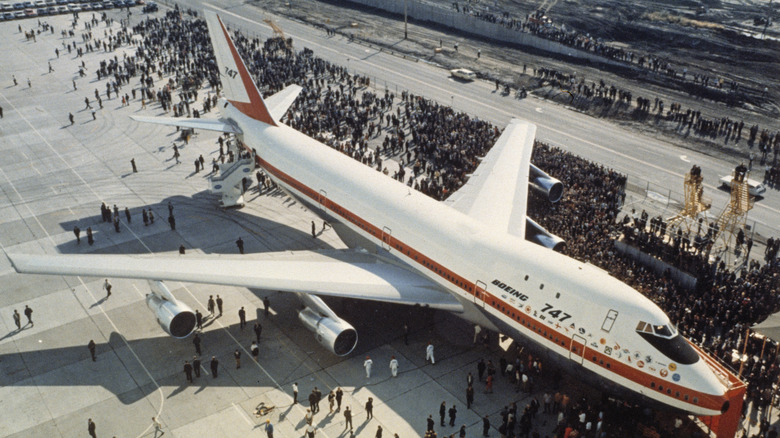
At the heart of this exchange was a high-stakes need for a rare metal—titanium. Boeing was working on two massive projects that were straining the company's resources. The first was the Boeing 747, a groundbreaking project aimed at creating the largest passenger jet in the world. The second was the Boeing 2707, a supersonic transport designed to compete with the Concorde and the Soviet Tu-144.
The 2707 required titanium to withstand the extreme heat generated by air friction at Mach 2.7 speeds. However, Boeing lacked the expertise to fabricate titanium on such a scale. Enter the Soviet Union, which had vast reserves of titanium and advanced space program capabilities. The Soviets were the leading experts in titanium manufacturing at the time.
A Strategic Exchange
While the Soviets had their own challenges, they were particularly interested in Boeing's design choices. Their initial designs for a jumbo jet were conservative, but they struggled with the decision to mount engines on the wings rather than the rear fuselage. This question brought them to Paris, setting the stage for a strategic exchange.
The dinner began with a targeted intelligence operation. Boeing's SST expert, Bob Withington, grilled the Soviet engineers on the intricacies of titanium fabrication. The Soviets provided detailed answers, and in return, Boeing's team received the information they needed. Boeing's president, Thornton "T" Wilson, ordered Sutter to be completely transparent, leading to an impromptu masterclass in airliner design.
Sketches on Napkins
The discussion unfolded on cloth napkins and the tablecloth itself, as no paper was available. While this might seem like a critical oversight, both parties likely found it too obvious to bring notebooks. Sutter explained the advantages of the wing-mounted pylon design, emphasizing its benefits in terms of bending relief and engine safety.
As the dinner concluded, the Soviet delegation carefully rolled up the inked linens, taking home a paradigm shift in aviation philosophy. The impact of this exchange was evident in the redesign of the Ilyushin Il-86, the Soviets' jumbo jet. It adopted a four-engine underwing configuration, closely resembling the Boeing 747. However, the Il-86 ultimately failed due to inefficient, outdated engines, highlighting that even with the best knowledge, success is not guaranteed.
Legacy of a Secret Meeting
Despite the failure of the Il-86, the fundamental design changes resulting from the Paris meeting marked a significant moment in aviation history. The exchange of ideas, though conducted in a seemingly informal setting, had lasting effects on aircraft design. It serves as a reminder of how even in times of conflict, collaboration can lead to innovation and progress.

Post a Comment for "The Night 747 Secrets Escaped a Paris Restaurant in Napkins"
Post a Comment