The Marine's Indispensable Fighter Jet
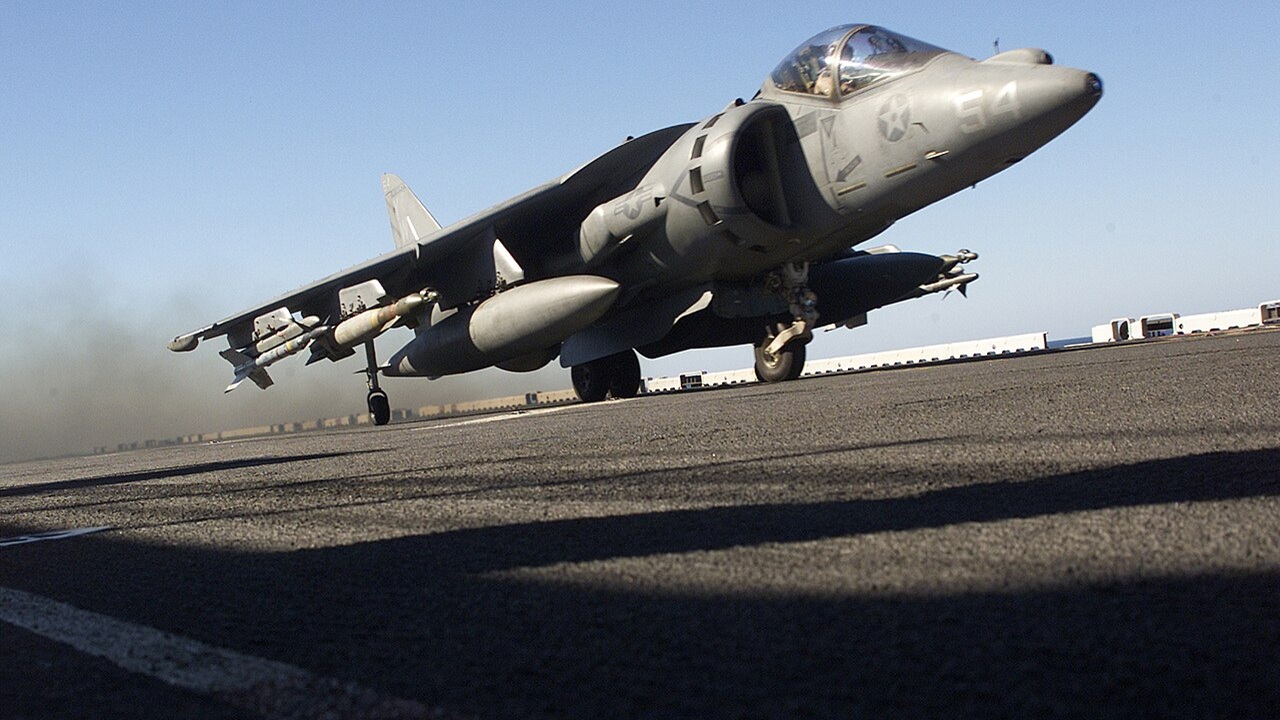
The Harrier Jump Jet: A Legacy of Versatility and Innovation
The Harrier jump jet has played a pivotal role in shaping the capabilities of the United States Marine Corps. Its unique design has enabled the Corps to deploy air power in ways that would have been impossible with traditional aircraft. The AV-8B Harrier II, in particular, has stood as a symbol of versatility and adaptability for nearly four decades. As it prepares to retire, the Harrier is being replaced by more advanced platforms, but its impact on military aviation remains significant.
Operational Flexibility Through V/STOL Technology
One of the most defining features of the Harrier is its ability to perform vertical or short takeoff and landing (V/STOL). This capability allows the aircraft to operate from short, unimproved airstrips, forward operating bases, and even small naval vessels. Unlike conventional jets that require long runways, the Harrier can launch and land in confined spaces, making it ideal for supporting ground forces in remote or contested areas.
This operational flexibility has made the Harrier an essential asset for missions such as close air support (CAS), interdiction, and armed reconnaissance. The ability to quickly respond to changing battlefield conditions ensures that the Marine Corps can maintain a continuous presence in combat zones without relying on established airfields.
Technical Specifications of the AV-8B Harrier II
The AV-8B Harrier II was introduced in 1985 and served the U.S. Marine Corps for over three decades. Here are some key specifications:
- Year Introduced: 1985
- Number Built: Approximately 340 (including all variants)
- Length: 46 ft 4.5 in (14.13 m)
- Height: 11 ft 8 in (3.55 m)
- Wingspan: 30 ft 4 in (9.25 m)
- Weight: ~22,000 lb (10,000 kg) standard loadout
- Engine: 1 × Rolls-Royce Pegasus 11-61 vectored-thrust turbofan (23,500 lbf / 105 kN thrust)
- Top Speed: ~Mach 0.9 (approx. 673 mph or 1,083 km/h) at sea level
- Combat Radius: ~300–400 mi (480–640 km), mission-dependent
- Service Ceiling: ~43,000 ft (13,100 m)
- Loadout: Up to 9,200 lb (4,200 kg) of ordnance on six wing and one centerline hardpoints (total 7)
- Aircrew: 1
How the Marine Corps Utilizes the Harrier
The Harrier’s mission profile typically involves launching from forward positions, reaching combat zones quickly, delivering precision ordnance, and returning to re-arm and re-fuel. This cycle allows the Marine Corps to provide rapid and sustained support to ground forces.
The aircraft’s design is optimized for this type of operation. The Rolls-Royce Pegasus engine, with its four swiveling nozzles, enables the Harrier to transition seamlessly between hover, short takeoff, and high-speed forward flight. This unique propulsion system is central to the jet’s ability to operate in diverse environments.
In addition to its propulsion system, the Harrier features a structure built from lightweight composite materials and an enlarged wing area. These elements improve lift and payload capacity, allowing the aircraft to carry a wide range of weapons, including precision-guided munitions, missiles, rockets, and a GAU-12/U cannon.
Advanced Avionics and Sensor Systems
The Harrier is also equipped with modern avionics and sensor systems that enhance its combat effectiveness. A digital cockpit, night vision compatibility, and systems like the LITENING targeting pod provide the pilot with advanced electro-optical and infrared targeting capabilities. These features allow for accurate target identification and engagement, even in low-light or nighttime conditions.
The cockpit layout is designed to maximize situational awareness. Features such as Hands-On Throttle and Stick (HOTAS) and Heads-Up Display enable the pilot to manage weapons and navigation systems while maintaining focus on the battlefield.
A Legacy of Mobility and Rapid Deployment
The Harrier’s design emphasizes mobility, rapid deployment, and sustained support. Its ability to operate from austere locations has made it a critical component of the Marine Corps’ expeditionary operations. While the Harrier is gradually being replaced by the Lockheed Martin F-35B Lightning II, its legacy as a pioneering jump jet will endure.
As the Marine Corps transitions to newer platforms, the Harrier’s contributions to military aviation will remain a testament to innovation, versatility, and the importance of unconventional flight capabilities.

Post a Comment for "The Marine's Indispensable Fighter Jet"
Post a Comment