The Epic Story of "Easy Money" and the ACH-47A Chinook in Vietnam
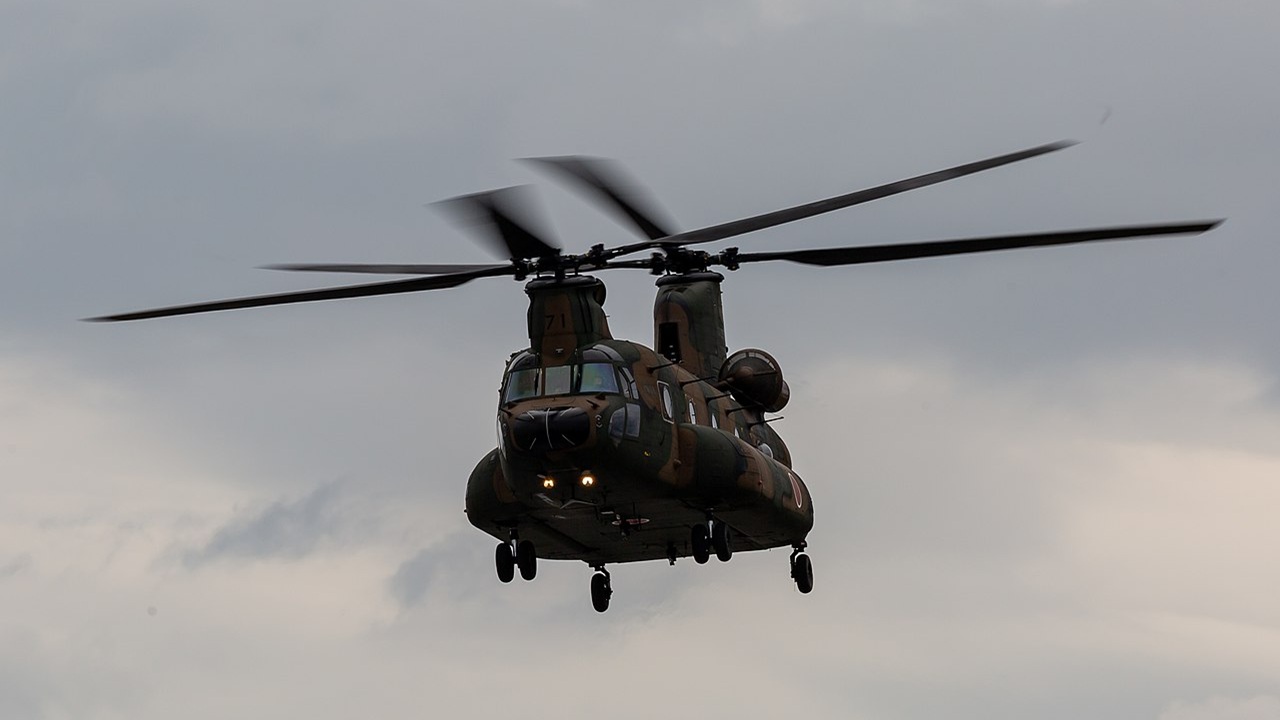
The Emergence of the “Guns a Go-Go” Helicopter in Vietnam
During the intense conflict in Vietnam, the United States faced a significant challenge in maintaining an advantage over North Vietnamese forces. The dense jungles and unpredictable terrain made traditional warfare difficult, prompting the need for innovative aerial solutions. One such innovation was the development of the ACH-47A helicopter, which would later be known as the “Guns a Go-Go.” This aircraft was transformed from a standard transport helicopter into a formidable gunship, capable of providing close air support (CAS) and heavy firepower.
The concept of the “Guns a Go-Go” initiative emerged in the mid-1960s as the U.S. military sought to enhance its capabilities in the region. By 1964, the vulnerability of standard transport helicopters like the CH-47 Chinook during landing operations became apparent, leading the Army to explore the idea of a dedicated escort gunship. Boeing Vertol was contracted to convert four CH-47A models into armed and armored variants, designated ACH-47A. These prototypes were delivered in November 1965 and received colorful nicknames, including “Easy Money,” “Cost of Living,” “Stump Jumper,” and “Birth Control.”
Technical Specifications and Modifications
The ACH-47A was a heavy-lift helicopter gunship designed for close air support. It featured a rotor diameter of 18.29 meters (60 feet) and was powered by two T55-L-712 engines. While specific details about its cruise speed and range remain unknown, it was capable of operating at speeds around 188 mph and had a range of approximately 460 miles. The crew consisted of eight members, including pilots, gunners, and other essential personnel.
To transform the standard Chinook into a combat-ready aircraft, Boeing removed non-essential features such as troop seats, cargo hooks, winches, and soundproofing. This allowed for the installation of armor plating, fire suppression systems, fuel cross-feed mechanisms, and enhanced communication equipment. The modifications significantly increased the helicopter’s survivability in hostile environments.
Armaments and Capabilities
One of the most notable features of the ACH-47A was its extensive armament package. It was equipped with five crew-served guns, either M2 .50 caliber or M60D 7.62mm guns, mounted at side windows and the rear ramp for full 360-degree defense. Additionally, the helicopter featured two fixed XM34 M24A1 20mm cannons on stub wings, XM159 pods with 19 2.75-inch rockets, and a chin-mounted M5 turret housing a 40mm automatic grenade launcher. It also had options for two additional M18 minigun pods.
This configuration enabled the ACH-47A to deliver more ordnance than three UH-1 “hog” gunships combined, while withstanding heavy machine gun fire from the ground. With a crew of eight, the helicopter could loiter over battlefields, obliterating enemy formations and providing critical support to ground troops.
Heroic Service in Vietnam
Deployed in late 1966, the “Guns a Go-Go” unit quickly proved its worth in Vietnam’s unforgiving terrain. Easy Money and her sister ships supported airborne assaults, escorted troop transports, and unleashed devastation on enemy positions. During evaluations, they destroyed every assigned target, earning high praise from field commanders for their ability to operate in extremely poor weather when fixed-wing aircraft could not.
Key operations highlighted the heroism of these aircraft. On July 19, 1966, near Trang Bang, the gunships provided critical fire support to besieged ground troops, halting enemy advances and minimizing casualties. The pinnacle of their service came during the Tet Offensive on February 22, 1968, near Hue. One of Easy Money’s sister gunships, nicknamed “Birth Control,” was hit by enemy fire and forced to autorotate into a rice paddy. Under intense Viet Cong assault, Easy Money landed to rescue the seven-man crew, laying down suppressive fire with rockets and guns while taking hits that wounded some of its crewmembers.
Legacy and Conclusion
Despite its short-lived operational period, the “Guns a Go-Go” program left a lasting impact on military aviation. By mid-1968, only Easy Money remained operational, leading to the cancellation of the program. The demand for Chinooks as transport helicopters outweighed their use as gunships, and Easy Money was repurposed as a maintenance trainer before being shipped back to the United States.
In the 1990s, Easy Money was restored and placed on display at Redstone Arsenal, Ala., in 2000, preserving its legacy as a museum exhibit. The influence of the ACH-47A can be seen in future gunship designs, such as the AC-130, and demonstrated the value of heavy helicopter support. Infantrymen recalled enemy forces fleeing at the sight of a “Go-Go Bird,” underscoring the psychological and tactical impact of the helicopter.
Though short-lived during the Vietnam War, Easy Money symbolized American ingenuity in adapting to the brutal and unforgiving asymmetric warfare tactics employed by North Vietnamese and Viet Cong forces. Its legacy endures in Vietnam War aviation lore, representing a pivotal moment in the evolution of close air support.

Post a Comment for "The Epic Story of "Easy Money" and the ACH-47A Chinook in Vietnam"
Post a Comment