The Cat Who Rescued Books
Grief and Feeling Alone
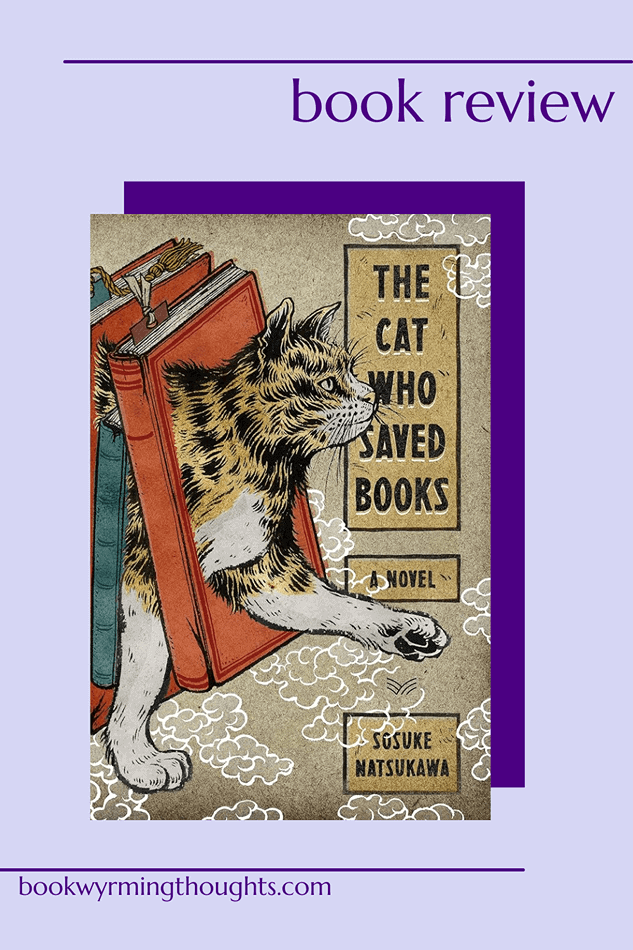
The Cat Who Saved Books tells the story of Rintaro Natsuki, a high school boy who inherits a second-hand bookshop after his grandfather dies. He had a close relationship with his grandfather, who introduced him to reading and cultivated his love for reading, so he’s devastated. And he’s even more devastated that he might have to close the shop that holds many of his memories and books that brought him joy so he can live with an aunt that he’s never even met.
Rintaro isolates himself from the world, not going to classes and grieving the loss of a grandfather. He’s already known to be a hikikomori, a Japanese term referring to those who are reclusive, sometimes to the extreme. But throughout the book, Rintaro gets a few visits from a couple of classmates who support him in various ways: bringing him notes, homework, and providing company. They ultimately remind him he’s not alone in this world, even if he might feel like it’s just him and his books. Sometimes the support is subtle and quiet, but they’re still there. And even if there is no one around, there’s always a story that you can turn to and escape into, whether it’s a new story from a new author, a classic, or a comfort read from years ago. I think a lot of us can relate to escaping into a book, a game, an art project, etc. when things seem like they’re on fire around us, even if it’s a temporary escape and reality pulls us back.
Consumerism, the Publishing Industry, and Hustle Culture
Not long after his grandfather’s funeral, when Rintaro’s coping with the aftermath of realizing that he’ll never see his grandfather wake up again, a talking cat named Tiger appears. Tiger’s exactly what you expect from a cat: no nonsense, direct, sometimes mean. He comes in recruiting Rintaro’s help to save books, and the two of them go on three adventures to accomplish this goal. Tiger warns Rintaro that it’s going to be dangerous, but personally, I felt like they were low stakes — it’s very much cozy/middle grade vibes. That being said, though, for someone who’s isolated and socially awkward/inept like Rintaro, it’s valid to have this be a challenge — it’s hard to put yourself out there when you’re used to relegating yourself to the background and making yourself as small as possible.
Through the three adventures Rintaro and Tiger go on, Natsukawa provides commentary about consumerism and the publishing industry. Arguably, one could say there’s commentary about the book community as well.
The First Labyrinth
The first labyrinth introduces Rintaro to the imprisoner of books in a mansion where a man claims to love and read books but treats them as trophies, keeping them away in glass cases. While the first labyrinth specifically deals with engaging with what we read, it’s a commentary about the overconsumption of books — and everything else, really. Bookstagram, booktube, booktok — a lot of us see readers with overflowing shelves filled with colorful books and special editions with sprayed edges (some of them just colored page edges). We have content about book hauls and going book shopping, and while yes, you can absolutely do what you want and buy what makes you happy if you have the means to do so, but really, how many of those books do you actually end up reading and how many are relegated to your shelves or tote boxes?
How many special editions of Fourth Wing do you actually need? At what point do special editions become not so special when nearly every book has them or there’s like so many versions coming out? The newest booktok era problem: rise of collector’s editions marketing gimmick by Book Chats with Shelley. When the Fourth Wing and Iron Flame wing and claw editions were announced, I remember seeing someone posting about how they have all the special editions of the books and they were going to purchase the new editions as well when it comes out. Don’t take this the wrong way (and if that person comes across this, no, I’m not shaming that person at all; do what makes you happy because I am not the customer service representative of your actions), but reading The Cat Who Saved Books while seeing that post nailed in about how much we’re consuming, and how books are becoming like fast fashion.
And no, it does not help at all that Red Tower Books is definitely capitalizing on this. But I mean, hey, they are in the business of selling books, and as much as I do not plan on continuing The Empyrean series, you cannot deny the impact of the series. And it’s also easier to invest in something you know will sell versus a new author who may or may not sell. It’s hard out there for authors.
I’m guilty of this as well (just book hoarding in general, not multiple copies of a book — I hope if I buy 3 copies of a book one of my friends will give me a good bonk in the head): I started unhauling my books recently, and I’ve got quite a collection that I have not read (not as much as some out there). A lot of them are from dollar stores, so it’s nowhere near as much as buying them at full retail price, but the amount of books I’ve read vs. books I got? There’s quite a few. Some of these I got years ago, and I’ve frankly forgotten that I even have them. I’m sure I’m not alone in this — we’re all constantly joking about our endless TBRs.
I love having special editions of books, especially my favorite ones that I plan on reading again after some time, and it genuinely does not help that publishers market a sense of urgency with limited print runs of some of the most beautiful books out there. Because what if I love the books? I’m going to want a pretty copy before it sells out, because what if I love the rest of the series and want the editions to match? Until they change it mid-series… Take other industries too, like stationery and coloring. How many coloring books do we actually need and use? Do we actually use all 108+ Tombows, or do we gravitate to maybe 20-30? Will we really use that square-shaped notebook, or are we just buying it because we’ve never seen it before and it looks cool or the cover looks pretty?
I’m guilty of this as well — I have quite the collection of washi tape. RELATED: 5 Things We Normalize and Overconsume without Question and TikTok is RUINING Reading, Coloring & Every Hobby It Touches by Susannah Friesen
The Second Labyrinth
Rintaro’s second venture with Tiger into the labyrinth introduces him to a research facility run by a scholar. The scholar’s goal: cutting down literature to help people read more quickly in a fast-paced, busy world where no one has time to read. It’s kind of like looking for the SparkNotes/CliffNotes version of a book rather than reading the book in full and engaging with the text, examining the deeper meaning and intentions of the author — if the quick version was just a few sentences — and then saying you actually read it. The thing about CliffNotes is that while they definitely help with recapping and providing clarity on the meaning of a character’s actions and motives and what the writer could have possibly meant when there’s a green light at the end of a dock, it’s also just one interpretation of the text.
Books are subjective, and everyone’s interpretations and what they take away from a book will differ from their neighbor’s interpretation. Heck, if you’ve read this book, then your interpretation might differ from mine. While The Cat Who Saved Books came out (originally in Japanese, not when the English translation came out) as BookTok started becoming big, you could arguably say it’s making commentary about anti-intellectualism and how performative the book community can be. I remember last year when there was an article about BookTokers skipping big paragraphs in books and only reading the dialogue. And no, my intention isn’t to shame anyone for skipping big paragraphs — I’ve done the skipping unintentionally when a big paragraph bores me (I’m usually on my way to DNFing, though) — but isn’t reading the dialogue cutting away the rest of the book essentially? And sometimes dialogues can be long, especially if they’re relevant to the world-building or character development. Sometimes a character is going to spend a lot of time telling another character a legend from their island.
Reading is deeply personal, and our opinions of the books we read are shaped by our experiences around us. When you cut down a book to everything but a few sentences, you lose the context and deeper meaning, and you lose the potential of forming a deeper personal connection with a book after engaging with it. RELATED: are booktokers actually reading books anymore?? | booktok and anti intellectualism by Book Chats with Shelley
And it takes time, too! As we grow up, we have less free time as we take on additional responsibilities. It’s so much easier to sit down and scroll away rather than picking up a book, making notes, and writing thoughts about the books. And the instant gratification of social media doesn’t help: there’s so much noise out there. The fast-paced industry of book publishing and the world doesn’t help either: we’re seemingly focused on the aesthetics and the newest releases — there’s that pressure (or the illusion of) as a creator to be on top of the latest, to read more books and sometimes people get shamed for reading fewer books. I’ve definitely felt that pressure myself, and honestly, that’s why I took a hiatus from bookstagram and essentially never returned — I have more peace of mind on my blog without the algorithm and noise. I don’t need to worry about posting every day if I don’t want to in order to keep the algorithm happy. The only noise that mostly happens on this blog is noises I make and the ever so rare guest poster.
The Third Labyrinth
The third labyrinth leads Rintaro and his companions to the president of a publisher, who believes that books should be produced based on the market. It’s very clearly about the publishing industry, and we see trends that pop up all the time because a book took off by storm. When Twilight came out, we saw an increase in vampire books. Divergent, dystopian. Fourth Wing? Romantasy (and first print special editions). The Love Hypothesis? Fanfiction. And look, I understand books have to sell for publishers to make a profit. Bookshops have to make a profit, and that’s something Rintaro’s classmate, Ryota Akiba, brings up when Rintaro asks him about why he’d visit Natsuki Books. He also mentions there are a lot of gems that are no longer bestsellers and have faded from the spotlight, but there’s always a variety at Natsuki Books: books no longer in print, books long forgotten, books that never made it into the spotlight in the first place, etc.
I talked about it briefly earlier, but we definitely focus a lot on the newest releases. And sure, they’re important, but backlist books equally deserve some spotlight as well — some people find their favorite books years after their release, but often the community has moved on to newer releases. Publishing has moved on to the newest trend. Vampire books might work for a few months, or maybe Reylo fanfiction, but then Dramione ones become the next focus. This seems to be the trend right now? Anyway, I’m not a fan of JKR for obvious reasons. Sometimes we’ll see a book from a while ago make its way back to a bestseller — We Were Liars is a really good example of this happening. We’ve also been seeing self-published books getting picked up by publishers, which I love seeing, but I can’t help but wonder what this will do for the future of publishing.
(Don’t get me wrong; there are some absolute gems in self-publishing. I’m more referring to how this might affect newer authors who don’t have the fanbase from self-publishing getting rejected because they don’t have an established base.) As the president of World’s Best Books says in The Cat Who Saves Books: Publishers don’t need to worry about what they’re telling the world; they need to understand what the world wants to hear. He also talks about reading being fashionable and conferring status, alluding to how books, like many industries, have been commercialized over the years. And honestly, what is a huge book haul if it’s not being fashionable and conferring status?
What about AI, though? I think this will play a part as well, unfortunately. Perhaps we’re already seeing it, as we’ve seen authors with allegations of using AI. I think when you’re feeling the pressure to churn out content and meet deadlines with a massive fan base who are hungering for more content from you, the thought becomes tempting to lift a burden off you even just a little. But what does this result in, really? What cost does this come down to? Personally, I’ve felt like the quality of books have gone down over the years, and I feel like there’s been a concerning trend that’s just been growing. (Or maybe I just need to try harder to find the good ones… maybe I’ll make it a mission one day to not use social media when searching for books to read.)
Final Thoughts
Outside of the commentary regarding the book and publishing industry, I loved Rintaro’s character growth as he goes from someone who isolated himself from everyone to someone who becomes more open to others as he takes on the next chapter without his grandfather. The Cat Who Saved Books was a quick and delightful read with magical elements, and Natsukawa packs a lot in an adventure that’s perfect for a variety of age groups. It’s very much an ode to reading and the power that books have on readers, but it’s also examining the growing commercialization of the publishing industry in the past few years.
The sequel to this (The Cat Who Saved the Library) recently came out in April, and it looks like it’s about the same length as this one. I’m looking forward to picking it up, as I’m curious to see what else Natsukawa has to say. He touches a little on representation and reading about the various experiences in books to better understand others along with censorship here, so I think there’s going to be more in the sequel.

Post a Comment for "The Cat Who Rescued Books"
Post a Comment