The 1937 Latina-Led Women's March Against Fascism: A Forgotten U.S. History
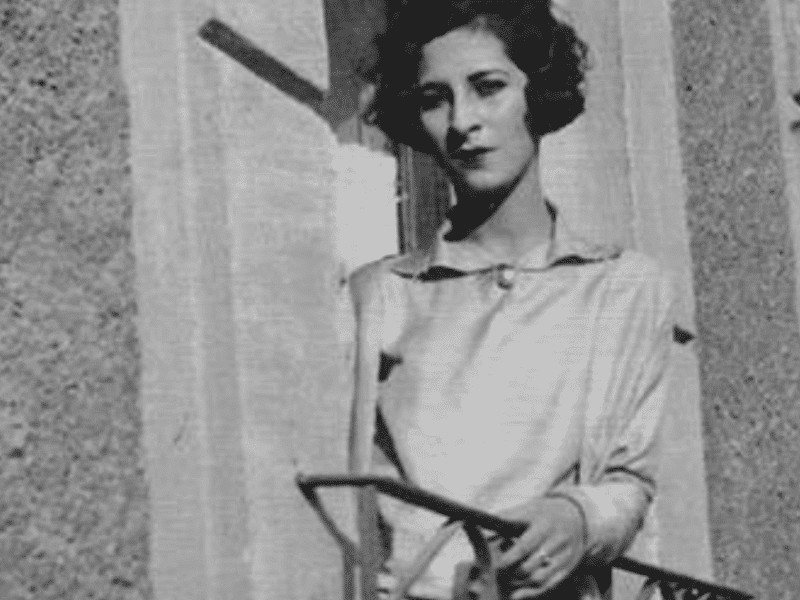
A Defiant March Against Fascism
On May 6, 1937, a powerful demonstration took place in Tampa's Ybor City, where 5,000 women, mostly working-class Latinas, marched through the streets in one of the largest political protests organized by Latinas in U.S. history. This event, now known as the 1937 Antifascist Women's March or Ybor City Women's March, was a significant moment in American history that highlighted the strength and determination of women fighting against rising fascist threats.
The march was inspired by the bombing of Guernica on April 26, 1937, when Hitler's Condor Legion and Mussolini's air force attacked a Basque town, killing thousands of civilians. News of this devastation spread quickly to Tampa's Latin immigrant community, which included Cubans, Spaniards, and Italians. Many had family ties in Spain and were deeply affected by the events unfolding there.
Within just ten days, the community organized a powerful anti-fascist demonstration that would become a landmark event in the nation's history. Historian Sarah McNamara, associate professor of history at Texas A&M University and author of "Ybor City: Crucible of the Latina South," described the march as "the largest collective action of Latinas to protest one single issue" before the modern immigration-rights era. The event mobilized a large number of people, especially women of color, under a unified antifascist banner.
Key Figures and Organizers
Labor organizer Luisa Moreno, a Guatemalan immigrant and one of the most formidable Latina labor leaders of the 20th century, played a crucial role in coordinating the demonstration. She worked with local coalitions like the Comité Popular de Defensa del Frente Popular Español to organize the march. Moreno was instrumental in unionizing Black and Latino cigar workers and became the first Latina elected to a high-ranking national position in a U.S. trade union as vice president of the United Cannery, Agricultural, Packing, and Allied Workers of America (UCAPAWA).
McNamara's great-aunt, Margot Falcón Blanco, was also involved in the march. She walked alongside her mother, Amelia Blanco Álvarez, and their presence helped personify the local, working-class, and countless everyday women who made the protest possible. The procession began on 7th Avenue and ended at Tampa City Hall, carrying an unapologetic message: "¡No pasarán!" (They shall not pass), which they borrowed directly from the Spanish Republican battle-cry coined by Dolores Ibárruri during the Siege of Madrid.
Strategic Leadership and Impact
The decision for women to lead the march was both symbolic and tactical. In the Jim Crow South, men of color who spoke out risked immediate, often violent retaliation. Women, while still targets of discrimination, faced less direct retribution, making them the safest public face for an urgent political stand. McNamara stated in a Tampa Bay Times interview that the Ku Klux Klan was pretty much unchecked, and when men spoke out, there were visceral repercussions. Women did not encounter the same kind of retribution.
When the marchers reached Tampa City Hall, they presented Mayor Robert E. Lee Chancey with a formal petition. A woman representative read a statement that declared: "As citizens and residents of a peaceful and democratic nation, we feel morally obliged to give all possible aid to Spanish cities that defend their democratic government against fascist aggression, thus maintaining the standard of peace and democracy in the world."
Remembering Is Resistance
Despite its size and impact, the Ybor City Women's March faded from mainstream memory for decades. It has taken generations to bring the march back into public consciousness. In 2023, with the support of the Carlos H. Cantu Hispanic Education and Opportunity Endowment and the Hillsborough County Historical Advisory Council, McNamara and artist Michelle Sawyer collaborated to create a historic marker and mural to commemorate the march and bring it to the forefront of public consciousness.
This year, on May 6, 2025, Women's March organized an Antifascist Women's March memorial walk. "We honor their courage, solidarity, and radical legacy in the face of global and local oppression. Their fight echoes in today's struggles for equity, workers' rights, and justice," stated the event's invite.
The Ybor City Women's March challenges the idea that Latinas' political engagement is a recent phenomenon. It reminds us that immigrant women, often written off as "workers" but not "leaders," have long been on the front lines of defending democracy. It also poses a question we can't ignore: if history forgot 5,000 women marching against fascism in 1937, what else has it erased?
Remembering Ybor City isn't just about honoring the past. It's about reclaiming a lineage of Latina resistance that is as relevant in today's political climate as it was when the women in black first stepped onto 7th Avenue and declared to the world: They shall not pass.

Post a Comment for "The 1937 Latina-Led Women's March Against Fascism: A Forgotten U.S. History"
Post a Comment