Thailand Launches Airstrikes on Cambodia Amid Border Clashes Killing 14
Escalation of Conflict Between Thailand and Cambodia
Thai and Cambodian soldiers have engaged in a significant military clash along their shared border, resulting in at least 14 deaths, mostly civilians. The conflict involved the use of small arms, artillery, rockets, and airstrikes by Thailand. According to Thai Defense Ministry spokesperson Surasant Kongsiri, fighting occurred in at least six areas on Thursday, following a land mine explosion that injured five Thai soldiers. This event prompted Bangkok to withdraw its ambassador from Cambodia and expel Cambodia’s envoy to Thailand.
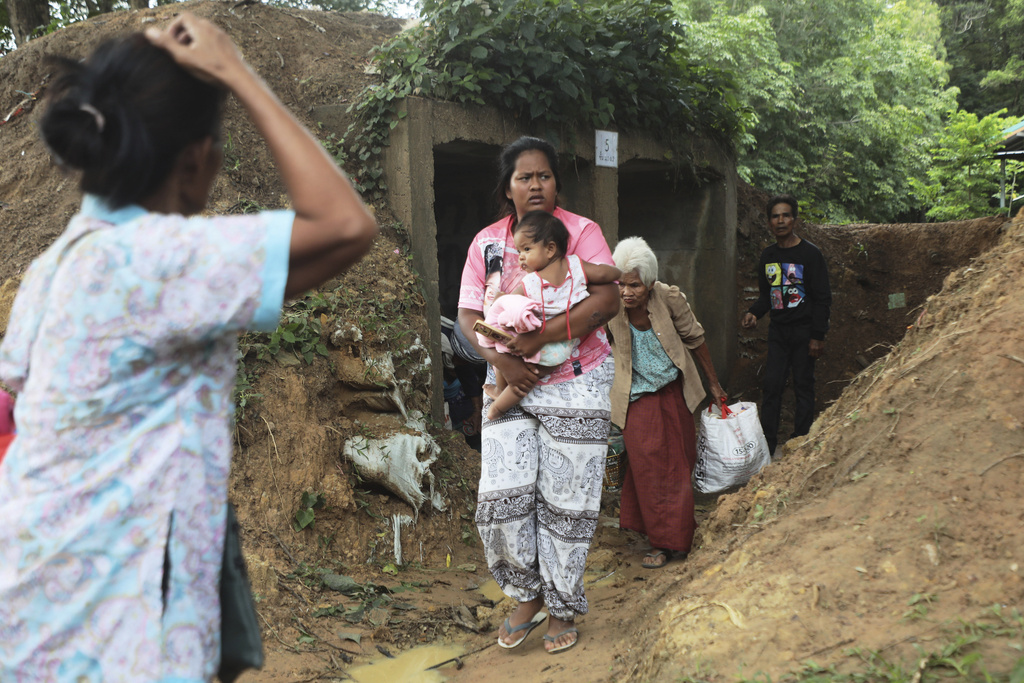
On Friday, Cambodia's chief official in Oddar Meanchey province, Gen. Khov Ly, reported that clashes resumed near the ancient Ta Muen Thom temple. Associated Press reporters near the border could hear sounds of artillery from early morning hours. The official also mentioned that at least four civilians were wounded in Thursday's fighting and that over 4,000 people had been displaced from their villages to evacuation centers. This marked the first account of casualties from the Cambodian side.
The recent escalation represents a rare instance of military conflict between member countries of the Association of Southeast Asian Nations (ASEAN). While Thailand has previously had tensions with Cambodia over the border and sporadic skirmishes with Myanmar, this incident is particularly severe.
U.N. Secretary-General Antonio Guterres urged both sides to "exercise maximum restraint and address any issues through dialogue," according to U.N. deputy spokesman Farhan Haq. Each side has blamed the other for the clashes, with allegations that civilians were targeted.
Casualties and Government Responses
In Bangkok, the Public Health Ministry reported that a Thai soldier and 13 civilians, including children, were killed, while 14 soldiers and 32 other civilians were injured. Public Health Minister Somsak Thepsuthin condemned the attacks on civilians and a hospital as violations of international humanitarian law and the Geneva Conventions. He urged the Cambodian government to halt these actions and return to peaceful coexistence.
Thailand’s Acting Prime Minister Phumtham Wechayachai stated that the fighting affected four provinces. The Interior Ministry ordered the evacuation of people at least 50 kilometers (30 miles) from the border. In Cambodia, several hundred villagers moved from their homes near the border to about 30 kilometers (18 miles) deeper inside Oddar Meanchey province. Many traveled with their families and belongings on home-made tractors, settling in makeshift shelters.
From an encampment near Samrong, a 45-year-old mother of four, Tep Savouen, described the sudden noise that woke her up. “Suddenly I heard a loud noise,” she said. “My son told me it might be thunder and I thought ‘Is it thunder or is it loud, more like a gun?’ At that time I was very scared.”
Military Actions and Diplomatic Efforts
Thai Foreign Ministry spokesperson Nikorndej Balankura stated that the government was prepared to intensify self-defense measures if Cambodia continued its armed aggression. In Phnom Penh, Defense Ministry spokesperson Lt. Gen. Maly Socheata claimed that Cambodia deployed armed forces due to the need to defend its territory against Thai threats. He insisted that Cambodian attacks were focused on military locations, not civilian areas.
Cambodian Prime Minister Hun Manet wrote to the U.N. Security Council requesting an urgent meeting to stop what he called Thailand’s aggression. The council scheduled an emergency closed meeting in New York on Friday.
Thailand sealed all land border crossings and urged its citizens to leave Cambodia. Officials said all seven Thai airlines were willing to assist in bringing back any Thai nationals seeking to return home.
Historical Context and Border Disputes
The two Southeast Asian neighbors have long had border disputes, which periodically flare along their 800-kilometer (500-mile) frontier. The last major combat over the issue was in 2011, leaving 20 dead. However, relations sharply deteriorated since a May confrontation that killed a Cambodian soldier. Thursday’s clashes were unusually intense.
The first clash on Thursday morning occurred near the Ta Muen Thom temple, prompting villagers to seek shelter in concrete bunkers. Both the Thai army and Cambodia’s Defense Ministry claimed the other side deployed drones before advancing and opening fire. They later used heavier weaponry such as artillery, leading to greater damage and casualties. Thailand responded with airstrikes against truck-mounted rockets launched by Cambodia.
International Reactions and Diplomatic Tensions
Cambodia’s Defense Ministry alleged that Thai jets dropped bombs on a road near the Preah Vihear temple, a site of past conflicts. Cambodian authorities distributed photos showing damage there. The country’s Culture Ministry vowed to pursue justice under international law, citing the temple’s status as a UNESCO World Heritage site.
Relations between the two nations had already deteriorated before the clashes. On Wednesday, Thailand withdrew its ambassador to Cambodia and expelled the Cambodian envoy after a mine blast wounded its soldiers. Thai authorities claimed the mines were newly laid along paths they considered safe, alleging they were Russian-made. Cambodia rejected these claims, stating that unexploded mines and ordnance are a legacy of 20th-century wars.
The border dispute has also impacted Thailand’s domestic politics. Prime Minister Paetongtarn Shinawatra faced criticism over a phone call with Cambodia’s former Prime Minister Hun Sen, who remains a key figure in his country. She was suspended from office on July 1 pending an investigation into possible ethics violations.

Post a Comment for "Thailand Launches Airstrikes on Cambodia Amid Border Clashes Killing 14"
Post a Comment