Thailand and Cambodia End Conflict After Trump and Anwar's Intervention
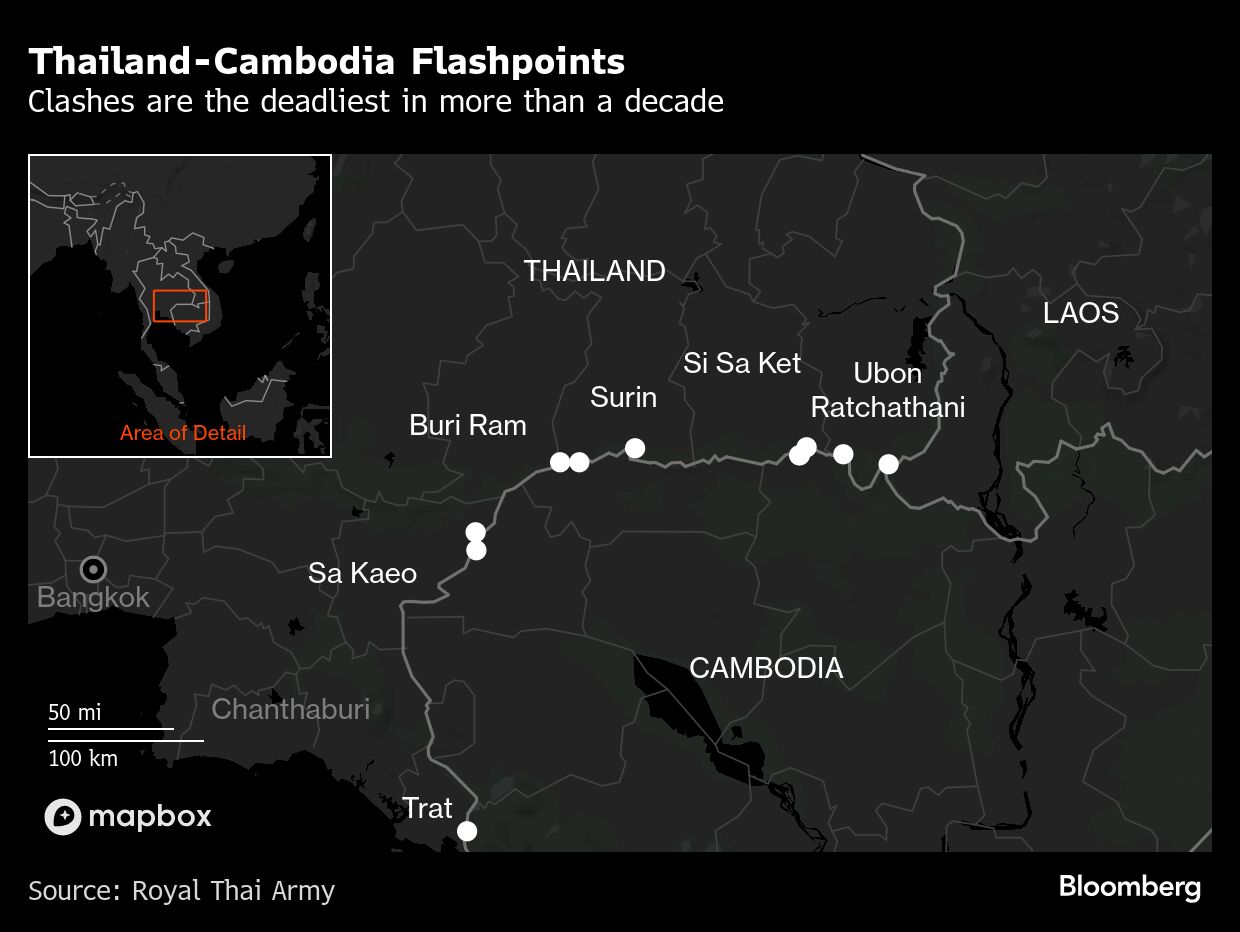
Key Details of the Ceasefire Agreement
Thai and Cambodian leaders have reached an agreement for an unconditional ceasefire, marking a significant step in resolving the most severe border conflict between the two nations in over a decade. This decision came after extensive diplomatic efforts by the United States and other regional powers to find a peaceful solution. The ceasefire was announced following a meeting between Thailand’s Acting Prime Minister Phumtham Wechayachai and Cambodia’s Prime Minister Hun Manet in Malaysia, hosted by Malaysian Prime Minister Anwar Ibrahim.
Anwar, who is also the chair of the Association of Southeast Asian Nations (ASEAN), played a pivotal role in facilitating the dialogue. Washington and Beijing sent envoys to support the talks, highlighting the international interest in stabilizing the region. The ceasefire will take effect from midnight on Tuesday, with regional military commanders set to meet at 7 a.m. local time. Anwar emphasized that both countries had reached a common understanding, calling it a vital first step toward de-escalation and restoring peace and security.
In a joint statement, the three nations committed to developing a detailed mechanism for implementing, verifying, and reporting on the ceasefire. This framework aims to ensure sustained peace and accountability. The talks represent the first formal dialogue since clashes began on July 24, resulting in at least 36 deaths and over 150,000 displaced civilians along their shared 800-kilometer border.
Escalating Tensions and Diplomatic Pressure
Tensions escalated rapidly over the weekend, with reports of heavy artillery fire and aerial strikes. Both sides accused each other of targeting civilian areas, raising concerns about the humanitarian impact. U.S. President Donald Trump had previously expressed confidence that Thai and Cambodian leaders would work quickly to establish a ceasefire. Following separate calls with both leaders on Saturday, Trump warned that no trade deals would be finalized as long as the fighting continued.
Both Phumtham and Hun Manet acknowledged the contributions of Anwar, Trump, and China in facilitating the ceasefire. However, prior to the talks, Thailand insisted that any ceasefire must include troop withdrawals, an end to lethal force, and a commitment to resolving conflicts through bilateral mechanisms. In contrast, Cambodia supported an unconditional end to hostilities.
Historical Context and Regional Implications
The current conflict has its roots in longstanding disputes over colonial-era maps and treaties that defined the borders between Thailand and Cambodia. Although relations had remained relatively stable since a 2011 clash that resulted in dozens of deaths, renewed tensions have sparked fears of further escalation.
Trump’s involvement in the negotiations extended beyond diplomacy, as he threatened to block trade deals with both countries unless the violence ceased. His approach mirrored previous actions where he leveraged trade measures to influence conflict resolution, such as his claim to have helped halt border clashes between India and Pakistan earlier this year.
The U.S. Secretary of State, Marco Rubio, confirmed that American officials were present in Malaysia to assist with the peace efforts. A representative from China, a major trading partner for both nations, also participated in the discussions. This underscores the strategic importance of maintaining stability in the region.
Economic Pressures and Political Considerations
With Trump's August 1 tariff deadline approaching, Thailand is keen to avoid antagonizing the U.S. president, especially as officials are engaged in talks to reduce the steep 36% levy on its exports. Trump has claimed credit for halting border clashes between India and Pakistan, although India has consistently denied these claims while Pakistan has embraced them.
Thailand’s trade negotiations with the U.S. have included proposals for expanded access for American goods to address a $46 billion trade surplus. Neighboring countries like Indonesia, the Philippines, and Vietnam have already secured trade deals with the U.S. in recent weeks.
Analysts suggest that Trump’s pressure tactics are working, as both Thai and Cambodian governments face economic challenges. However, some experts caution that yielding to a ceasefire agreement may not be well-received by the Thai public or military, given the ongoing threat from Cambodia to escalate the dispute to the International Court of Justice.
Cambodia has indicated its desire for the court to resolve the disputed status of four border areas following a skirmish in May. However, Thailand does not recognize the court’s jurisdiction, adding another layer of complexity to the situation.

Post a Comment for "Thailand and Cambodia End Conflict After Trump and Anwar's Intervention"
Post a Comment