Texas Law Prohibits Phones in Classrooms; SAISD Readies New Policy
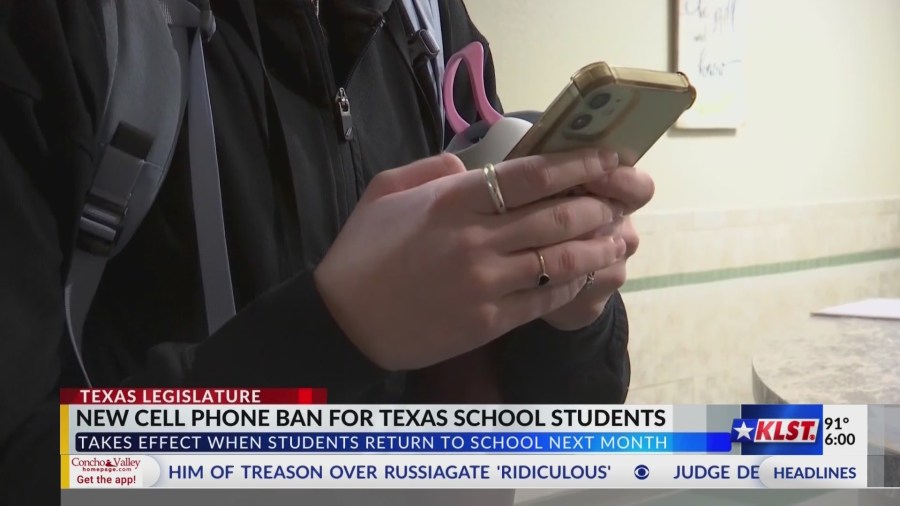
New Texas Law Restricts Student Use of Cell Phones in Schools
As the new school year approaches, students across Texas are preparing to return to classrooms with a significant change in how they interact with technology. A new state law, House Bill 1481, signed by Governor Greg Abbott in June, has introduced strict rules regarding the use of cell phones, smartwatches, and wireless earbuds during instructional time. This law is now being implemented by school districts, including San Angelo Independent School District (SAISD), which is finalizing its approach to enforcement before classes start on August 14.
The law aims to reduce distractions caused by electronic devices, which have become a major concern for educators. Dr. Christopher Moran, superintendent of SAISD, emphasized that the legislation provides a clear framework for schools to manage device usage more effectively. “It’s a huge change,” he said. “What it does is acknowledge that these devices can be a disruption to the school day.”
According to the law, students are not allowed to use their phones, smartwatches, or other communication devices during the instructional day. However, there are exceptions for emergencies. Parents and students are encouraged to keep devices accessible in case of an emergency, such as needing to contact emergency services. “I’m a parent. I want my kids to have their phone and be able to do what they need to do to protect themselves,” Moran explained.
Despite the restrictions, the law allows for certain exceptions, especially for health-related needs. Students who require medical monitoring through a smartwatch or smartphone will not face penalties. “There are exceptions for health needs and other legitimate situations,” Moran said. “We recognize these needs and will make sure no student is put in harm’s way.”
With only a few weeks until the first day of school, SAISD is working to communicate the new policy to families and outline the consequences for violations. The district is also developing detailed guidelines to help students and parents understand how the rules will be applied. “We want to be fair to kids and use common sense, but we also want to protect instructional time and give students the best chance to focus and succeed academically,” Moran said.
The implementation of this law may pose challenges for some students, particularly those who are used to constant access to their devices. “Because of the addictive nature of phones and smartphones, this will not be easy for some,” Moran acknowledged. However, he believes the long-term benefits of reducing distractions will outweigh the initial difficulties.
In addition to the new device policy, SAISD is also finalizing other administrative updates, such as the completion of the 2025 bond sale and the establishment of an oversight committee. These steps reflect the district’s commitment to maintaining high standards of education and transparency.
School principals will soon provide specific instructions for each campus, ensuring that all students and families are aware of the expectations. “They will get the guidelines in time before August 14, so they can begin planning and know what to do,” Moran said.
Overall, the new law marks a significant shift in how schools manage technology in the classroom. While the transition may take some time, the goal is to create a more focused learning environment that supports student success. As the district moves forward, it remains committed to balancing safety, fairness, and educational excellence.

Post a Comment for "Texas Law Prohibits Phones in Classrooms; SAISD Readies New Policy"
Post a Comment