Texas Democrats Fundraise to Exit State and Block GOP Redistricting
Democrats Explore Legal and Financial Strategies to Challenge Redistricting in Texas
As Republicans in Texas push forward with their plan to redraw the state’s congressional districts, Democrats are actively considering a range of options to counter the move. One strategy under discussion involves a quorum break — a tactic that has been used before by members of the party to stall legislative action. This approach could be costly, but it appears that wealthy Democratic donors are prepared to support the effort financially.
A quorum break involves lawmakers leaving the state to prevent the legislature from achieving a majority needed to conduct business. If they take this route, each member would face a fine of $500 per day and the risk of arrest. However, deep-pocketed donors seem willing to cover these expenses, which could significantly reduce the personal financial burden on the lawmakers involved. This backing could encourage more members to participate in the protest, even if they might otherwise hesitate.
Despite the potential for fines, there is a legal challenge that needs to be addressed. Texas House rules prohibit lawmakers from using campaign funds to pay the daily penalties. The rule was introduced in 2023, following a similar attempt by Democrats in 2021 to block the passage of an election law overhaul. However, according to sources involved in recent fundraising discussions, legal teams have identified a way to distribute the funds without violating these rules. While details remain unclear, the possibility of circumventing the restrictions has sparked interest among some lawmakers.
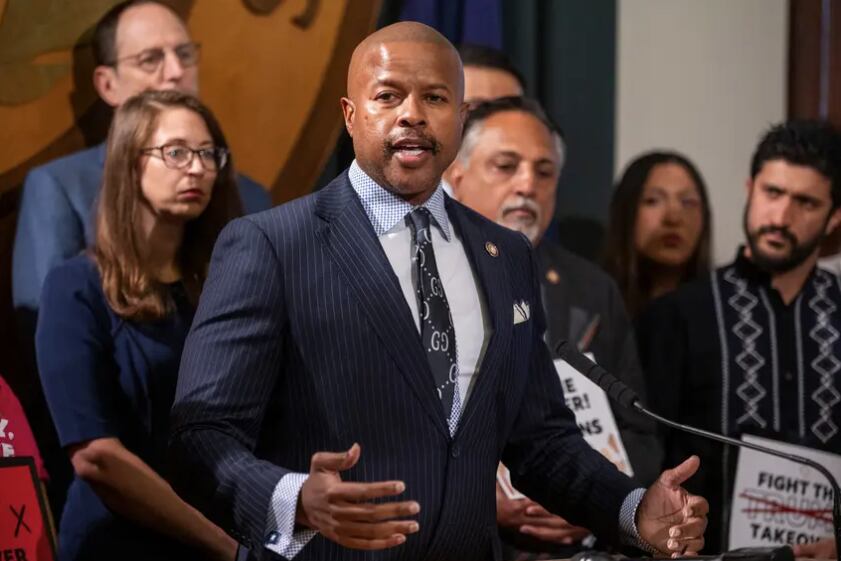
Rep. Jasmine Crockett, a Dallas Democrat who participated in the 2021 quorum break, believes there is a way to bypass the campaign finance rules. She suggests that lawmakers can accept donations as additional income, given the minimal limits on external earnings. With a war chest of $3.7 million, Crockett is ready to tap into her donor base to cover any costs associated with the protest.
On private calls, members of Congress, including Rep. Greg Casar of Austin, have been advocating for high-stakes resistance, including a quorum break. Their argument frames the redistricting issue as a critical battleground in the broader fight against the White House. For many, this is not just about the maps themselves, but also about providing a platform for opposition that resonates with their base.
Donors appear to be convinced and are prepared to provide the necessary funding if Texas members decide to flee the state. One estimate suggests that lawmakers would need around $1 million per month to sustain the protest, and those involved in the discussions believe this amount can be secured. Additionally, Crockett believes that paying the fines may not even be necessary, as she is working with attorneys to challenge the legality of the rules.
Andrew Cates, an Austin-based campaign finance and ethics lawyer, said he would be “very surprised if there were any real monetary penalties that were enforceable.” While the Speaker of the Texas House, Dustin Burrows, and Rep. Charlie Geren, who chairs the House Administration Committee, have not commented on the matter, the situation remains tense.
The quorum break would provide time for Democrats to educate the public about the potential harms of the new maps and allow ongoing court challenges to proceed. A lawsuit against the 2021 maps has already raised concerns, as Republican map drawers testified that race was not considered in the creation of the district lines. However, the GOP is now using a letter from the U.S. Department of Justice to justify the mid-decade redistricting, claiming that four current districts are racially gerrymandered.
“If all of a sudden, all these years later, they’re like, ‘never mind,’ they really were considering race,” Crockett said. “They weren’t race neutral.”
If lawmakers proceed with the quorum break, a public messaging war is likely to follow, drawing attention and resources to both sides. Republicans may argue that Democrats are neglecting their duties and hindering efforts to address flood relief in Central Texas. Attorney General Ken Paxton has even called for fleeing Democrats to be arrested and offered his office’s services in “hunting down and compelling the attendance of anyone who abandons their office.”
Many Democrats see any effort to stop the new maps, no matter how unconventional, as a way to represent their constituents’ interests. Beyond quorum breaks, national Democratic groups are also investing heavily in the issue. The Democratic National Committee (DNC) is mobilizing 30,000 volunteers to reach out to persuadable voters and encourage them to oppose the new maps. They have sent 250,000 text messages to mobilize voters for field hearings across the state.
The National Democratic Redistricting Committee (NDRC) is planning an August fundraiser on Martha’s Vineyard featuring former President Barack Obama, former House Speaker Nancy Pelosi, and other prominent figures. The event will focus on supporting Texas Democrats opposing the redistricting efforts and funding the NDRC’s operations. The NDRC’s campaign arm, the National Redistricting Action Fund, is also investing in digital ads to turn public opinion against the GOP’s new maps.
Additionally, the Democratic Congressional Campaign Committee (DCCC) has committed to spending six figures on a public opinion campaign, with plans to invest more in targeting vulnerable Republican candidates in Texas. A new fund backed by the House Majority PAC has pledged $20 million to flip seats in the state.
Spokespeople for the DNC, NDRC, and DCCC have stated that their organizations have not officially gotten involved in the quorum break fundraising efforts. However, the growing financial and political support for the Democratic strategy indicates that the battle over redistricting in Texas is far from over.

Post a Comment for "Texas Democrats Fundraise to Exit State and Block GOP Redistricting"
Post a Comment