Texas Allocates $1 Billion for New State Parks
Exploring the Future of Texas State Parks
On a scorching June morning, Andy Sipocz runs his fingers through the thick, sawgrass fronds that tower above him along a creek in the Texas Hill Country. The area is marked by rocky limestone formations lining Yancey Creek, displaying subtle hues of red and brown — a testament to centuries of mineral deposits and weathering. Sipocz, a natural resources coordinator and biologist with the Texas Parks and Wildlife Department (TPWD), is part of a team of over three dozen staff members gathered to begin planning for what will eventually become Texas’ newest state park, located about two hours northwest of Austin.
Dressed in cargo shorts, hiking boots, and sun-brimmed hats, the TPWD team navigates down a steep hill without a trail in sight. This is intentional — they are here to determine where trails should be placed. Their mission today involves conducting early-stage natural resource surveys and habitat assessments to support the future design of the park.
“Like any good business, you need to know what you have before you start,” Sipocz said, who has worked with TPWD for 35 years. “You can’t make good plans until you know what it is you’ve got.”
This effort comes after voters approved the Centennial Parks Conservation Fund, a $1 billion investment passed by lawmakers in 2023. This initiative allows the parks department to expand access to natural spaces across Texas while preserving native ecosystems and cultural landmarks.
The significance of this expansion becomes even clearer when considering the controversial closure of Fairfield Lake State Park in 2023. A 1,800-acre site near Dallas was closed after the private power company that leased the land to the state decided to sell it. The site was later purchased by a private developer for a luxury housing project. This event sparked widespread concern and increased support for state leaders to acquire more parkland to prevent similar situations.
According to a 2022 report by Environment Texas, Texas ranks 35th in the nation for state park acreage per capita. With a population of over 29 million as of 2019, the state has about 636,000 acres of parkland. The report suggests that Texas needs to add 1.4 million acres of state parks by 2030 to meet the needs of its residents.
With the new funding, Texas is set to expand its 88-park system. Recent additions include:
- A 1,100-acre acquisition in Lampasas and Burnet Counties, including 1.5 miles of Yancey Creek.
- A 2,020-acre acquisition in Burnet County along the Colorado River, across from Colorado Bend State Park.
- A 3,073-acre expansion to Enchanted Rock State Natural Area in Llano County, significantly increasing the size of the existing 1,685-acre park.
These acquisitions will form the new Post Oak Ridge State Park, with Centennial fund money used for development.
“This is kind of a new thing for the department,” Sipocz said. “There was a big burst of acquisitions of parks in the ’70s and ’80s, and there hasn’t been since. That’s what makes this so exciting.”
Two Ranches Becoming New Park
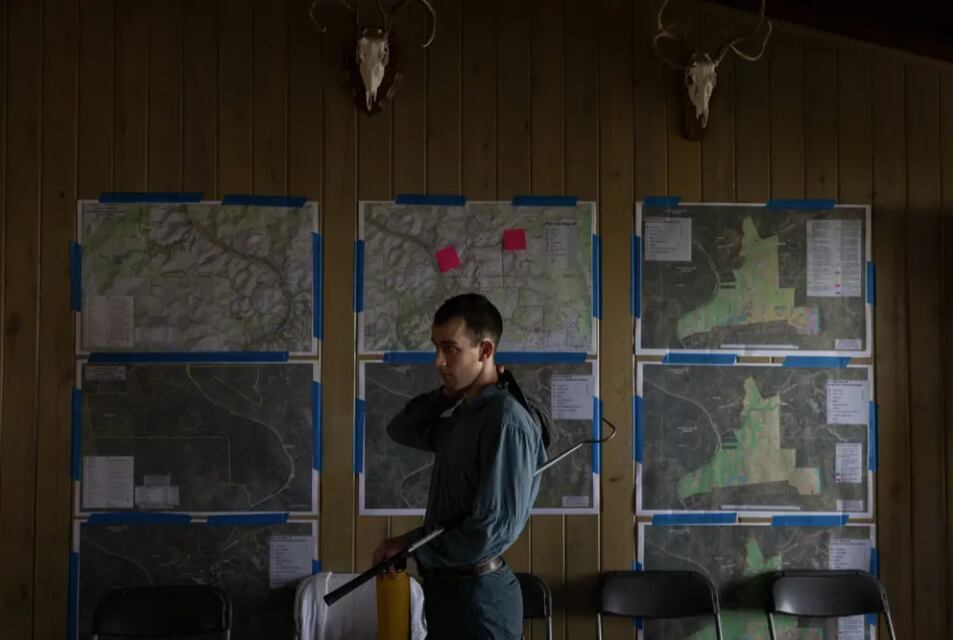
At the heart of the planning process is JJ Fleury, the program director for planning and geospatial resources at TPWD. Fleury explained that Post Oak Ridge State Park, which includes Yancey Creek, is still in the early stages of development. Originally two large ranches, Vann River Ranch and Big Springs Ranch, the properties were acquired as soon as they came on the market, costing $47.1 million.
Fleury highlighted that the park checks several boxes: it's within the Texas Triangle formed by Houston, San Antonio, and Dallas-Fort Worth, features varied terrain such as sweeping canyons and frontage along the Colorado River, and includes flatter areas that could serve as “back of house” zones for wastewater treatment, maintenance, or staff housing.
This site also sits near Colorado Bend State Park. When developed, the new park along Yancey Creek will connect with the greater Colorado Bend ecosystem, expanding conservation efforts at a regional scale.
“One of the exciting things is that landscape scale of conservation, where we’re protecting now 10,000 acres,” Fleury said. He also noted that the park fills recreation gaps like cabins and RV camping, which Colorado Bend doesn’t provide.
A “Herp Search” to Catalog Critters
Early that June morning, Greg Creacy, a natural resources program director for Texas State Parks, leads a team of biologists, herpetologists, and hydrologists through an ecological inventory. They walk the land, catalog species and habitats, and determine what’s rare or sensitive.
The Yancey Creek survey begins with a herp search, focusing on snakes, lizards, frogs, and salamanders. “That knowledge informs our plans for how to conserve these systems and these species over the long haul,” Creacy said. “It also informs how we manage the site, how we develop, and how the public uses the site recreationally and doesn’t negatively impact those resources.”
Staff members fan out across the limestone creek bed, squatting, lifting rocks, and peering into shadows where these creatures often hide. For Sipocz, every discovery brings a thrill. He jokes that picking up rocks is addictive and gives him a high.
Soon, the team is shouting joyfully from opposite banks. Tadpoles wriggle in shallow pools, a Rio Grande leopard frog is gently scooped for identification, and a water moccasin slithers through the tall grass. A bright blue collared lizard basks on a sun-warmed rock, and a delicate Maidenhair Fern is spotted. Tiny skinks and plain-bellied water snakes are found hiding beneath loose stones.
Staffers use the iNaturalist app to log every species they encounter, uploading photos and habitat notes in real time. The data helps TPWD assess the site’s ecological significance and identify sensitive areas in need of protection.
These discoveries guide the placement of trails and facilities — and sometimes determine what can’t go where. “We might find a flat, buildable area that looks great for a trail,” said Fleury, “but then our resource team comes back and says, ‘Endangered species habitat — move it.’”
Electrofishing in Yancey Creek
Following the herp search, the TPWD team pivots to the fish community. A small team steps into the clear, knee-deep waters of Yancey Creek. Using electrofishing, they temporarily stun fish with a low electrical current — enough to make a human hand tingle but not dangerous to fish. Every zap triggers a sharp beep as fish float to the surface, where they are gently scooped by a net and later dumped into buckets for identification.
They found an array of native species, including longear sunfish, Western mosquito fish, sand shiners, blacktail shiners with striking orange fins, and Texas tetra. Buckets quickly filled, especially with “cuss bugs,” a local nickname for a particularly prickly aquatic insect. After counting the fish and noting their species, they release them back into the creek.
“That’s a good sign,” said Curtis. “We have a lot of complexity in this stream. We have a variety of habitats for fish to occupy and we want to keep it that way and keep that managed to where we can share this with people in the future.”
Curtis emphasized that sampling fish is about building a deeper understanding of the ecosystem. Fish diversity reveals how healthy the stream is and how well it functions. It also helps assess how they will need to manage the fish population when the site is open to the public for fishing.
In addition to identifying fish, the team collected water samples and measured water flow. Fleury, the park planner, said that once surveys are done, park planners will work closely with resource specialists to avoid sensitive areas for species and start figuring out the best spots for roads, parking, utilities, buildings, and recreational features.
As they go, the planning team creates early concept plans to share with the public and get feedback at local and regional meetings. The goal is to gauge what kinds of experiences people want — day use, overnight facilities, paddling access, etc. — and test the early concept plans before finalizing them.
Once a plan takes shape, TPWD moves into design and construction. “It’s like building a small city,” Fleury said.
With the Centennial Parks funding, the timeline is fast. He said that people can expect to have access to Post Oak Ridge State Park, the new park at Yancey Creek, within a year. That could mean guided tours, paddling, birding, or limited day use on existing ranch roads. Within 18 months, the goal is to have basic facilities such as trails, parking areas, and restrooms. And within four years, a full-fledged state park including day use and overnight recreation, administrative support facilities, utilities, roads, and parking.
Back at Yancey Creek, the team wraps up its survey. Some are sunburned, wet, or mud-splattered. They’ve logged dozens of species and mapped critical areas for future planning. As they begin the long trek back up the hill, one staffer takes a moment to admire the land, which remains raw and untamed.
In the near future, this stretch of Texas Hill Country could become a place the public can cherish and explore.
“This is why I got this career,” Sipocz said. “We don’t get paid a lot, but… we get paid in sunsets.”

Post a Comment for "Texas Allocates $1 Billion for New State Parks"
Post a Comment