Tesla's Profit Plummets as Musk's Politics Drive Away Buyers
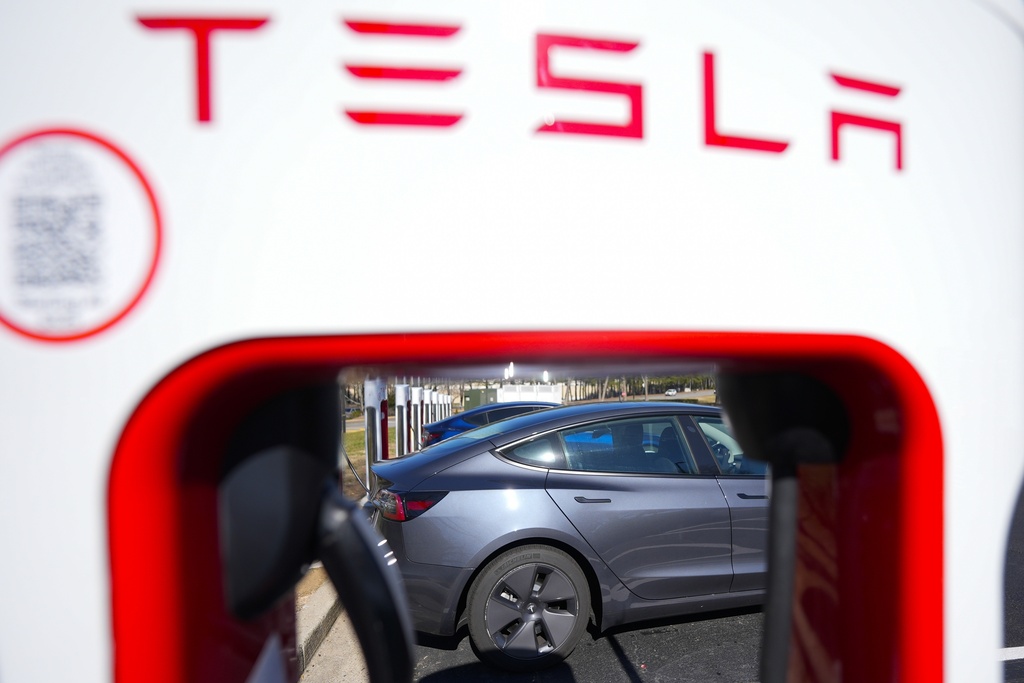
Tesla Faces Challenges as Sales and Profits Drop
Elon Musk’s deep involvement in politics over the past year has had a lasting impact on his company, Tesla. The electric vehicle manufacturer has seen a significant decline in both sales and profits, with recent quarterly results showing a continued downward trend. In the three months ending in June, Tesla reported a 12% drop in revenue and a 16% decrease in profits. This marks the third consecutive quarter of declining profits, raising concerns about the company's future.
The company’s latest financial report revealed that profits fell to $1.17 billion, or 33 cents per share, down from $1.4 billion, or 40 cents per share. On an adjusted basis, the company met Wall Street expectations by earning 40 cents per share. Revenue also saw a decline, dropping from $25.5 billion to $22.5 billion, which was slightly above analyst forecasts. However, the news did not sit well with investors, causing Tesla shares to fall 3% in after-hours trading.
During the earnings call, Musk shifted the focus away from car sales and instead emphasized robotaxis, automated driving software, and robotics. He described these areas as the future of the company. However, these ventures have yet to generate significant revenue, and the gap between Musk’s ambitious vision and actual performance is becoming more apparent.
One of the main challenges Tesla faces is the reluctance of potential buyers, especially in the U.S. and Europe. Musk’s support for far-right politicians in countries like the UK, France, and Germany has led to a backlash, resulting in a loss of market share. Competitors such as China’s BYD and Germany’s Volkswagen have taken advantage of this weakness, further challenging Tesla’s dominance.
In June, Tesla launched its paid robotaxi service in Austin, Texas, with plans to expand to other cities soon. Musk aims to have hundreds of thousands of driverless cabs on U.S. roads by the end of next year. During the post-earnings call, he stated that the service could potentially be available to half of the U.S. population by the end of the year, pending regulatory approvals. Despite some incidents during the test run, including a robotaxi veering into the wrong lane, the overall experience has been largely smooth.
However, the path to success for Tesla’s autonomous taxi service is fraught with competition. Waymo, the leading provider of autonomous vehicles, has already launched services in several cities and recently reached a milestone of ten million paid trips. Additionally, new federal legislation has eliminated the $7,500 electric vehicle credit and removed penalties for exceeding carbon emission standards, posing a threat to Tesla’s revenue from selling carbon credits. This change has significantly reduced Tesla’s income from credit sales, which dropped from $890 million to $439 million.
Musk acknowledged the challenges ahead, predicting several tough quarters due to the loss of incentives. However, he remains optimistic about the future, stating that once autonomy scales up in the second half of next year, Tesla’s economics will become compelling.
To boost sales while waiting for the full realization of its autonomous vision, Tesla is planning to introduce a cheaper model later this year. The company had previously aimed to launch this model by June but has delayed it. Musk also expressed hope for regulatory approval to roll out its Full Self-Driving software in parts of Europe by the end of the year, though this timeline has been pushed back from earlier expectations.
In the robotics sector, Musk anticipates explosive growth as Tesla increases production of its humanoid Optimus robots to 100,000 units per month within five years. He envisions a future where robots are so common that they go unnoticed.
Regarding his stake in Tesla, Musk indicated he would like to increase his ownership beyond the current 13% to maintain control, but not to the point where he could dominate the company without oversight. He emphasized the importance of ensuring the company moves in the right direction while remaining open to change.
Despite the challenges, Tesla reported a positive highlight from the quarter: a $284 million paper gain from its investment in Bitcoin, compared to a loss in the previous quarter. This unexpected profit underscores the unpredictable nature of the company’s financial landscape.

Post a Comment for "Tesla's Profit Plummets as Musk's Politics Drive Away Buyers"
Post a Comment