Terrifying Maps Reveal Nuclear Fallout Damage from Iranian Attack Scenarios
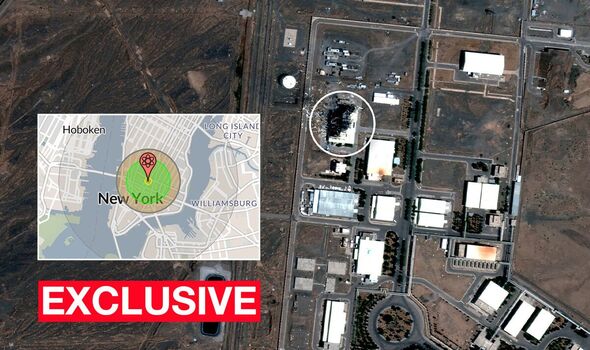
Understanding the Potential Impact of a Nuclear Attack on Major U.S. Cities
A series of detailed and alarming maps have been created to illustrate the potential damage that could occur in five major U.S. cities if Iran were to rebuild its nuclear program and launch a nuclear attack. These maps, developed by experts and using tools like NUKEMAP, provide a visual representation of the devastation that could result from a 10-kiloton nuclear bomb.
Before the strikes during Operation Midnight Hammer, which involved 14 "bunker buster" bombs dropped on sites such as Isfahan, Natanz, and Fordo, Iran was believed to have had the capability to produce a nuclear bomb with at least the strength of the one dropped on Hiroshima. This bomb, which had a 15-kiloton yield, led to massive destruction and loss of life, ultimately ending World War II in the Pacific Theater.
While former U.S. President Donald Trump claimed that these facilities were completely "obliterated," subsequent reports indicated that they were not as damaged as initially thought. Some sources suggested that centrifuges at the Fordo site remained intact, raising concerns about Iran's potential to resume its nuclear activities with minimal effort. Despite this, Iran has consistently maintained that its nuclear program is for civilian purposes only and not aimed at developing weapons.
Recent intelligence reports indicate that Iran is producing uranium enriched to 60%, which exceeds the nonproliferation benchmark of 20%. This level of enrichment is typically reserved for medical purposes, and it raises serious concerns about Iran's intentions. Experts suggest that if the centrifuges are not entirely destroyed, Iran could theoretically achieve 90% enrichment within six to 12 months, which is the level needed for nuclear weapons.
If Iran were to produce a nuclear weapon and use it against the U.S., the consequences would be catastrophic. However, it is important to note that modern nuclear weapons possess greater destructive power than those used in historical attacks like Hiroshima. The NUKEMAP tool provides an interactive way to visualize the potential impact of various nuclear explosions across different locations.
How NUKEMAP Visualizes Nuclear Explosions
NUKEMAP, developed by science historian Alex Wellerstein, allows users to explore the effects of nuclear explosions on a global scale. It features different radii representing varying levels of damage based on proximity to the blast:
- Yellow "Fireball" Radius: Anything inside this area is effectively vaporized.
- Red "Heavy Blast Damage Radius: This region experiences a 20 psi overpressure, leading to severe damage to buildings and nearly 100% fatalities.
- Green "Radiation Radius:" A likely fatal dose of radiation could affect populations in a month, with about 15% of survivors facing cancer risks.
- Gray "Moderate Blast Damage Radius: This area experiences 5 psi overpressure, causing most residential buildings to collapse and widespread injuries.
- Orange "Thermal Radiation Radius:" Causes third-degree burns and can lead to severe scarring or disability.
- Light Gray "Light Blast Damage Radius: Shatters glass windows and causes many injuries due to the pressure wave.
These visualizations help to understand the potential scale of destruction in urban areas.
Impact on Major U.S. Cities
New York City
New York City, the largest metropolitan area in the U.S., would face catastrophic damage if a 10-kiloton nuclear bomb were dropped there. Assuming the bomb is dropped over SoHo in Lower Manhattan, approximately 186,660 people would die, and nearly 476,000 would be injured. The fireball and heavy blast damage radii would cover significant portions of the city, including Chinatown, the Villages, and Tribeca.
Washington, D.C.
As the nation's capital, Washington, D.C., would be a prime target for a nuclear attack. Dropping a nuke over the Capitol Building would devastate the U.S. government, with the fireball and heavy blast damage radii reaching neighborhoods like Penn Quarter and Capitol Hill. Approximately 85,690 people would die, and another 168,000 would be injured.
San Francisco
San Francisco, home to Silicon Valley, would also be severely impacted. If a 10-kiloton bomb were dropped over the Mission District, the fireball and heavy blast damage radii would reach Noe Valley and the Castro District. Over 43,000 people would die, with nearly 150,000 injured.
Los Angeles
Los Angeles, the second-largest city in the U.S., would experience catastrophic damage. Dropping a bomb over downtown L.A. would result in approximately 80,000 deaths and 200,000 injuries. Key cultural and commercial areas would be destroyed.
Chicago
Chicago, the third-largest city, would face widespread devastation. Dropping a bomb in the center of the city would lead to nearly 102,000 deaths and 213,000 injuries. The fireball and heavy blast damage radii would stretch across significant parts of the city, including downtown areas and surrounding neighborhoods.
These scenarios highlight the critical need for continued vigilance and diplomatic efforts to prevent the proliferation of nuclear weapons and ensure global security.

Post a Comment for "Terrifying Maps Reveal Nuclear Fallout Damage from Iranian Attack Scenarios"
Post a Comment