Teens Turn to AI for Advice, Friendship, and Avoiding Thought
The Growing Role of AI in Teen Lives
For Kayla Chege, a 15-year-old high school student from Kansas, artificial intelligence has become an everyday companion. She uses it for back-to-school shopping, makeup color choices, and even low-calorie options at Smoothie King. She also seeks ideas for her Sweet 16 and her younger sister’s birthday party. However, she makes a point not to let chatbots do her homework and limits interactions to simple questions.
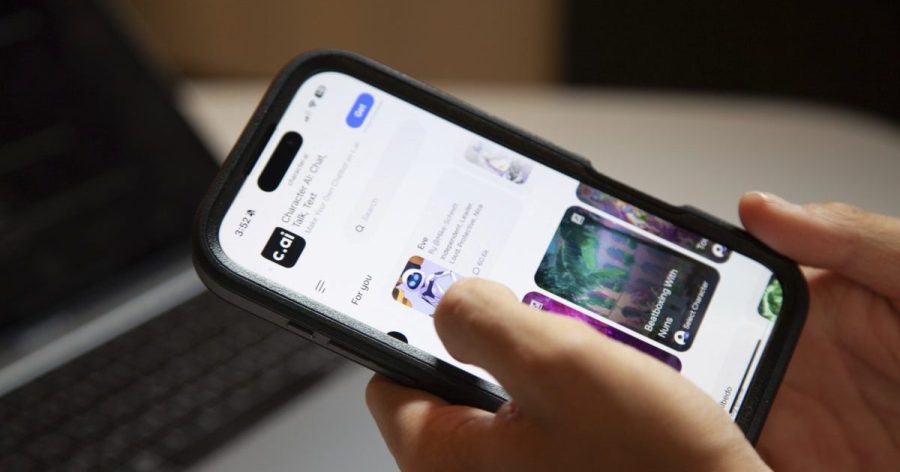
Despite this, many teenagers are increasingly using AI as if it were a friend, seeking advice and emotional support. According to a new study by Common Sense Media, more than 70% of teens have used AI companions, with half using them regularly. These platforms, such as Character.AI or Replika, are designed to act as digital friends, offering emotional support and human-like conversations. Even sites like ChatGPT and Claude, which primarily answer questions, are being used in similar ways.
AI as a Constant Companion
Teens describe AI as always available, never judgmental, and always interested in their thoughts. Ganesh Nair, an 18-year-old from Arkansas, highlights the appeal of AI. “When you’re talking to AI, you are always right. You’re always interesting. You are always emotionally justified.” However, as he prepares to head to college, he wants to step back from using AI after a friend relied on an AI companion to write a breakup text that ended a two-year relationship.
“This felt a little bit dystopian,” said Nair. “It’s almost like we are allowing computers to replace our relationships with people.”
A New Concern for Parents and Educators
The Common Sense Media study found that 31% of teens said their conversations with AI companions were “as satisfying or more satisfying” than talking with real friends. Even though half of teens distrust AI’s advice, 33% had discussed serious issues with AI instead of real people. Michael Robb, the study’s lead author, warns that this trend is concerning.
“Adolescence is a critical time for developing identity, social skills, and independence,” said Robb. “AI companions should complement — not replace — real-world interactions.”
The nonprofit analyzed several AI companions and found ineffective age restrictions, as well as platforms that can produce sexual material, give dangerous advice, and offer harmful content. They recommend that minors avoid using AI companions.
The Impact on Youth Mental Health
Researchers and educators are worried about the cognitive costs for youth who rely heavily on AI, especially in creativity, critical thinking, and social skills. The potential dangers of children forming relationships with chatbots gained national attention when a 14-year-old Florida boy died by suicide after developing an emotional attachment to a Character.AI chatbot.
Eva Telzer, a psychology and neuroscience professor at the University of North Carolina at Chapel Hill, notes that parents are largely unaware of how widespread AI use is among teens. “All of us are struck by how quickly this blew up,” she said.
Telzer’s research has found that children as young as 8 are using generative AI and that teens use it to explore their sexuality and for companionship. One of the top apps teens use is SpicyChat AI, a role-playing app intended for adults.
The Shift in Social Dynamics
Many teens use chatbots to write emails or messages to ensure the right tone in sensitive situations. “One of the concerns that comes up is that they no longer have trust in themselves to make a decision,” said Telzer. “They need feedback from AI before feeling like they can check off the box that an idea is OK or not.”
Bruce Perry, a 17-year-old from Arkansas, relates to this. He uses AI daily to craft outlines and proofread essays for his English class. “If you tell me to plan out an essay, I would think of going to ChatGPT before getting out a pencil,” he said.
Perry feels fortunate that AI companions were not around when he was younger. “I’m worried that kids could get lost in this,” he said. “I could see a kid that grows up with AI not seeing a reason to go to the park or try to make a friend.”
The Deeper Need for Connection
Other teens agree that the issues with AI and its effect on children’s mental health are different from those of social media. “Social media complemented the need people have to be seen, to be known, to meet new people,” said Nair. “I think AI complements another need that runs a lot deeper — our need for attachment and our need to feel emotions. It feeds off of that.”
“It’s the new addiction,” Nair added. “That’s how I see it.”

Post a Comment for "Teens Turn to AI for Advice, Friendship, and Avoiding Thought"
Post a Comment