Teen-Driven Chinatown Oral History Project Captures Elder Voices and Struggles
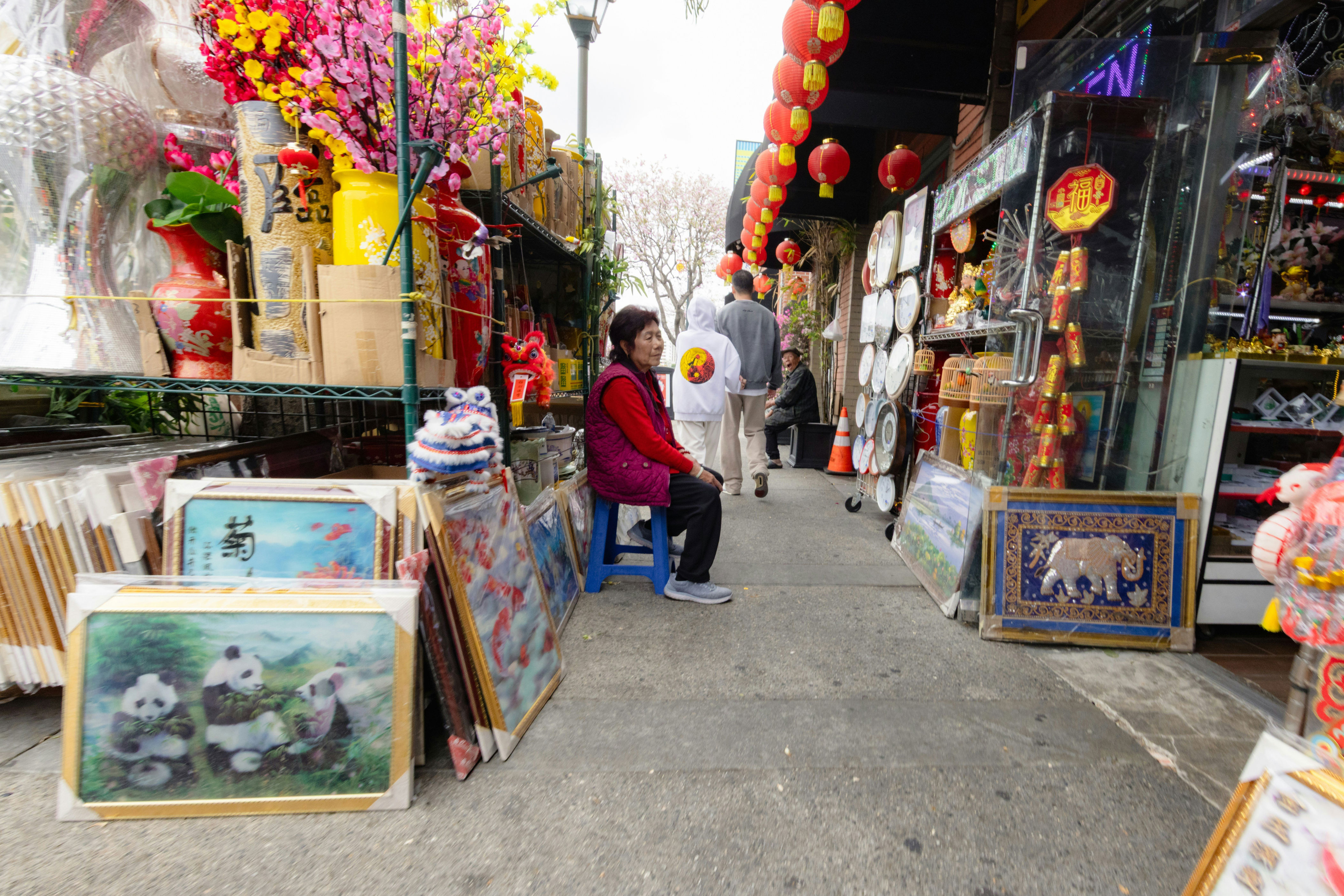
Youth in Los Angeles Chinatown Document the Struggles of Senior Residents
In the cramped and aging single-room occupancy (SRO) buildings of Los Angeles’ Chinatown, the youth of the LA Public Library’s Chinatown Branch’s Teen Council witnessed the daily struggles of senior residents. These buildings, often in disrepair, lack basic amenities such as working elevators, air conditioning, and private bathrooms and kitchens. The conditions are far from comfortable or dignified.
Malia Mahelona-Janilkarn, a member of the Teen Council, shared her experience in a short video produced by Conectopod, a youth storytelling nonprofit. “Both of their elevators weren’t working, so we had to go up the stairs,” she said. “It’s a journey…There’s very little ventilation so you’re huffing and puffing.”
Seeing these conditions inspired the teens to create a multimedia oral history project that documents the stories of elderly residents facing housing insecurity, displacement, and cultural loss. With support from Conectopod, the teens produced podcasts, a short documentary, and community events that amplified the voices of Chinatown’s most vulnerable residents.
From Groceries to Oral Histories
The project began with the teens' involvement in a grocery delivery program launched in 2021, which addressed food insecurity among low-income elderly residents living in SRO units. Through this initiative, the teens met many residents and gained a deeper understanding of their challenges.
Lynn Nguyen, the librarian behind the Chinatown Oral History Project, explained how the project evolved. “When we did the grocery distribution project, the kids got to meet all the residents that live here in Chinatown, specifically in the SRO buildings,” she said.
Funded by the Library Foundation of Los Angeles through its Teen Leading Change grant, the oral history initiative has grown beyond just storytelling. From November 2023 to June 2024, teens interviewed elders in their native dialects, engaged with community leaders, and created public archives of voices and visuals. Guided by Nguyen, the effort provided teens with firsthand exposure to the impacts of gentrification and enabled them to create a platform to fight for change.
Nguyen, the daughter of Vietnamese refugees, said her own family's story shaped her work. “When I see people in the communities I serve, I see my parents,” she said. “This is probably what they went through.”
Launching the Chinatown Oral History Project
Zhangyang Wu, a Teen Council member and immigrant from China, played a key role in sparking the Oral History Project. He started it as a community impact project during a summer camp at Princeton University. “Chinatown cannot be displaced again,” he said, referring to the destruction and relocation of LA’s original Chinatown to make way for Union Station. “Histories neglect the voices and stories of those who are being impacted the most negatively. It is now time to change the story and offer [the voices of insiders] to help people understand the complications, and hopefully change comes [with] enough awareness.”
The teens developed skills in interviewing, storytelling, and using recording equipment. They conducted interviews in Cantonese, Mandarin, and Toisanese, capturing oral histories that may have otherwise gone undocumented.
Podcasts, Interviews, and Action
Over six months, the teens produced seven podcast episodes, a four-minute overview of the project, and a short documentary produced by Conectopod, featuring interviews with community members, historians, and local officials.
They spoke to members of the LA Chinatown Community Land Trust; activists from Stop The Gondola; John Yi, former candidate for California’s 54th Assembly District; and Eugene Moy, former president of the Chinese Historical Society of Southern California.
“Oftentimes, the poorest communities end up being the ones that are displaced … Southern Pacific got here because of the Chinese, and yet Southern Pacific became involved in the displacement of the Chinese. That’s the whole irony,” said Moy, reflecting the painful history of displacement in Chinatown.
The irony Moy highlights stems from the relocation of Chinatown’s original community during the construction of Union Station in the 1930s. Despite the critical role Chinese laborers played in building the railroads, the Southern railroad companies that benefited from their work ultimately contributed to the displacement of Chinatown residents.
Impact: Now and Beyond
Despite the awareness this project has brought, Nguyen says logistic hurdles and institutional support can make it difficult to expand on projects like this, but she hopes to continue it in the future.
“I always want to expand. I always want to continue. The problem is behind all these forces that I have to deal with,” she said, referring to the library administration. “Everybody wants to control how we do things here.”
Nguyen said she will continue to push forward with the hope of showing the world what is truly happening in Chinatown and ultimately inspiring change.
Nguyen said the program’s impact goes beyond media production. “A lot of these projects have changed [the teens’] lives because they’re able to get into Stanford, they’re able to get to Harvard, they’re able to get into UCSD, UCLA, USC,” she said. “As long as I know they’re happy and that I was able to do something that is helpful for their future, then I feel like I’ve done my job.”
For Wu, the experience was transformative. “It helped me learn more about my own community and gave me a platform to share [these stories] with people,” he said. “It gives me hope that so many people of my generation care about these community members the way I do.”
The project’s full archive is available at Conectopod’s website, including podcast episodes and the short documentary.

Post a Comment for "Teen-Driven Chinatown Oral History Project Captures Elder Voices and Struggles"
Post a Comment