Taiwan Stuck in Political Gridlock; Mass Recall of Pro-China Lawmakers May End Impasse
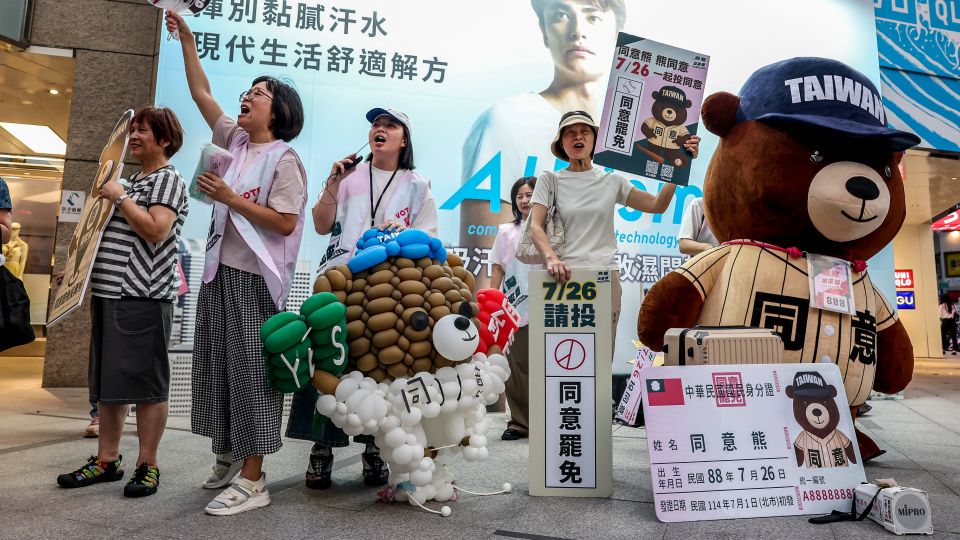
The Political Drama Unfolding in Taiwan
Taiwan is currently experiencing a highly charged political atmosphere, with giant yellow trucks adorned with bears sipping boba tea and broadcasting speeches by lawmakers, emotional rallies featuring rock bands, and rival political camps clashing for support outside metro stations. This vibrant political theater is not aimed at electing new lawmakers but rather at recalling them through a unique feature of Taiwan’s democratic system — the recall vote.
This Saturday, voters will decide whether 24 lawmakers from the main opposition Kuomintang (KMT) can retain their positions. An additional seven seats will be voted on next month. The results could significantly reshape Taiwan’s political landscape, potentially allowing the ruling Democratic Progressive Party (DPP) to regain a majority in the legislature, which is currently held by the KMT and the smaller Taiwan People's Party (TPP).
President Lai Ching-te, who has struggled to advance his agenda through parliament, has supported the recall efforts as part of his strategy to maintain good relations with the United States and counter growing threats from China.
What Is the Recall All About?
According to Taiwan’s constitution, lawmakers can be put to a recall vote after their first year in office if at least 10 percent of registered voters in their constituency sign a petition. While recalls are relatively common, this represents a record number of such votes on the island.
Supporters of the recall movement have framed their campaign as “anti-communist,” aiming to remove “pro-China” KMT lawmakers they believe are collaborating with Beijing’s Communist Party, which seeks to reunify Taiwan, even by force if necessary. They argue that the opposition has undermined democratic institutions and national security by obstructing Lai’s administration, pushing through controversial laws, freezing defense spending, and imposing budget cuts.
They also accuse the KMT of secretly colluding with Beijing, citing events like a meeting between a KMT delegation and Wang Huning, China’s top official on Taiwan affairs. However, supporters have provided little concrete evidence. While one KMT lawmaker facing recall is under investigation for allegedly receiving Chinese funding, no incumbents have been indicted on national security offenses.
The KMT has rejected these accusations, calling the recall an abuse of democratic rules and a power grab. At a recent rally, KMT chairman Eric Chu labeled President Lai a “dictator.” KMT vice chairperson Andrew Hsia described the recall as unconstitutional and undemocratic, emphasizing the importance of maintaining checks and balances in any democracy.
What’s at Stake?
At the core of this political conflict are two competing visions for Taiwan and its relationship with China. The DPP, which is openly disliked by Beijing, has cut off all official communication with Taipei since coming to power. The party views Taiwan as separate from China and has seen increasing success in recent elections, particularly among younger voters.
In contrast, the KMT favors warmer ties with Beijing and sees Taiwan as part of a “one China” framework, though both sides agree to disagree on what that means. Beijing is more willing to engage with the KMT than with the DPP.
The outcome of the recall will determine whether Lai and the DPP can implement policies that strengthen US support or whether he becomes a lame duck president unable to make significant progress. Taiwan has been paralyzed by political gridlock, with parliamentary disagreements often escalating into physical altercations, hindering Lai’s ability to push forward key agenda items, including those addressing US concerns over Taiwan’s security.
To address Washington’s concerns about security costs, Lai announced an increase in defense spending from 2.5% of GDP to over 3%. However, his lack of a parliamentary majority may complicate this effort.
Lev Nachman, a political science professor at National Taiwan University, notes that the recall result will significantly impact Lai’s ability to govern. He highlights that the outcome will involve critical questions about defense spending and the future of the US-Taiwan relationship.
The KMT has long argued for enhancing Taiwan’s defense capabilities while advocating for prudence to avoid wastefulness and ensure the effectiveness of weapon programs.
Relations with the US and China
In recent years, China has intensified its military, diplomatic, and economic pressure on Taiwan, sending fighter jets and warships around the island almost daily and working to limit its global presence. The recall vote comes as Taiwan seeks to bolster its defenses against an increasingly aggressive China and demonstrate to the Trump administration that it is contributing to its own security.
The US and other Western nations have grown increasingly concerned about the possibility of a devastating invasion if Chinese leader Xi Jinping follows through on his vow to “reunify” Taiwan. Key China hawks in the Trump administration, including Defense Secretary Pete Hegseth and Vice President JD Vance, have urged Washington to focus more on countering China in Asia.
However, the Trump administration has also pushed allies and supporters in Asia to pay more for US protection. The outcome of the recall could influence Lai’s standing with the administration during a highly anticipated transit stopover in the US next month, while on his way to visit Paraguay, one of Taiwan’s few remaining diplomatic allies.
If the recalls fail and the DPP does not succeed, the KMT could gain significant strength, leaving Lai in a weaker position during his transit tours, according to Nachman.
What Might Happen?
Currently, the DPP controls just 51 seats in Taiwan’s 113-seat legislature. If KMT lawmakers lose their seats, by-elections must be held within three months, providing the DPP an opportunity to win back enough seats to reclaim a parliamentary majority.
The DPP would need to secure at least six seats in the by-elections to meet the 57-seat majority threshold. If they oust enough lawmakers — 12 — they could gain a majority immediately, even before the by-elections take place.
A successful recall would empower Lai, giving him the mandate to push his policy agenda. Nachman added that Lai would feel confident in pursuing his vision without constraints.

Post a Comment for "Taiwan Stuck in Political Gridlock; Mass Recall of Pro-China Lawmakers May End Impasse"
Post a Comment